 Gabe McCauley · · 3 min read
Changes in Australia’s visa system may thin opportunities for Asian tech talent
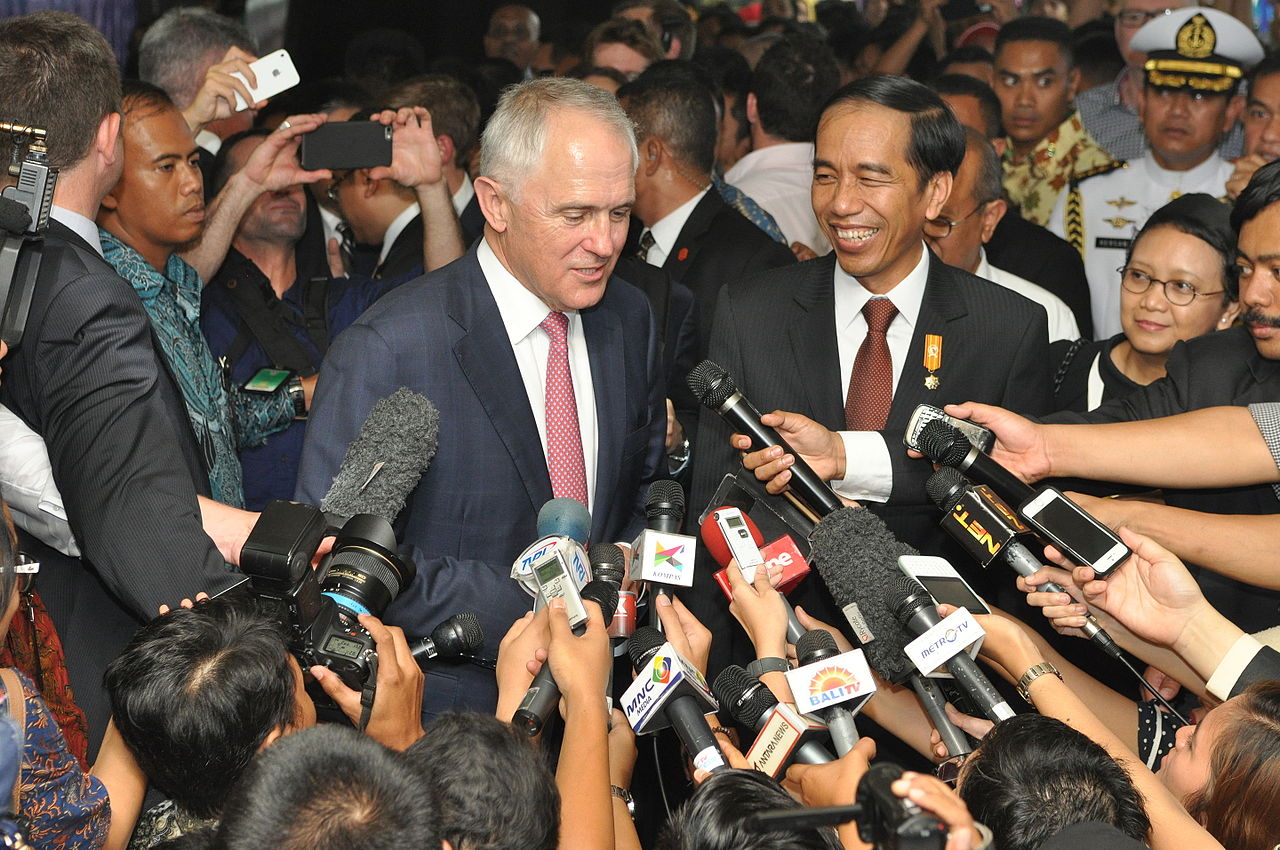
Current Australian prime minister Malcolm Turnbull in Jakarta. Photo credit: Ferdi Oktaviano.
The controversial changes to Australia’s 457 visa category have drawn criticism from many of the country’s leading entrepreneurs and leaders in the startup industry. The Australian government abolished the system today in favor of two separate visas, a two-year and a four-year visa. Both have more stringent requirements including better English proficiency and previous work experience. The change also cut 200 jobs that foreign workers could have applied for, impacting critical tech roles like web developers.
This could have a strong impact on Australian startups looking to import talent and Asian job seekers looking for opportunities in the country.
Currently, Asian countries are the largest holders of 457 visas. India has the highest number of applicants, with a total of 6,260 applicants (or 26.6 percent of total applicants) according to the latest quarterly report from the Australian government. China, the Philippines, Korea, Japan, and Nepal are all in the top 10 countries with the highest number of 457 applicants.
Expert360 co-founder and CEO Bridget Loudon said it was safe to say that many of Australia’s leading startups might be forced to move their headquarters to the US or Europe.
“The talent gap in Australia is a major concern for businesses and this move simply creates more uncertainty for skilled workers who might have considered bringing their talent to Australia.”
According to Bridget, “While top global talent is in the making in our schools and training programs, there are still shortfalls that sponsored workers have helped fill, particularly in the technology sector.”
“In fact, 457 visas have played a big part in helping us grow so significantly over the past four years and it would be a shame if other high-growth businesses would not be able to achieve that same level of success because of these changes.”
Atlassian CEO Mike Cannon-Brookes, whose tech company is worth more than Qantas, told The Australian that 457s were “essential” for Australia and that making it more difficult for Australian companies to find talent would negatively impact startup growth.
“We’ve got about 1,000 people in Sydney, and about 25 percent of the Australian staff are on 457s—maybe a bit over that.”
“What we lack is experience,” he said. “The biggest thing we lack is senior technical talent with deep experience in the volumes that we need for the industry to keep growing. Every single startup has very similar problems once they start to scale. And the biggest gap the 457s fill are the people that come in [who] have spent 10 years in a Silicon Valley company or a great European company, and they come in and train the grads.”
Startups are not the only companies set to feel the potential pinch of 457 visa changes. According to the Getting Trendy 2017 report, of the 100 Australian Securities Exchange (ASX) listed businesses, 80 percent of large corporations are already experiencing a talent shortage despite the existing ability to lure top overseas talent with working visas.
With the changes made to 457 visas, large companies will look to increase their use of on-demand, temporary talent rather than finding longer term specialist talent from overseas. According to the same report, large organizations are already increasing their use of contingent workers, with 48 percent of companies surveyed indicating that they will have more than 20 percent contingent staff by 2020.
Specialist skills that Asian 457 visa holders often bring to companies are becoming increasingly important. Sixty-two percent of large corporations surveyed indicated that specialist skills will be “extremely important” by 2020. Temporary local talent will be used increasingly to fill these specialist talent gaps as more jobs are awarded to Australian workers. Unfortunately, for Asian tech talent looking to move to Australia, the opportunities are likely to thin out.





Stay updated on the go with our mobile app.
Get latest insights with smoother, more personalized experience through TIA mobile app.








📅 Upcoming Events
22 October 2026
Payoneer x CSPN Summit 2026