 Malavika Velayanikal · · 7 min read
HR startup ropes in 40 big enterprise clients within a year. Founder explains how.

Photo credit: Pexels.
If you’ve ever worked with one of the older, large companies in India, or most other places for that matter, you’d know how frustrating it is to apply for leave. You would have to login to a clunky system, go through countless steps, including calling up the IT team for help, before you finally give up and walk down to the human resource (HR) department. The HR person would then manually take in your leave application and feed it into his system – most times, with help from the IT team.
The only plus in the process is that sometimes, you could get lucky and the leave you took wouldn’t get recorded. Then you could take more than your allotted share. And if you are due for an appraisal, just brace for a whole new process, most probably with another system.
All that will be history if Darwinbox has its way. It built an HR management suite on the cloud that covers the whole spectrum of HR-related activities – from recruitment, onboarding, employee management, payroll, leave, transfer, and performance management to exit management. An employee would need just one login for the entire worklife and an HR person or the CEO gets a 360-degree view of an employee or a team – from their rating at the time of recruitment to how the salary and performance trajectory has been. This makes decision-making and processes faster.
If software products for consumers like Uber or Amazon can be so user-friendly that even first-timers barely need hand-holding, why can’t the software managing an HR system – which is as important to a company as finance – be easy to use? That’s the question that led Rohit Chennamaneni, Chaitanya Peddi, and Jayant Paleti to build Darwinbox.
“Be it Uber or some HR software, both are products; both are used to achieve a certain end. For example, if you take a simple workflow of applying for a leave or giving somebody feedback, these are simple processes – like you would rate an Uber driver after a ride or you would buy something from Amazon. Why can’t HR software be that simple? That is where we started, and remain focused,” Chennamaneni says.
“For a lot of our clients, Darwinbox has replaced two or three systems that they were using to do different aspects of HR,” he tells me. “Even though the functional depth and flexibility of the product is high, we stick to making sure it is very easy to use for the employees. That is a differentiation that got us a lot of clients in the market.”
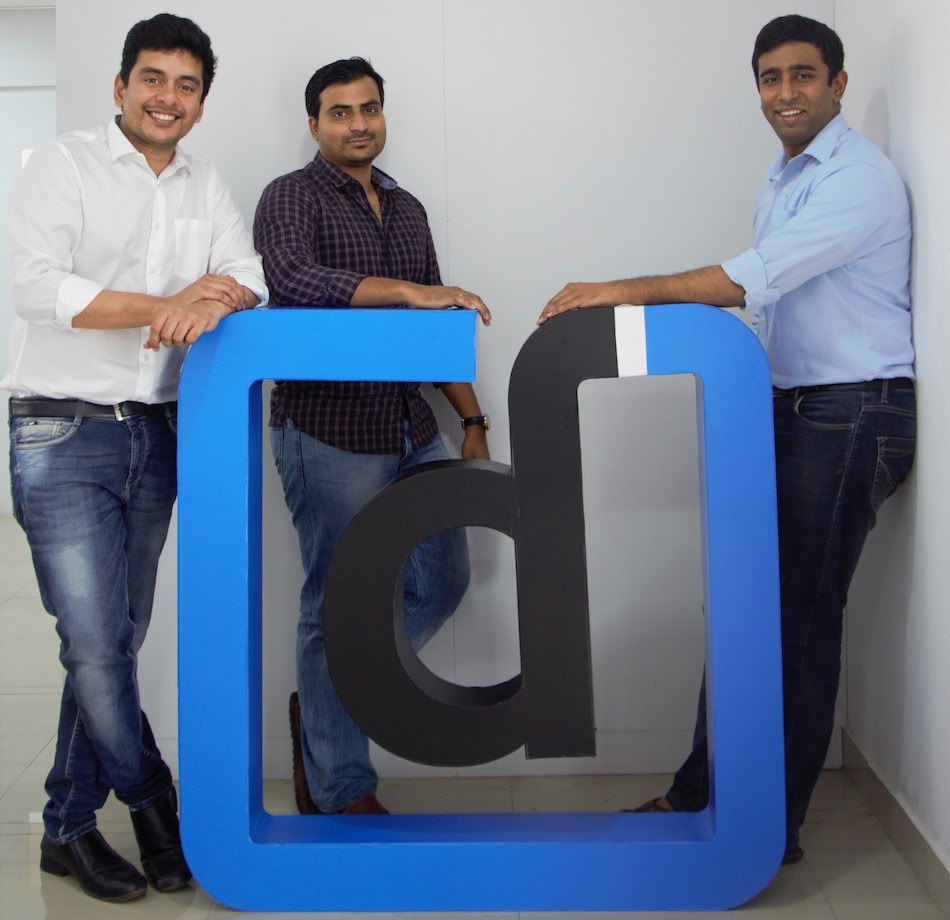
Darwinbox founders Rohit Chennamaneni (left), Chaitanya Peddi (center), and Jayant Paleti. Photo credit: Darwinbox.
The SaaS suite is built for mid-size to large enterprises – those with a headcount of at least 500 employees. “We would go up to 30,000 employees in our client base today,” Chennamaneni says. A year since its product hit the market, Darwinbox claims to have over 40 enterprises as clients with upwards of 100,000 employees on its tech suite.
The startup today announced its series A funding round of US$4 million, led by Lightspeed India Partners. Darwinbox’s earlier investors Endiya Partners, 3one4 Capital, and Startupxseed Ventures also participated in the round.
How it got enterprise clients
The HR software market globally is expected to cross US$9.2 billion by 2022.
There are several niche startups which have a laser-like focus on solving parts of the HR functions. EdGE Networks, for example. It uses machine learning and natural language processing to make hiring easier for companies. It is also based in Darwinbox’s home city, Hyderabad.
Then there is Chennai-based ZingHR which also claims to cover the entire spectrum of HR functions “from recruitment to retirement.” It’s a couple of years older than Darwinbox and focused on small businesses until recently, when it started scaling up to serve larger enterprises.
One-stop shop





Stay updated on the go with our mobile app.
Get latest insights with smoother, more personalized experience through TIA mobile app.











📅 Upcoming Events
22 October 2026
Payoneer x CSPN Summit 2026