Terence Lee · · 3 min read
Veteran travel exec’s new startup sees new gold in airline cargo
This article is a part of Startup Spotlight, a series that features young, up-and-coming startups.

Belli’s Jeff Pan (middle) wins a startup pitch competition / Image credit: FutureTravel
Property holds value, even below your feet. Yet, airlines are flying with the bellies of their planes 85% empty, resulting in untapped income. Jeff Pan, a veteran travel executive and startup founder, sees an opportunity here.
His new Singapore-based startup, Belli, has developed software that modernize air cargo operations. Here’s more on their approach.
😟 Problem
- Despite air cargo being highly profitable and offering up to 70% operating margins, planes have a lot of unused spaces that airlines struggle to monetize.
- This is because airlines rely on outdated software and spreadsheets.
- The lack of modern systems prevent direct bookings and real-time data visibility.
💡 Solution
Belli’s product suite consists of:
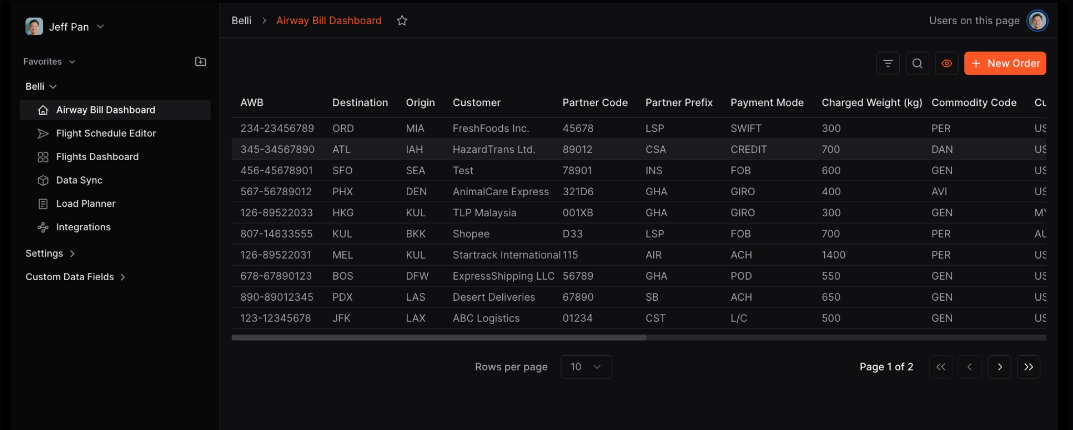
- A cargo management software, available on desktop and mobile, that handles space booking, acceptance, and cargo loading. Data can be viewed at the flight, airway bill level, or even parcel level. This software can connect in a few clicks to external data sources, including trucking applications, warehouse inventory, and accounting.
-
A booking portal allowing an airline’s customers, including shippers and freight forwarders, to make bookings after viewing updated price and capacity data.
🤝 Team
- Jeff Pan: Co-founder of Belli with experience leading product at Teleport, AirAsia’s air cargo venture, and Booking.com. He also worked on building a flight system for SpaceX, and founded a series A travel startup called Flymya.
- Alex Khor: Co-founder who was a product manager at Teleport. He was a chief of staff at edtech startup GuruLab.
🛞 Traction
- Within six months of launch, Belli acquired three small airline customers. In the past two weeks, it closed two large contracts with an annual value of over US$100,000 each.
- These airlines pay US$1,000 to US$10,000 a month depending on services and company size. This is more affordable than what the average airline pays for cargo management software, which can run up to US$1 million annually.
🏆 Competition
- Belli competes with long-established cargo software providers, which often require lengthy setup times and lack flexibility. Setting up an API could be a months-long ordeal.
- The team’s edge lies in them being ex-consultants with experience building software for airlines. They claim airlines usually come out of meetings with them learning something new within the first hour.
💰 Financials
- The company raised US$500,000 in pre-seed funding from startup accelerator Iterative in March 2024.
- It won a US$345,000 grand prize at a pitch competition in traveltech conference FutureTravel.
- With a US$30,000 monthly burn rate, Belli is scaling operations with a team of six full-time employees. But following the recent onboarding of two large aviation customers, it expects to breakeven in less than nine months after writing its first line of code.





Stay updated on the go with our mobile app.
Get latest insights with smoother, more personalized experience through TIA mobile app.