- Premium Content It takes our newsroom weeks - if not months - to investigate and produce stories for our premium content. You can’t find them anywhere else.
 Scott Shuey · · 7 min read
The hacked strikes back: Agentic AI startup fights cyber threats
When David Samuel’s first startup – Ritase, a logistics tech business in Indonesia – was locked down by a ransomware attack, it was just days after the company announced an US$8.5 million series A round.
Hackers demanded US$250,000 – more than what Ritase made in a month – to hand back control of the system. The startup didn’t pay, but it regained control of the platform.
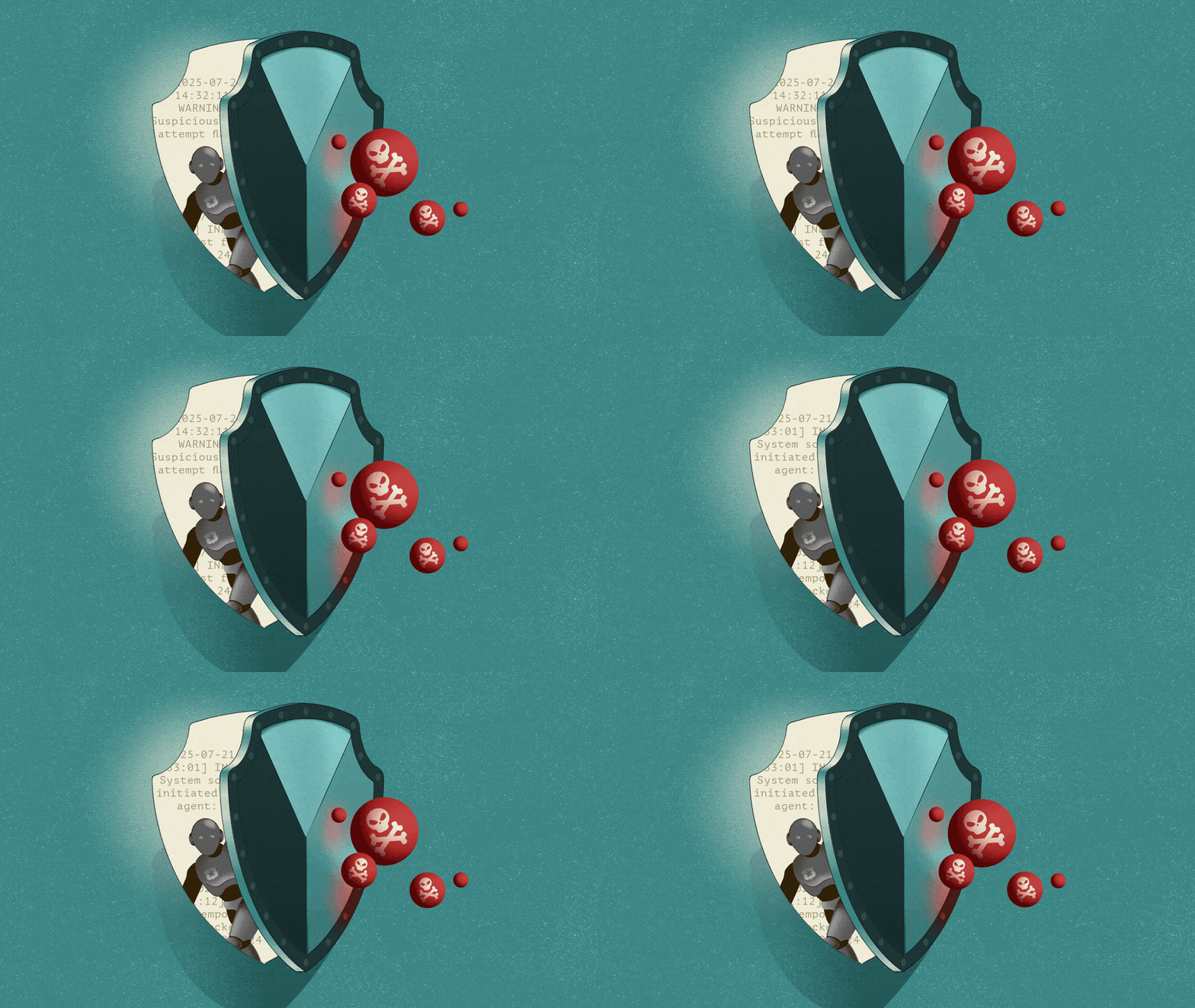
Image credit: Timmy Loen
However, Ritase lost two days of work, costing it about US$40,000 since shippers couldn’t access transport data.
Samuel’s logistics startup was eventually acquired in 2023. But getting hacked convinced him that mid-sized companies are in a cybersecurity no man’s land: They’re too big to rely on basic consumer-oriented products but too small for the multimillion-dollar solutions pushed by enterprise-oriented giants.
“Many small and medium enterprises don’t really think too much about cybersecurity,” he tells Tech in Asia. “They think they’re too small” to be targeted by cyber attackers, he adds.
That experience planted the seed for Samuel’s second act: Peris, a startup building cybersecurity tools that use agentic – not just generative – AI to automate the grunt work of modern cyber defense. The company is headquartered in Singapore and has offices in Jakarta and Abu Dhabi.
Agentic AI challenger
Peris started in 2022 with a penetration-testing platform that connected “pen testers” – people who conduct attacks on computer systems to spot vulnerabilities – with companies that wanted to stress-test their systems.
But when genAI exploded in 2023, Samuel and his co-founder, Deden Gobel – the same head of cybersecurity who helped fight the Ritase ransomware attack – saw a way to go further.
They built a system called Brahma Fusion, an on-premise platform that deploys multiple specialized AI agents that mimic the way a real security operations center (SOC) team works.
Each agent does a specific job: triaging basic alerts, scanning logs, flagging suspicious patterns, blocking malicious IPs, and recommending policy fixes. Brahma Fusion even has an agent that will send an email telling you to change your password.
Samuels says he now believes agentic AI is the only practical answer to a problem that’s getting bigger every day: too few human analysts, too many threats, and massive data that no team – at least not a small one – can manually manage fast enough.
In 2020, the estimated losses attributed to ransomware attacks was US$20 billion globally and rose to between US$40 billion and US$50 billion in 2024.

Why bring agentic AI into cybersecurity?
Focusing on internal data
Taking on the giants
Stay ahead in Asia’s tech landscape
This is premium content. Subscribe to read the full story.
After a cyber attack, David Samuel learned hackers don’t care how small your business is. His new firm, Peris, is out to help mid-market companies defend themselves.
We know this is not ideal. ⌛ Sign up in 20 seconds. Cancel anytime.
Our subscriber community includes professionals from these companies:





Stay updated on the go with our mobile app.
Get latest insights with smoother, more personalized experience through TIA mobile app.








📅 Upcoming Events
22 October 2026
Payoneer x CSPN Summit 2026