Nadine Freischlad · · 4 min read
Facebook user blocked for good after posting ‘photos of Indonesian women in history’
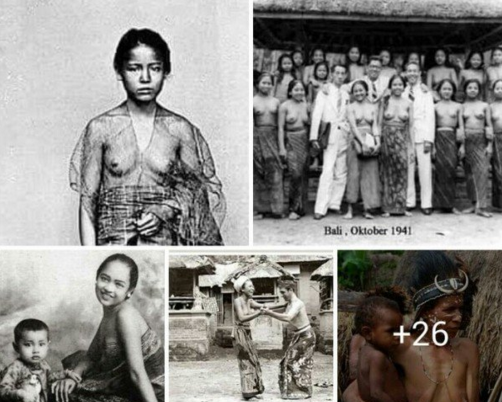
Some of the photos in the album that got Dea Safira Basori suspended from Facebook.
(Update 12:05 am SGT: Dea Safira Basori writes on Twitter that Facebook has declined to reactivate her account based on her appeal. “Facebook has disabled my account for good because I posted photos of Indonesian Women in history,” she tweeted.)
In a recent controversy, Facebook suspended the account of an Indonesian woman for posting historical photos of local women with bare breasts. For women to go topless was – and still is, in some parts of the archipelago – considered normal. There’s no sexual message, it’s considered the same as men walking around bare-chested.
Dea Safira Basori, the woman who created the post, told the Asian Correspondent she created the album in protest of the censoring of a beauty pageant by the Indonesian Broadcasting Commission. When the pageant was shown on TV, the contestants were partly blurred. They were wearing traditional kebaya outfits, which showed some skin around the midriff.

This is the image of the pageant as seen on Indonesian TV.
Dea says her album got almost 3,000 shares within 24 hours of uploading.
The suspension occurred on Tuesday evening without a prior warning. Apparently Dea received a notification telling her she has to write an appeal to get her account back. The note also said Facebook went ahead with the suspension based on about 50 reports of “nudity” and “explicit content” it received.
Facebook’s guidelines on nudity
The story raises a couple of questions. How does Facebook determine what’s culturally acceptable and what isn’t? What are the mechanisms it uses to make these decisions?
Here’s a passage on nudity from its community guidelines page:
People sometimes share content containing nudity for reasons like awareness campaigns or artistic projects. We restrict the display of nudity because some audiences within our global community may be sensitive to this type of content – particularly because of their cultural background or age. In order to treat people fairly and respond to reports quickly, it is essential that we have policies in place that our global teams can apply uniformly and easily when reviewing content. As a result, our policies can sometimes be more blunt than we would like and restrict content shared for legitimate purposes.





Stay updated on the go with our mobile app.
Get latest insights with smoother, more personalized experience through TIA mobile app.