- Premium Content It takes our newsroom weeks - if not months - to investigate and produce stories for our premium content. You can’t find them anywhere else.
 Miguel Cordon · · 5 min read
The ‘superglue effect’ of eSIMs on fintech
If telco firms can offer financial services, why can’t fintech companies and digital banks offer telco products?
In recent years, Globe Telecom’s GCash became the most used e-wallet in the Philippines, while Singtel partnered with Grab to launch Singapore-based digital bank GXS in 2022.
Now, digital banks and e-wallets are striking at one of the core pillars of traditional telco’s businesses by offering their own embedded SIM (eSIM) services.
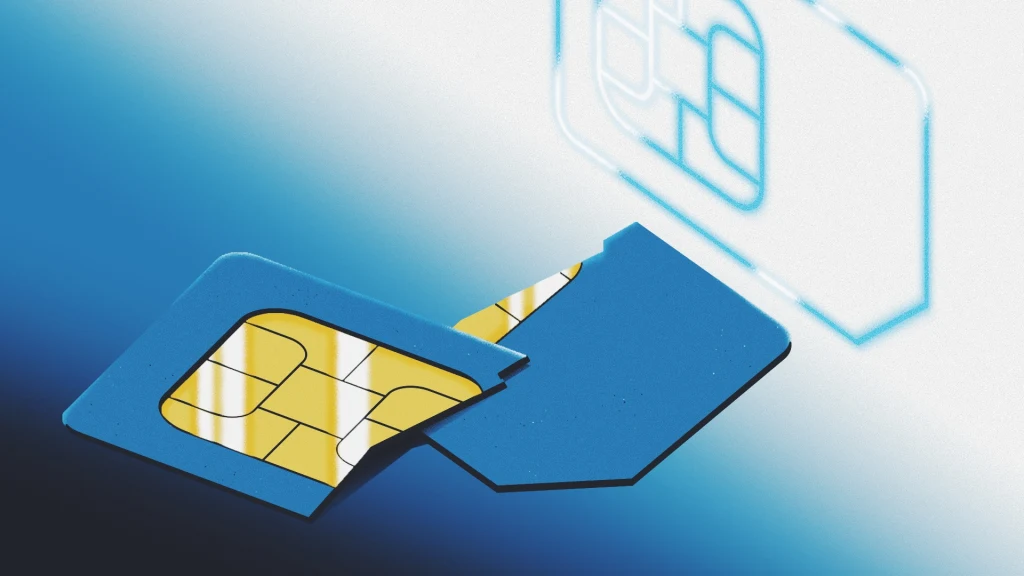
Image credit: Timmy Loen
This comes as the data roaming business of established telco players like Singapore’s Starhub already face “intense pressure” from a new wave of upstarts like Simba.
UK-headquartered neobank Revolut launched an eSIM product in Singapore this December, becoming the first fintech firm in the city-state to provide eSIMs and global data plans to its customers.
This trend may be driven by more than just eSIM’s contribution to the top line of fintech players and neobanks. In fact, the direct financial contribution of eSIMs may be less significant than their potential to boost customer stickiness and serve as a bridge to offer loans in adjacent categories like smartphones.
The superglue effect
Certainly, an eSIM business is another revenue stream for digital banks and e-wallets.
Travel eSIM users are expected to grow by over 5x between 2024 and 2028 to reach over 215 million globally. But given the relatively low prices charged and the number of competitors, how much can a company make from hawking eSIMs?
Revolut set a starting price of S$1.50 (US$1.11) for 1 gigabyte of data in Singapore. The service supports more than 100 countries, and the price changes depending on the travel location.
Singapore residents use around 28.2 million GB of roaming data yearly, according to Tech in Asia’s calculations.
Even if Revolut manages to capture 10% of the market, this will only generate US$3.1 million in additional revenue.
For comparison, the company posted US$9 million in revenue for its Singapore business in 2023, according to its audited financial statements.
But the benefits of eSIM may go beyond just the hard numbers.
Not without challenges
A sure shot
Stay ahead in Asia’s tech landscape
This is premium content. Subscribe to read the full story.
Southeast Asia is accustomed to all-in-one apps, so more fintech players in the region may go toe-to-toe with telco firms.
We know this is not ideal. ⌛ Sign up in 20 seconds. Cancel anytime.
Our subscriber community includes professionals from these companies:





Stay updated on the go with our mobile app.
Get latest insights with smoother, more personalized experience through TIA mobile app.











📅 Upcoming Events
22 October 2026
Payoneer x CSPN Summit 2026