- Insights This article was written by a TIA community member. Insights pieces undergo the same rigorous editorial process that newsroom-produced articles have.
 Jay Kim · · 8 min read
‘Wired’ co-founder on China’s future and his unique connection to Asia
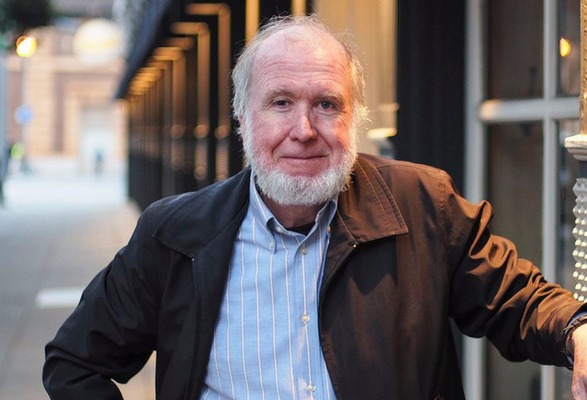
A photo of Kevin Kelly.
This article is part of Tech in Asia’s partnership with The Jay Kim Show where we publish the revised transcripts from the show’s podcast interviews with top entrepreneurs. This is heavily revised from the original show transcripts. For the full interview, go here.
Kevin Kelly is a celebrity in the tech world. He is one of the co-founders of Wired magazine, a premiere publication focused on how emerging technologies affect culture, economy, and politics. Kelly has also authored several bestselling books. His most recent one is called The Inevitable, where he discusses the 12 technological forces that will shape the future.
In my interview with him, Kelly told me about his journeys in Asia, his thoughts about China’s future, his books, and the idea behind the concept of having 1,000 true fans. I know you will get a lot of value out of my conversation with him, so let’s get right into it.
Who is Kevin Kelly and what do you do for a living?
I package ideas, and I mostly view myself as an editor. I was the editor and publisher of the Whole Earth Review, which used to be the Whole Earth Catalog. I’m one of the co-founders of Wired magazine, although I don’t edit it anymore. I also write books and run a website. The books are about technology and what they mean, and the websites are about cool tools.
My current project, which I’m working on this year, is called Vanishing Asia. It documents the disappearing traditions, customs, and festivals of Asia between Turkey and Japan.
I go to China a lot, and I do a lot of speaking engagements in Asia. I visit the region to learn what Asians have in mind for us in the future because I think they’re going to decide. At the same time, I’m documenting what’s lost in Asia. I’m not really nostalgic about it, as I understand why things are being left behind. But I just find a beauty in it, and that’s what I’m trying to capture.
Why do you have a unique connection to Asia?
It’s kind of the first place I went to outside of my little parochial area in New England. In the early 70s, I first went to Taiwan, then to Japan, Korea, and Philippines, and later to Southeast, and Central or Central South Asia. I eventually went westward to Turkey.
Those first journeys were just so mind-blowing, particularly at that era of transformation. So, I gave myself an assignment to do photography in Asia. I had almost no money, but I had a lot of time, and I traveled everywhere.
Asia for me was like a graduate degree on how the world works. I basically gave myself a doctorate in Asian studies because there was just so much to learn.
One of your books was translated into Chinese. Could you talk about that experience?
The first book I wrote was published in the US in 1994 and was called Out of Control. It was an early roundup of how technological systems were becoming very complex and were mirroring the complexity of biological systems. It talked about bee hives and the internet, how evolution worked in the natural world, how artificial evolution could work on machines and computers, the very beginnings of the internet, and decentralized systems.
That’s just a quirk of the timing because being too early can be as bad as being too late.
In the US, the book was published a little too early. People didn’t really get what I was talking about. But in China, it was translated late, just five years ago, I think. And it came out at the right time when the Chinese internet founders were founding their own companies like Alibaba and Tencent. They read the book in translation, which laid out the power of social networks and network effects. Since the founders got influenced by it and became fans of it, word about the book spread.
I wrote a follow-up book called The New Rules, The New Economy, which came out in the US unfortunately right at the dotcom bust. People thought I was talking about the dotcom companies, but I was talking about the new internet economy, which was this online world. I was talking about new principles like freemium pricing, but that was also a little too early.
What are some of the broad strokes that you could share from The Inevitable?
What do you think China’s future will be?
Can you tell us about the idea behind your article ‘1,000 True Fans?’





Stay updated on the go with our mobile app.
Get latest insights with smoother, more personalized experience through TIA mobile app.







📅 Upcoming Events
22 October 2026
Payoneer x CSPN Summit 2026