Phoebe Magdirila · · 4 min read
What you need to know before building a startup in the Philippines
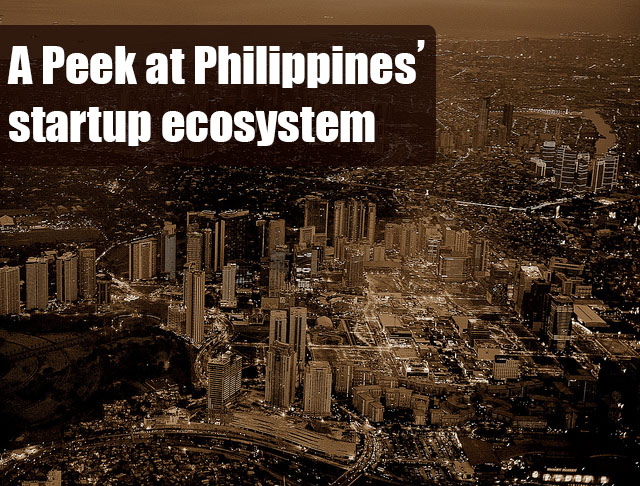
Like other countries in Southeast Asia, the Philippines’ startup ecosystem is in a growth stage. Tech in Asia earlier revealed how the country’s ecosystem is doing in terms of investors and accelerators’ activities. But for some, questions still remain: Why should we (or should we not) start an internet business in the Philippines? What should we expect?
The creation of the World Startup Wiki is centric to this goal: to share information about a specific country to those who are interested in doing business in a specific market. Tech in Asia is dissecting these facts from the World Startup Report team’s discoveries.
Grabbing opportunities
The Philippines’ English-speaking population is one of the glaring factors that make it easy for any foreign individual or business to enter the market. This is the exact reason why a huge number of foreign companies have decided to put their outsourcing businesses in the country. From a startup’s point-of-view, we’ve also seen a number of businesses such as Rocket Internet and individuals like Silicon Valley entrepreneur Ron Hose starting businesses here.
Apart from that, the Philippines is one of the fastest growing economies in Asia. While experiencing 6.5 percent GDP growth in the last quarter of 2013, it has become the second-best performing country in Asia after China.
Looking even more closely into the tech startup space, the World Startup Wiki team has listed 58 internet business models in the in the B2C, B2B, B2B2C and C2C categories that are “usually the first ones to succeed in an emerging country.” Through the wiki’s own market saturation rating system, the Philippines falls “between infancy and semi-mature.”
This rating means many sectors remain untapped and reflects a huge opportunity for people who want to build an internet business in the Philippines. Of the 58 internet business types, only around 10 percent have reached saturation. Of these saturated verticals, social media and web search are led by global players Facebook and Google. There’s also the remittance and listings opportunities led by local startups Ayannah and Sulit, respectively.
Meanwhile, around 25 percent of these businesses are still non-existent in the Philippines. It means not a single startup has put up a business on these verticals and they are huge opportunities for startups. Some of these are virtual assistance, reservations, auctions, and retail subscriptions.
Not only that, in terms of mobile opportunities, most mobile services are still either nonexistent or at an infancy stage.
Internet, infrastructure, and poverty issues remain
While huge opportunities await startups in the internet space, some hindrances still make the Philippines a challenging market for a startup, such as slow internet speeds, lack of a solid talent pool, and the small market.
The wiki underscores that the poor infrastructure and poverty level are two main factors that hinder startup development in the Philippines.
In terms of infrastructure, the internet is slow. In a report by internet content provider Akamai last year, the Philippines had an average internet speed of 1.4 Mbps, lagging behind neighboring countries such as Hong Kong, Singapore, Thailand and Malaysia. While LTE is already available in the Philippines, the telcos are still rolling it out in different cities.
The population is also divided into five classes based on their income. From this, the wiki reveals the elites only comprise one percent of the population. Those considered well-to-do comprise nine percent.
The government’s role





Stay updated on the go with our mobile app.
Get latest insights with smoother, more personalized experience through TIA mobile app.