Meet Legal.ly.
It’s a legaltech startup hailing from London. It helps businesses automate legal paperwork processes such as partnership agreements and employment contracts.
Legal.ly’s been pretty successful – it raised over US$3 million in its series A round in 2022 and currently serves thousands of startups in the UK. It began offering its services in France last year and it’s looking to expand even further afield.

A look at the team at Legal.ly / Image generated using Midjourney
(Disclaimer: Before we go further, we must note that Legal.ly doesn’t actually exist. It’s something we made up. Any resemblances to companies real or fictional is purely coincidental. Now, back to the story.)
But where should it set its sights on? How can it go about this process? Two actual, real UK-based startups that have expanded overseas share their advice.
Identifying opportunities
First things first – where should Legal.ly go? It has considered several options such as other European markets, but the US and Asia also hold sizable opportunities.
According to Anthony Rose, co-founder and CEO of SeedLegals, the smart move would be for Legal.ly to go to a market where there’s demand for its services and where it can make a difference in the ecosystem.
SeedLegals automates early-stage startup legals – from essential contracts and agreements to fundraising and share option schemes as well as cap table management. When it was looking at expansion opportunities abroad, the company found Asia to be compelling thanks to its growing startup ecosystem.
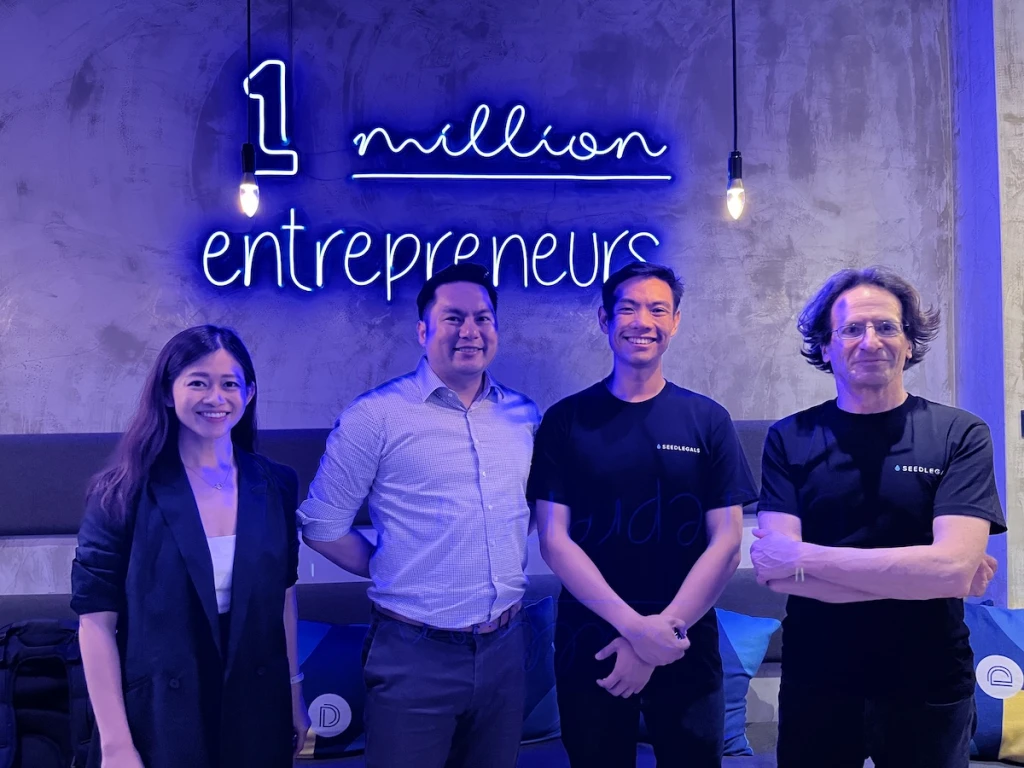
Anthony Rose, co-founder and CEO, (far right) and Hsiang Low, head of APAC (second from the right) / Photo credit: SeedLegals
“When we looked at Asia Pacific, we saw a very big ecosystem,” shares Hsiang Low, who heads SeedLegals’ operations in the region. “Singapore was a bit of a no-brainer for us as an expansion destination – English speaking, common law jurisdiction, lots of startups who would benefit from our service.”
This makes sense for Legal.ly as well. When it first made its foray into France, it struggled to navigate the language barrier and the different law system. Expanding to a country that operates on similar principles as its home market can make the effort easier.
For David Howorth, co-founder of Avvoka, his team chose Singapore due to the global nature of the firm’s work. Avvoka offers a document automation, negotiation, and analytics tool designed to help the legal industry work more efficiently.

David Howorth. co-founder of Avvoka / Photo credit: Avvoka
“Our clients have always had quite global footprints, so we couldn’t just operate with a London headspace, and many of them had offices in Singapore,” he says. “Singapore [also seemed] very forward-thinking when it came to technology, how business should be done, and the support from the ecosystem.”
Singapore therefore seems like an ideal expansion target for Legal.ly, given the market opportunity and commonalities it shares with the English law system.
Making that foray
Singapore it is. What’s next?
“When you want to enter a new market, you need to become a part of that startup community,” says Rose. “Localization is important. You need a fantastic local team that knows the law and the community.”
To that end, one of the first things both SeedLegals and Avvoka did was to hire local talent for their Singapore units and begin establishing a presence in the country.
“You need people on the ground who know people, understand the ecosystem, understand culture and market, and are able to feed this into the way that we go to market in this new place,” Low shares.
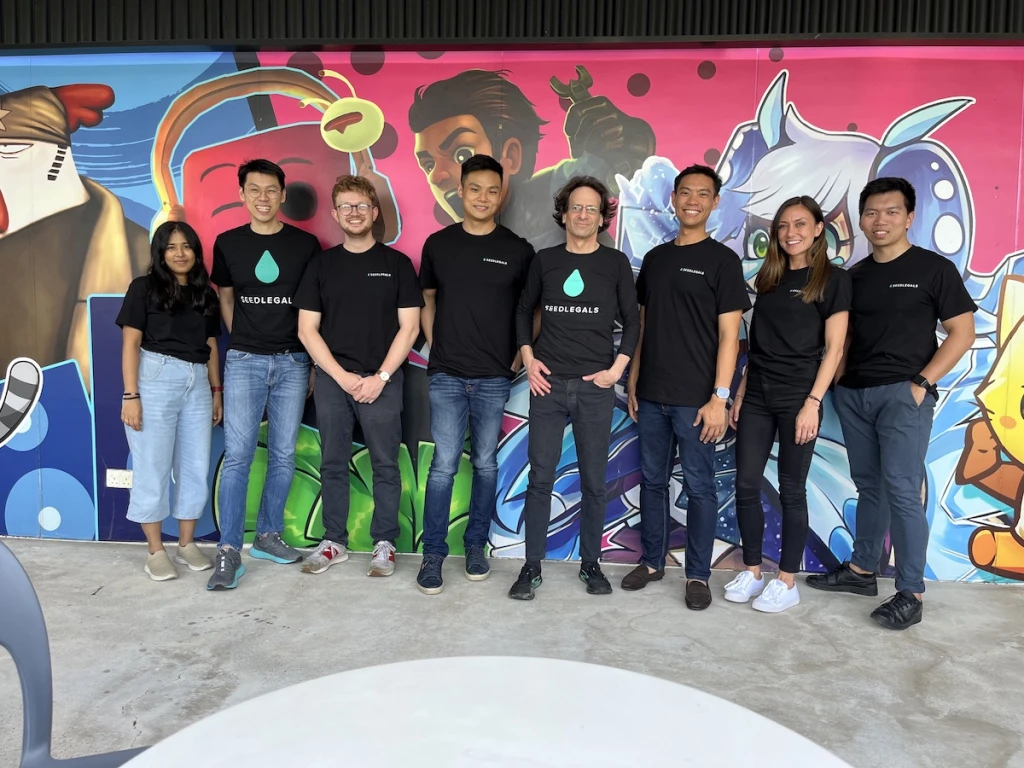
Rose and Low with SeedLegals’ team in Singapore / Photo credit: SeedLegals
This is one point where Legal.ly stumbled in France. Given its close proximity to the UK, the team tried to operate by traveling between cities to set up its French office. This was exhausting and led to struggles navigating the local business environment.
There are also other potential challenges. Both SeedLegals and Avvoka initially experienced hurdles with brand recognition. While well-known in the UK, they didn’t have the same kind of cache in this new market, which caused some difficulties in bringing in clients and employees.
“Your reputation in the UK market doesn’t always immediately transfer,” says Howorth. “You have to go back to when you were just starting out.”
The two companies also had to make adjustments with how they communicated with customers.
“In the UK, we tend to use a more witty, sort of conversational type of messaging. But we found that in Singapore, people preferred something more direct,” shares Low. “This was something we should have paid more attention to and done more testing on before the launch.”
Tapping into the ecosystem
It would also serve Legal.ly well to tap into the resources available to companies that are looking to enter Singapore. much like how it received help from organizations such as La French Tech during its previous expansion.
SeedLegals, for one, first entered Singapore through TechNation, a scaleup program run by the UK government’s Department of Business and Trade. It made its first hire in the city-state through the program.
Avvoka has also received support from the UK government, tapping into resources from the Department for International Trade to fuel its expansion efforts.
Both companies also benefited from the Spark Programme, run by Singapore’s Infocomm Media Development Authority (IMDA). The program identifies promising tech startups and offers them support through initial reference customers, priority grant processing, networking avenues, and collaboration opportunities with industry players from both the public and private sectors.

Photo credit: 123rf
The IMDA Spark Programme has helped SeedLegals connect with new customers and gain insights into how it can better meet the needs of startups in Singapore.
“The first week, we were invited to come in and give a presentation about what we did,” Low recounts. “We provided the content, IMDA provided the space and curated attendees, and we were able to meet startups who gave us feedback and let us know what they wanted to learn more about. We’ve been able to work with IMDA to do more of that.”
SeedLegals also collaborated with IMDA to run pitch deck clinics with select IMDA Spark companies, enabling it to bring its expertise to other startups in the country.
For Avvoka, it’s benefited from the recognition that the IMDA Spark Programme has given the firm.
“It’s a stamp of approval that you’re a company that’s respected and worth speaking to,” says Howorth. “That’s really important when you’re starting in a new market, and we’ve already seen a huge difference in the way that people talk to us and think about us.”
Take the leap
As Legal.ly gears up to make its entry into Singapore, Low and Howorth have some last words of advice.
“Be open-minded about how different things can be in this part of the world,” Low says.
“Expanding abroad is not as difficult as it sounds,” Howorth adds. “Most importantly, pick your early team really carefully – they’re the face of the business there.”
Above all, Legal.ly needs to remember that it’s not alone and that there’s plenty of support available in the ecosystem.
“The trick is to not be afraid to ask for help,” Low says.
The IMDA Spark Programme aims to address the key challenges and support the growth of promising Singapore-based infocomm and media startups by providing selected government tools as well as creating a vibrant, collaborative ecosystem and network.
If you’re a startup looking to tap into the opportunities that Singapore holds, learn more about what the Spark Programme can do for you on its website.
SeedLegals and Avvoka are legaltech startups that aim to transform the way companies understand, manage, and go about their legal paperwork. Learn more about SeedLegals and Avvoka.
This content was produced by Tech in Asia Studios, which connects brands with Asia’s tech community. Learn more about partnering with Tech in Asia Studios.
Stay updated on the go with our mobile app.
Get latest insights with smoother, more personalized experience through TIA mobile app.
Recommended reads
 Life’s a game, and AI agents are Animoca’s new play
 Indonesian AI startup goes global
 Forrest Li on scaling Sea, building smarter bots, and founder grit
 An AI assistant that joins sales calls and scores team skills
 Beyond the check: Why VCs need more than capital
 SGX’s CEO says it doesn’t need a unicorn to win
 SMEs want AI too, but not the kind Big Tech is selling
 Oatside’s alt-milk rise hits a profitable gear
 Alibaba’s financial health in 12 charts
 Asia’s telcos bundle AI into mobile plans. Will it pay off?





Editing by Winston Zhang and Lorenzo Kyle Subido
(And yes, we’re serious about ethics and transparency. More information here.)