 Miguel Cordon · · 3 min read
This startup makes software testing easy even for non-programmers
People delete apps for several reasons, but many of them have something do with how easy or difficult the user experience is. Shi Ling Tai, co-founder of Singapore-based startup UIlicious, says that demand for user-friendly apps and websites has spiked as people increasingly rely on digital services.
However, there aren’t enough good software engineers to meet this demand. As a result, testing software to ensure they work perfectly has become a daunting task for developers and businesses.
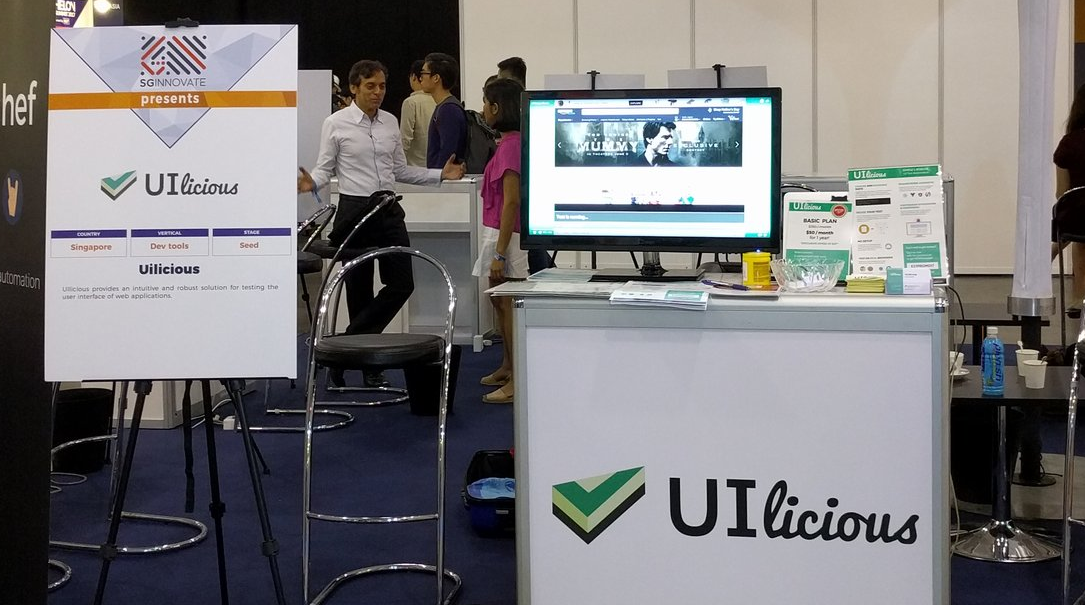
Photo credit: UIlicious
“As the number of features on software grows, it is impossible to test everything and catch software bugs by hand on the plethora of browsers and devices people today are using,” Tai explains. She also observes that most software teams worldwide either test their user interface (UI) manually or leave it to users to report issues to them.
These problems led Tai and her co-founder Eugene Cheah to build an automated UI testing solution that’s very easy to use yet also robust.
UI testing made easy
Prior to establishing UIlicious in 2016, Tai had worked at several local B2B software-as-a-service startups as a web developer. She was a full-stack web app developer at Singapore-based marketing solutions provider Knorex right before co-founding the startup.
Cheah, on the other hand, previously worked at a software development house, building several enterprise web and mobile apps for financial institutes. Prior to UIlicious, he was a director for the app and software development firm Picoded.
The two co-founders consider UI testing a billion-dollar opportunity.
“Ninety percent of software teams are still testing their applications manually with in-house or outsourced testers simply because they don’t have the know-how to automate UI testing,” Tai says. “Up to half of the cost of software development is spent on testing or fixing defects that have already impacted users.”
UIlicious is not the first automated UI testing solution in the market. Tai and Cheah had tried using various free and paid solutions in the past but encountered several issues. Tai shares that for some of those existing platforms, even minor layout changes can cause a number of unrelated properties to fail the test.
Based on this experience, the startup designed a low-maintenance software that’s easy to learn. It doesn’t even require users to have coding know-how, thus allowing anyone to write tests in pseudo-English.
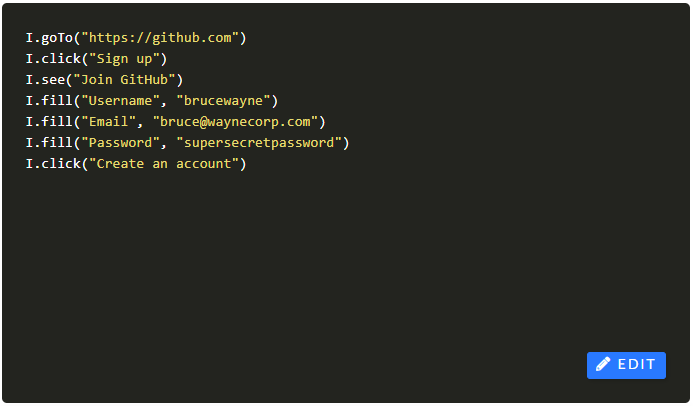
UIlicious’ tech understands the structure of websites based on the use of semantic HTML and ARIA accessibility attributes, as well as the context of the previous commands. / Image credit: UIlicious
UIlicious claims its software can save teams time as they set up their testing grid, write first test scripts, and set up continuous test monitoring, cutting down weeks to less than an hour.
Profitability and sustainability





Stay updated on the go with our mobile app.
Get latest insights with smoother, more personalized experience through TIA mobile app.








📅 Upcoming Events
22 October 2026
Payoneer x CSPN Summit 2026