 Steven Millward · · 2 min read
Chinese-Made UC Browser Targets America, After 20 Million Overseas Downloads
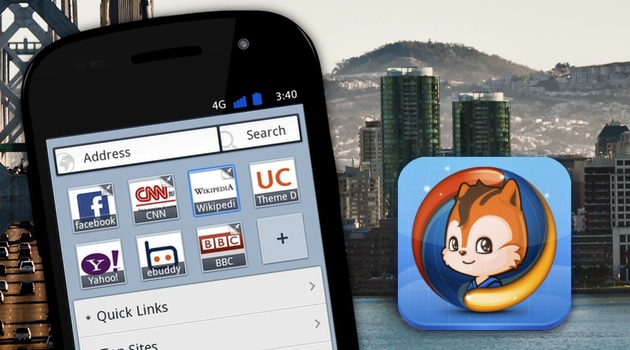
UC Browser, the mobile web browser from China that has turned into a global hit, has passed the major milestone of 20 million overseas users. And now it seems ready to push into the US market too.
That’s the assessment of UC Web’s CEO, Yu Yong-fu (pictured below), speaking recently at the Silicon Valley-China Wireless and Mobile Conference (SVCWM). His company’s mobile web browser – for Android, iPhone, BlackBerry, WinMo 6, Symbian, and numerous JAVA-based phones – is a rare example of a Chinese software product becoming a global success.
The Beijing-based web company claims its triumph from being unique among Chinese web browsers in having its own rendering engine, rather than using, say, Gecko, Trident, or Webkit. And so UC Web maintains that being able to tweak its own engine can give it an edge over some global rivals as well.

UC Web CEO, Yu Yong-fu, talking recently at the SVCWM conference. (Image source: TechWeb)
Why the move into the US now? Mr Yu told SVCWM attendees that the US, like China, still has a lot of potential in the mobile industry, as people move quite quickly onto smartphones. He added:
China and the US will be the pair of nations who’ll form the core of the mobile internet market in the future.
And so it seems that he wants UC Browser to have a strong presence in each of those powerhouse markets. There are already international versions of the browser for Android (see it in the Market) and iPhone (in the iTunes App Store) – and all other platforms – but the company has not yet targeted and localized for the US.
In many markets, UC Browser has surpassed the European firm, Opera, whose own browser has similar server-side speed boosts and support for a wide range of feature-phones and smartphones. In China, UC Browser has – according to StatCounter – 64 percent of mobile browser market share (see graph below) this month. In India, UC Web claims it now has 20 percent of mobile pageviews. But across Asia as a whole, it’s at only 1.98 percent.
Here’s the interactive graph, showing the situation in China:
[Source: TechWeb – article in Chinese]





Stay updated on the go with our mobile app.
Get latest insights with smoother, more personalized experience through TIA mobile app.








📅 Upcoming Events
22 October 2026
Payoneer x CSPN Summit 2026