Grace Priscilla Teo · · 4 min read
Uber’s plan: Let rivals build the self-driving cars
This article summarizes an episode of WSJ Podcasts’ video series featuring Sachin Kansal, CPO of Uber.
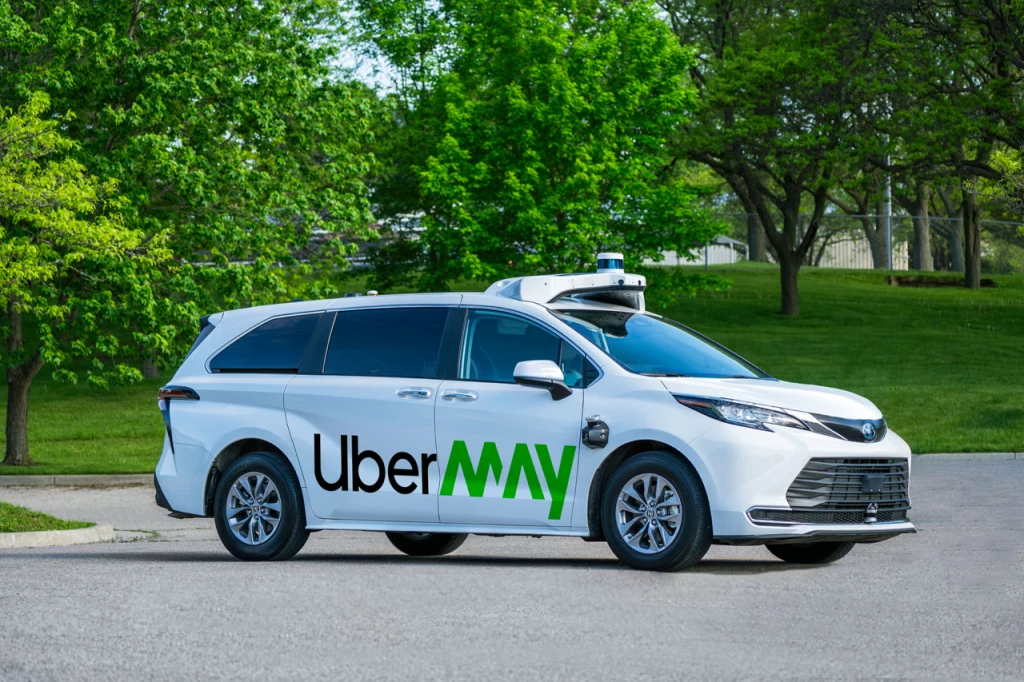
Photo credit: Uber Investor
Many people think the rise of self-driving cars means the end for human drivers. But according to Sachin Kansal, chief product officer of Uber, the story is more complex. He sees the change to robotaxis not just as a way to replace workers, but as a plan to grow the company’s network. This plan has shown good results for Uber’s human drivers.
The change from building cars to running a network
For years, Uber tried to do everything itself by building its own self-driving cars. But the project was too big, and outside problems forced the company to rethink its plan.
From making cars to running a network
Instead of building cars, Uber decided to build the system that connects them. Uber opened its network to different partners from around the world. This allows Uber to work with any type of car and add self-driving cars to its network quickly.
Kansal notes, “We have signed about 20 partners at this point… We have deployed with Waymo in Austin, Atlanta, and Phoenix [and] with the likes of WeRide in the Middle East.”
The problem of demand with a set number of cars
This system of partnerships created a new problem. It is hard to manage customer demand that goes up and down with a set number of expensive cars.
The problem with busy times
Demand for rides changes a lot. During rush hour, many people need rides at once.
Kansal explains, “The number of vehicles that you need at say 8:30 AM on a weekday, is very different than what you may need at 3:00 PM on that same day.”
The problem with using only robot cars
For companies with self-driving cars, these changes in demand create a financial question. Should they buy enough expensive cars to handle the morning rush, knowing the cars will sit empty for the rest of the day?
He continues, “If you try to deploy enough cars to be able to meet that [peak] demand, you’re gonna have a lot of idle time on your hands because these are assets that you’re deploying in the city.”
A mixed network is the solution
This unused time is a big problem. Uber’s solution is a mixed network of humans and machines.
Mixing humans and machines
This is where Uber believes its network of human drivers gives it a strong advantage over companies that only use self-driving cars.
Kansal notes, “What we also bring is what we call a hybrid marketplace… on the same platform we have AVs, but we also have human drivers. What that allows us to do is to provide the right kind of utilization of all of these assets.”
Managing competition with partners
An open invitation to Tesla
Human drivers will not disappear
Self-driving cars are increasing driver income





Stay updated on the go with our mobile app.
Get latest insights with smoother, more personalized experience through TIA mobile app.