- Insights This article was written by a TIA community member. Insights pieces undergo the same rigorous editorial process that newsroom-produced articles have.
 Tim Romero · · 4 min read
This wearables CEO shares the hard thing about hardware startups
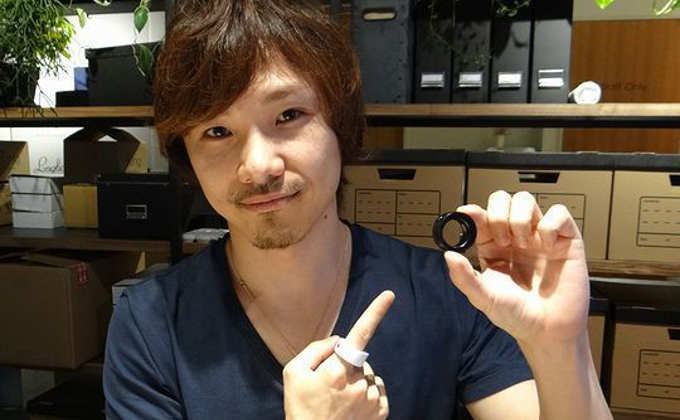
This article is part of Tech in Asia’s partnership with Disrupting Japan where we publish the revised transcripts from the show’s podcast interviews with Japanese entrepreneurs. This is heavily revised from the original transcripts. For the full interview, go here.
Sometimes the most inspiring founders are those who come from somewhere you don’t expect. Takuro Yoshida of Logbar is one founder in that mold.
When I first met him five years ago, he was trying to innovate bartending. Over the past few years, he and his team have run one of Japan’s largest Kickstarter campaigns and have been developing, releasing, and securing international distribution for two hardware products (Ring and ili).
Let’s get right to my interview with him.
Tell us about your Kickstarter campaign.
Before Kickstarter, we were able to raise angel funding—not a big amount, but enough for us to make the prototype. Once we were almost ready for mass production, we started the Kickstarter campaign.
We raised over US$800,000 on that campaign, but the production wasn’t that smooth. Hardware is always hard to mass produce—a single change takes about two or three months. We were targeting to ship the product in July but we shipped in October instead.
It wasn’t too bad, actually, but I think the delay was caused by our lack of experience in building hardware. It was my first time. We didn’t know the risks and the time frames.
What would you advise hardware/internet of things startup founders to avoid such delays?
You need to experience the hardware, and trust the factory all the time. It wasn’t the fault of our partner-factory that we experienced a delay in shipping the product. It was our fault. I was always like, “I want to do this. I want to add a new function.” And then they would warn, “OK, but it takes time. Is that OK for you?”
Why didn’t Ring get much attention?
It was great during the early adoption stage, but there were no more consumers after that. One reason is that we can already do almost everything on our iPhones or Android devices.
Another thing is that we tried to make it as small as possible. But there were limitations. We always said, “If we can use a smaller battery or smaller chips, we can do this.” We wondered whether people would use it if it were smaller with more functions.
The Ring was an interesting device, but it’s not for everyone. When people see it, they always say, “Oh, it’s a remote control,” or, “200 bucks just for a remote control?” Most people don’t need it.
When did you decide to focus on ili?
We started developing ili about two years ago. I thought the Ring was very simple, requiring only gestures for it to function. But people found it very complicated.
Moreover, people needed to worry about two things: a Bluetooth connection and gesture recognition. So I thought I wanted to make something that wouldn’t need a Bluetooth or internet connection. And then I remembered that I couldn’t speak English at all the first time I went to the US. So I thought that maybe I could make a translation device.
You created a video to promote it and it went viral. Were you surprised by the public’s reaction?
Do you think Japan has fallen behind as the leading innovator in hardware?
Are we going to see more interesting hardware coming out of Japan?





Stay updated on the go with our mobile app.
Get latest insights with smoother, more personalized experience through TIA mobile app.











📅 Upcoming Events
22 October 2026
Payoneer x CSPN Summit 2026