Steven Millward · · 3 min read
Wheel of misfortune: China starts banning new bike-shares
This is a graveyard of startup dreams and investor cash:
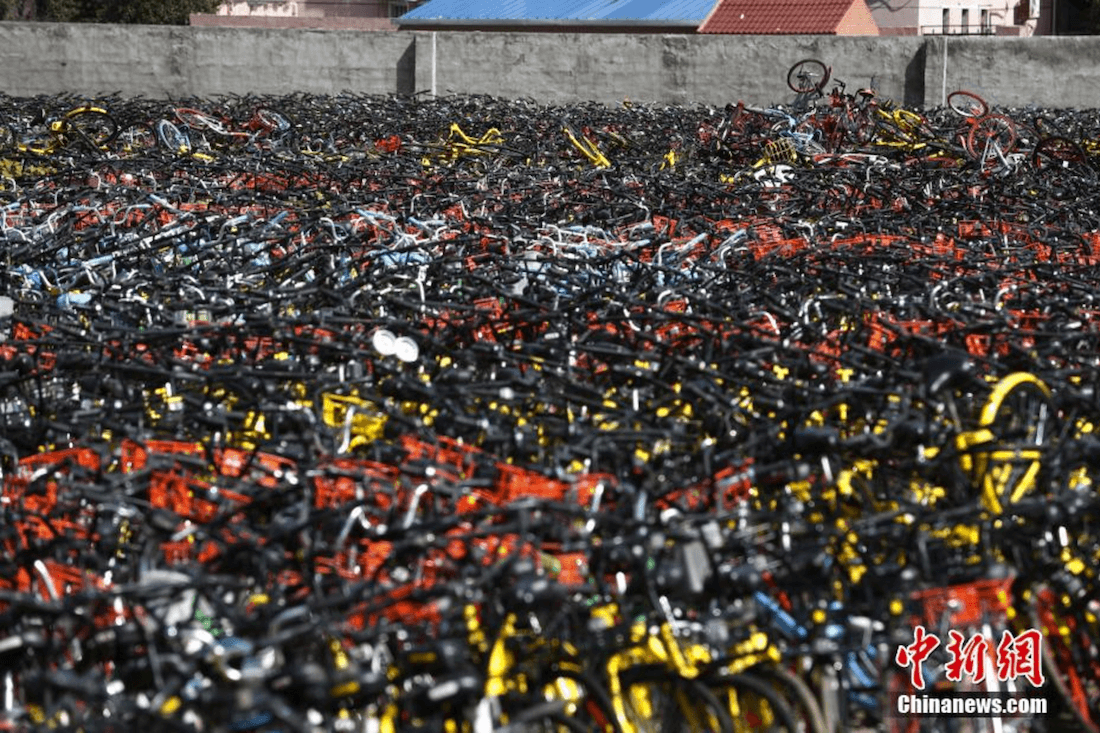
Ride-share startups’ bicycles confiscated from Shanghai’s Jing’an district. Photo credit: ChinaNews.
The rows and piles of bicycles, from an array of bike-share startups that have popped up in the past year or two in China, were created when authorities in Shanghai seized the two-wheelers. The reason: the city of 25 million has too many bikes, resulting in clogged sidewalks, especially outside subway stops and community gates.
Startups like Mobike and Ofo, in their haste to expand and become the best-known service, have flooded Shanghai with bicycles. 1.5 million of them.
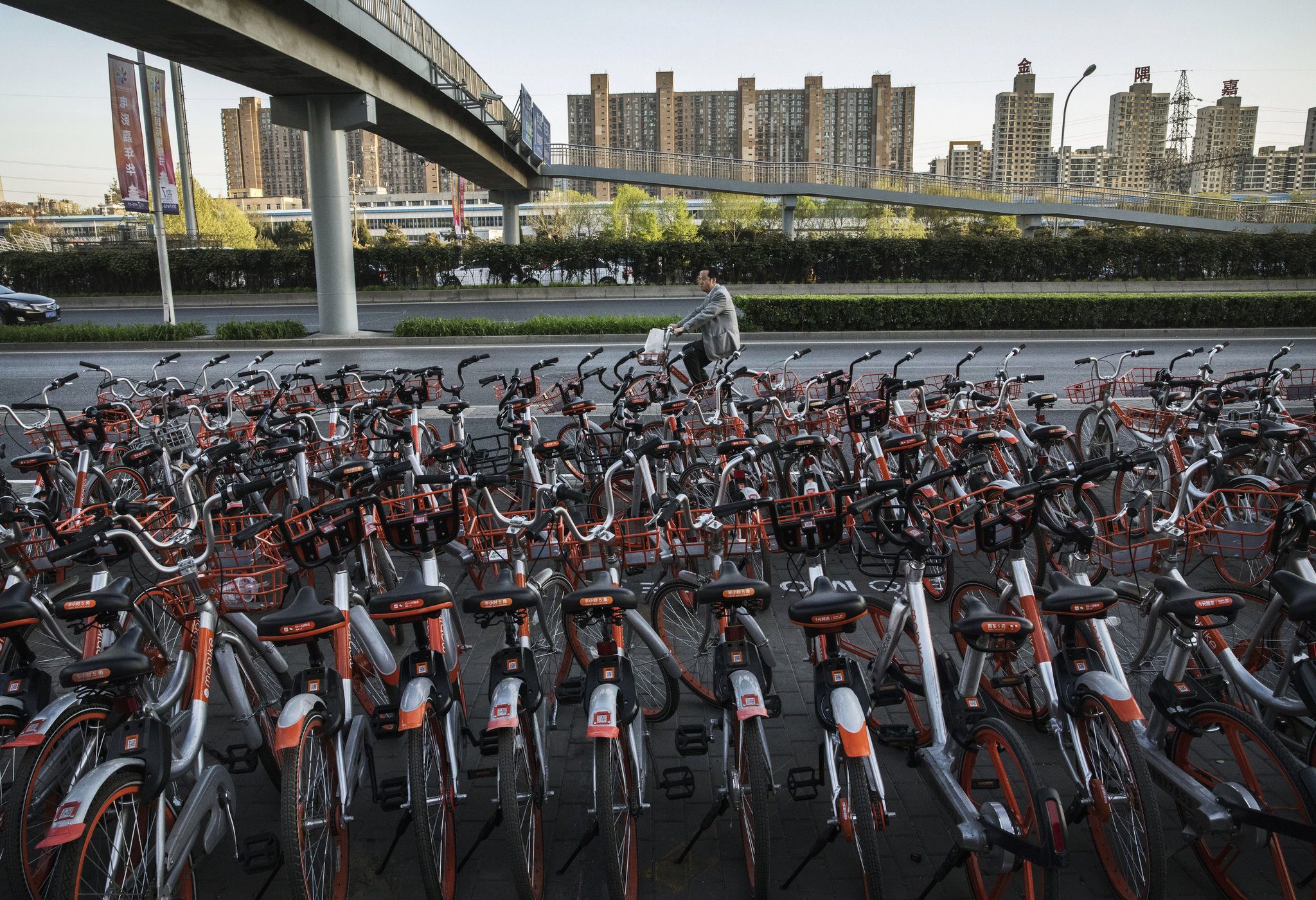
Photo credit: Kevin Frayer.
In August, Shanghai municipal authorities said that 500,000 bikes is its saturation point and instructed the startups not to deploy any more bicycles. Guangzhou did likewise, putting a cap at 800,000 rides for its 14 million inhabitants. Six other cities followed suit.
And then this week in Wuhan, population 10.6 million, authorities said no more goddamn bikes. There’s 700,000 of them, but the streets can only handle 400,000, according to state news agency Xinhua which described the deluge as causing “chaos.”
Cease and desist
It’s a stark reminder to bike-share startups that their growth cannot be limitless.
Unlike Uber or Didi, the dockless bicycles operate under a ceiling. In every city there is a saturation level – a tipping point where bikes turn from utility to litter; from tools that improve city life to mangled wrecks that trip up old ladies.

Riding a Mobike in downtown Shanghai. GIF by Tech in Asia. From video by Mobike.
In order to continue the kind of growth that startups need to bag hundreds of millions more dollars from investors, apps like Mobike and Ofo will need to accelerate their overseas expansion.
And this applies to more than bikes.





Stay updated on the go with our mobile app.
Get latest insights with smoother, more personalized experience through TIA mobile app.