Colin Moreshead · · 6 min read
Reinventing the window? Former Nintendo designer nabs $100k on Kickstarter in three weeks
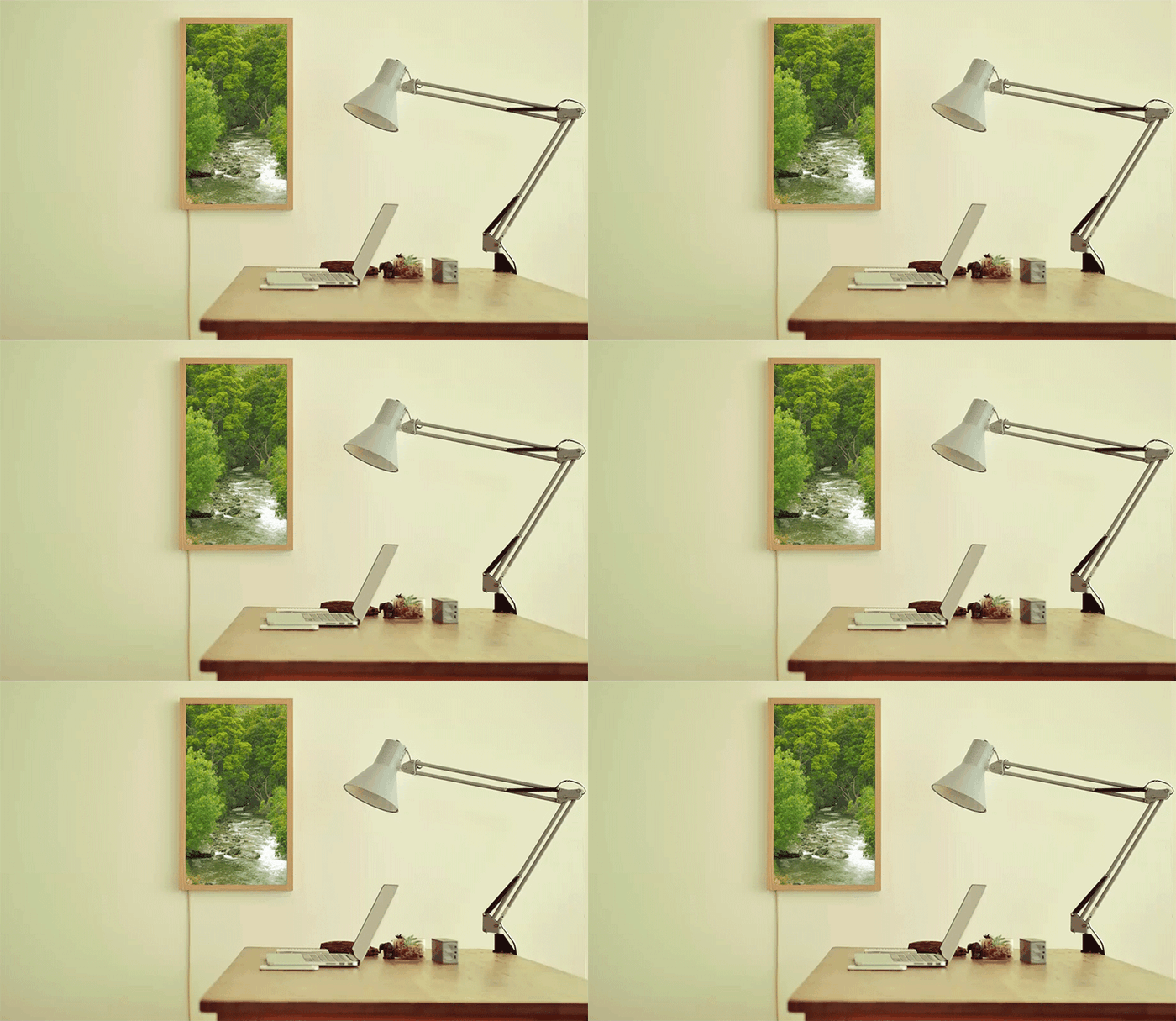
One doesn’t exactly watch the Atmoph Window. You can stare at it immersively if you like – I did – but the Window is best enjoyed out of the corner of your eye. While reading a book, you might sit nearby as a stream burbles in the background. The sound of water passing through a forest in New Zealand is the sort of ambient noise you could pass a few chapters with, enveloping you in an environment you may never have visited. Should you choose to glance over your shoulder at the Window, you would be forgiven for thinking it was a single pane of crystal overlooking a pristine wilderness. But you’d be wrong.
The Window itself is a 27-inch, 1920×1080 pixel high-contrast full HD display made in Osaka. With its wifi connection, it can connect to an iOS device, Apple Watch, or Android phone to display local weather information and sync with Google Calendar at will, though you won’t want to look at that clutter for too long. The more enjoyable feature is held in a 32GB internal drive – the pre-installed 4K video loops designed to transport you through time and space to somewhere less… wherever you are.
Nintendo bred
Atmoph co-founder and CEO Kyohi Kang has been thinking about this product for a long time. Ten years ago, he finished his undergraduate degree in robotics from Aoyama Gakuin University in Tokyo and began his graduate degree at the University of Southern California. Kang’s modestly proportioned studio apartment had a single window, with a view that many urban dwellers are familiar with – the building next door. That environment gave him the idea for the Window, but sky-high LCD prices prevented him from realizing his vision at the time.
Upon moving back to Japan, Kang found web developer work here and there until he ended up at NHN Japan, now Line. There, he worked on user experience and interface until he landed a job at Nintendo, where he was interviewed by Atmoph’s future co-founder, Kyohei Nakano. The pair worked primarily on Wii U web applications until Kang approached Nakano about starting Atmoph together in Kyoto. Kang notes that some of Nintendo’s UI design special sauce found its way into the Window.
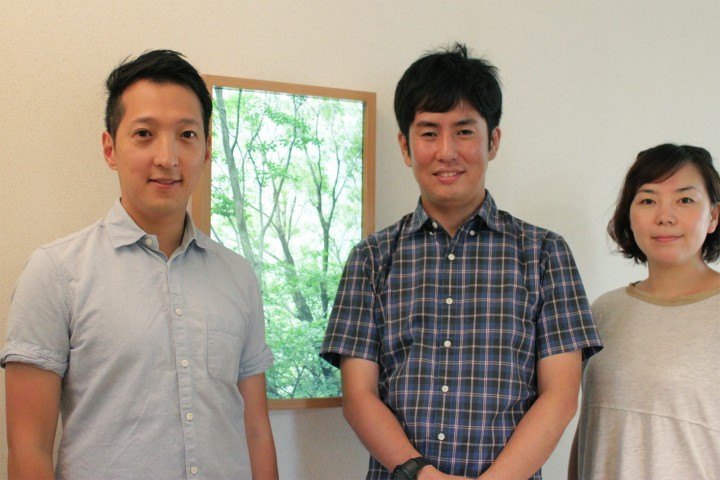
Kyohi Kang, Kyohei Nakano, and Yoko Tarui.
“Designing for Nintendo is a challenge, because the product needs to work for people from age 3 to age 80 around the world,” says Kang with a knowing smile. “We reduced the stress of interacting with the Window by minimizing language and simplifying the flow of control.”
That means the Window can be localized without much fuss. The release software has support for English and Japanese, but Kang says that crowdfunding has alerted them to the languages they should seriously consider for future updates – German and French.
Crowdfunding success
Europe, with its largely urban population and its affinity for interior design features, might seem like an obvious market for the Window in retrospect. Atmoph originally intended on launching in the United States and Japan, but online support from Germany and France – ranking 3rd and 4th respectively in donations – pushed the company to rethink its global expansion strategy.
Atmoph was founded in August, 2014, and the founders have bootstrapped until now – a successful Kickstarter campaign has given them the funds they need to ramp up production. When it launched its Kickstarter campaign on May 12th, Atmoph set a goal of US$100,000 to cover manufacturing costs. It hit that goal on June 1 and continued to $161,459 pledged by the end of the campaign on June 11. Atmoph isn’t the first Japanese startup to leverage Kickstarter for success; pen-and-paper circuit maker AgIC used the site to get itself off the ground, and eye-tracking virtual reality startup Fove ultimately raised an unbelievable $480,000 this summer.
See: Fove’s eye-tracking headset aims to shake up VR, launches on Kickstarter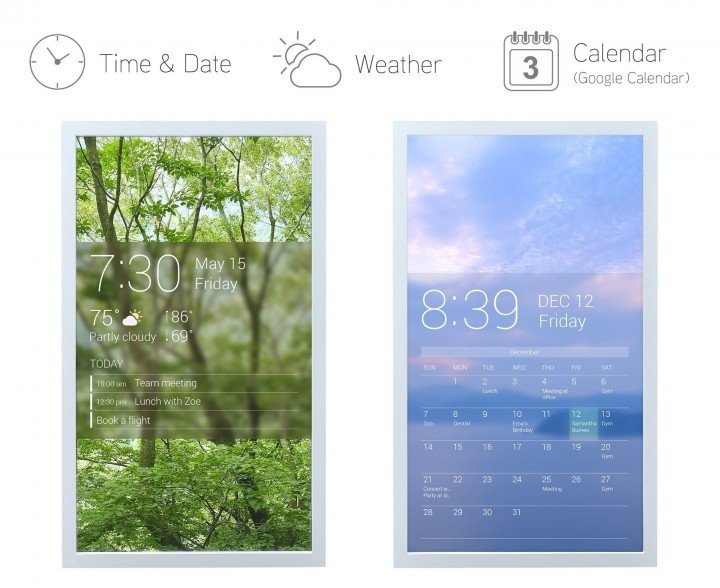
But the most impressive thing about Atmoph’s funding round was how much money individuals pledged. Kang knew that there would be interest in the product, but when potential backers saw early deals on the Window as rewards, they ponied up to the tune of US$460 per person on average – well over six times the typical pledge rate for Kickstarter.
Shifting to content
Defining the product





Stay updated on the go with our mobile app.
Get latest insights with smoother, more personalized experience through TIA mobile app.