- Premium Content It takes our newsroom weeks - if not months - to investigate and produce stories for our premium content. You can’t find them anywhere else.
 Jamille Tran · · 5 min read
Vietnam pushes blockchain as foreign crypto faces limits
After years of domination by global players, Vietnam is making moves to develop homegrown stars in the blockchain sector.
The country’s government is all in on the tech, with blockchain named as one of 11 “strategic technologies” in June. In the same month, Vietnam passed a new law that officially recognized digital assets.

A high-rise building in Ho Chi Minh City / Photo credit: 123rf
State bodies and local firms are rolling out network infrastructure, while major banks, including Military Commercial Joint Stock Bank (MB) and Techcombank, are building crypto exchanges.
Major initiatives in the sector include NDAChain, a Layer 1 blockchain that works with Vietnam’s National Data Centre, as well as the Vietnamese Multi-Chain Blockchain Service Network (VBSN) developed by local firm 1Matrix.
New Vietnamese exchanges are also in the making, including one created through a partnership between MB and South Korea’s Dunamu, the operator of Upbit – the world’s third-largest centralized crypto exchange.
While blockchain might be most associated with crypto, Vietnam is also using the tech to safeguard the personal data of its 100 million citizens as it races to digitalize government services.
Building blocks
Vietnam’s National Data Centre is the central repository for data from Vietnamese citizens as well as governmental and organizational entities.
However, storing all this data in a centralized facility faces challenges from cybersecurity threats, scalability bottlenecks, and limited international compatibility, says Nguyen Huy, head of technology at the National Data Association (NDA).
The solution? Blockchain.
NDAChain is a decentralized and permissioned blockchain that works with the National Data Centre. This means NDAChain doesn’t replace the central database but adds a checkpoint that verifies and protects data before it’s stored.
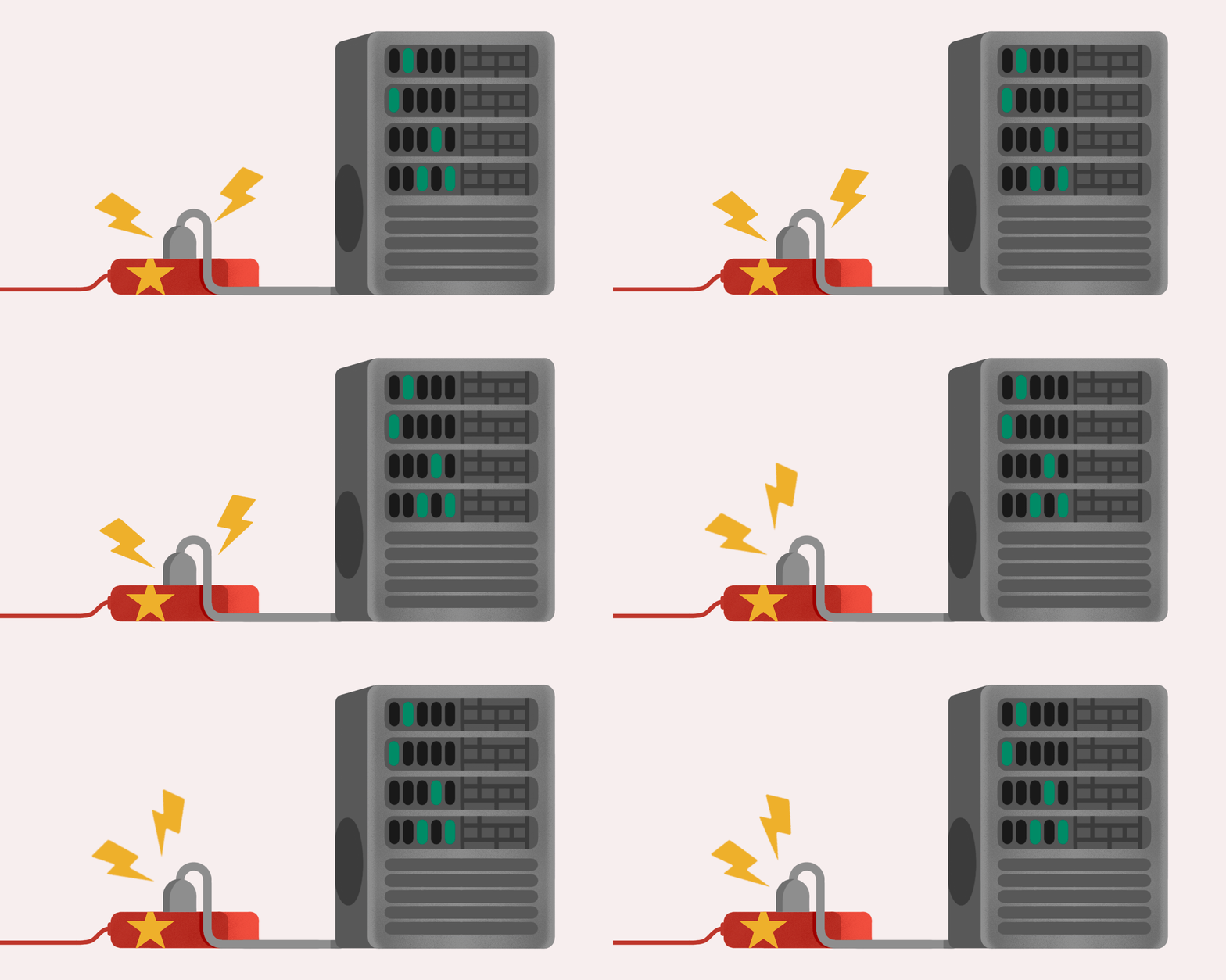
Image credit: Timmy Loen
“It acts as a protective layer that authenticates and verifies citizen and private-sector data before it reaches the National Data Centre, reducing system load and enhancing overall security,” says Nguyen, a former Google engineer and the lead developer of NDAChain.
If it ain’t broke, customize it
Crypto-crazed
Stay ahead in Asia’s tech landscape
This is premium content. Subscribe to read the full story.
Vietnam is betting big on blockchain, from citizen data to crypto exchanges, as new rules threaten to upend the country’s US$120 billion crypto scene.
We know this is not ideal. ⌛ Sign up in 20 seconds. Cancel anytime.
Our subscriber community includes professionals from these companies:





Stay updated on the go with our mobile app.
Get latest insights with smoother, more personalized experience through TIA mobile app.