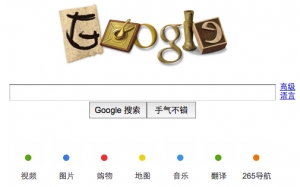
 Back in March, Google shut its search engine and redirected Chinese users to its unfiltered Hong Kong site. The action was triggered by Google’s unwillingness to continue to censor information on Google.cn.
Ever since the Google-China saga, Google’s market share slipped from 26.8 percent to 24.6 percent in the third quarter. On the other hand, Baidu’s market share increased to 72.9 percent in the third quarter from a previous 71 percent.
To ensure Google has a role to play in China’s ever increasing Internet development, Alan Eustace, Google’s senior vice president of engineering said that maps and display advertising are areas where Google can expand and innovate in China.
“Search is only one piece of our business,” Eustace told reporters after the Google Innovation conference in Beijing. “There are lots of areas we can innovate. It’s not a narrow slice.”
The Internet “can be a huge force for good in the world,” Eustace said in a speech. “We’re at the very beginning and China, in my opinion, will lead much of that revolution.” The nation is “the heart of the future of the Internet.”
With over 420 million Internet users, China is a indeed a lucrative market for any Internet companies. But strict controls from the Chinese government have so far worked towards Chinese-based technology companies’ favor. Facebook, the world’s largest social-networking site is banned in China. This has given Renren, a Facebook clone, an opportunity to capture the Chinese market. Renren currently has over 120 million users and is gearing for IPO in the U.S.
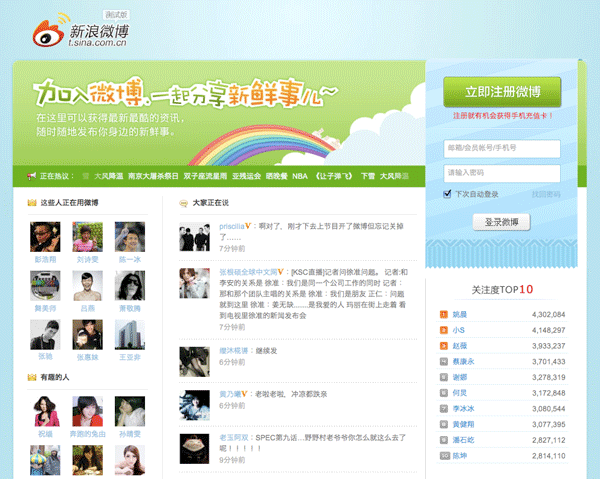
Twitter, which is also banned in China has seen several of its clones like Fanfou and Sina Weibo (screen capture above) grow exponentially. Sina Weibo, China’s largest microblogging site, has over 50 million registered users. China has the potential to be the heart of the Internet. First, she has to open up her Internet market and relax on control. But one can understand why China isn’t willing to do so. Besides political reasons, strict controls and high barrier of entry (or no entry) have seen native Chinese companies flourish. Could Renren and Sina Weibo attain the same success if Facebook and Twitter weren’t banned in China? Probably not.





Stay updated on the go with our mobile app.
Get latest insights with smoother, more personalized experience through TIA mobile app.