 Jonathan Chew · · 7 min read
Innovators of a feather flock together – meet the teams in Hatch

Everyone loves an “Avengers, assemble!” moment, but it only works when every individual or team plays a significant role to get to that point.
That’s exactly what Hatch, a Singaporean innovation center, is like.
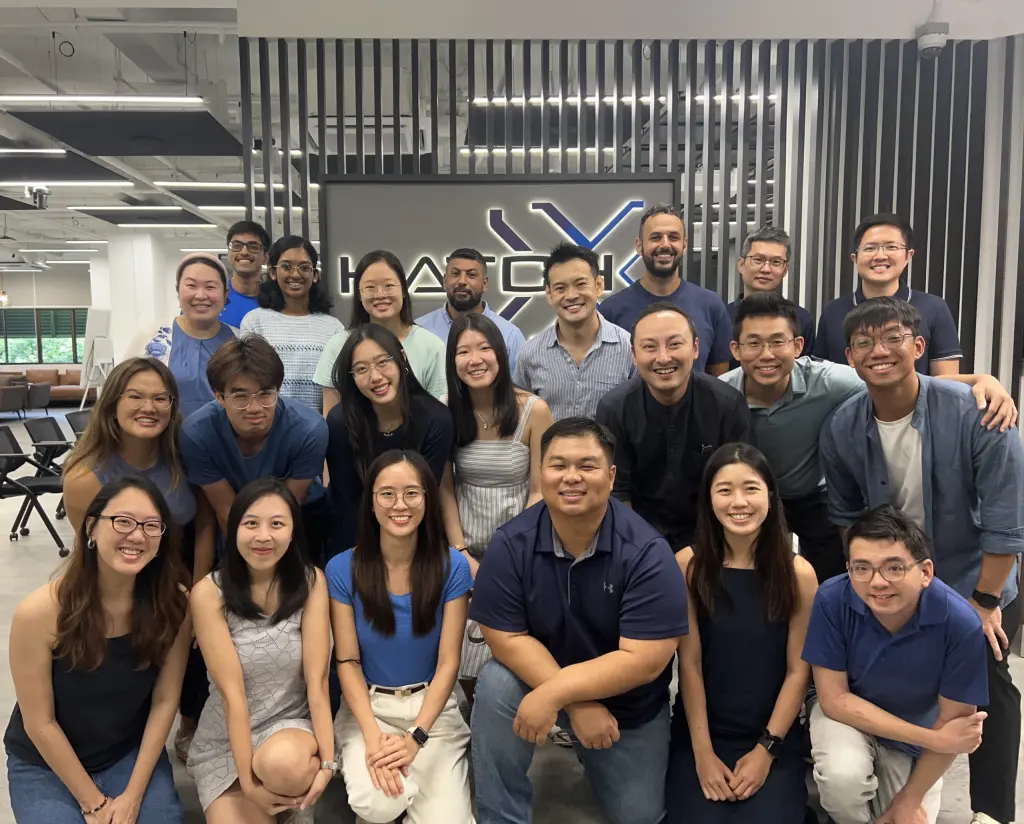
The team serving to improve Singapore’s public safety and security / Photo credit: Hatch
It was established in 2023 by the Home Team Science and Technology Agency – a statutory board of the Singapore government also known as HTX – in partnership with Knovel Engineering, a tech solutions provider, and Sosa, an open innovation company.
Hatch’s goal is to serve Singapore’s Home Team – which comprises the Ministry of Home Affairs and 10 agencies – by exploring new ways for startups and the government to collaborate through tech-enabled capabilities.
Often, this requires thinking out of the box to source for tech across multiple verticals and testing unexplored approaches. Startups can work directly with Home Team end users, which in turn supports Singapore’s public safety and security needs.
To that end, the center has various teams that work together to run open innovation programs. These teams serve different functions throughout the whole process, whether it’s scouting startups or organizing the programs.
“It’s really meaningful, and we invest a lot of resources through our teams to make it happen,” says Chiko David, program director at Hatch.
Making the cut
For every program that Hatch organizes, it connects with end users to bring in challenge statements. These challenge statements are built off pain points that public safety and security frontliners currently face. One example is improving location tracking of officers for the Singapore Police Force.
Prior to each program’s commencement, Hatch’s analyst team – which consists of David as well as Felicia Lim, Lior Eitan, Michelle Ng, and Joelle Ng – sits down with end users to explore the extent and content of the challenges they face, before reframing them as challenge statements for Hatch’s programs.
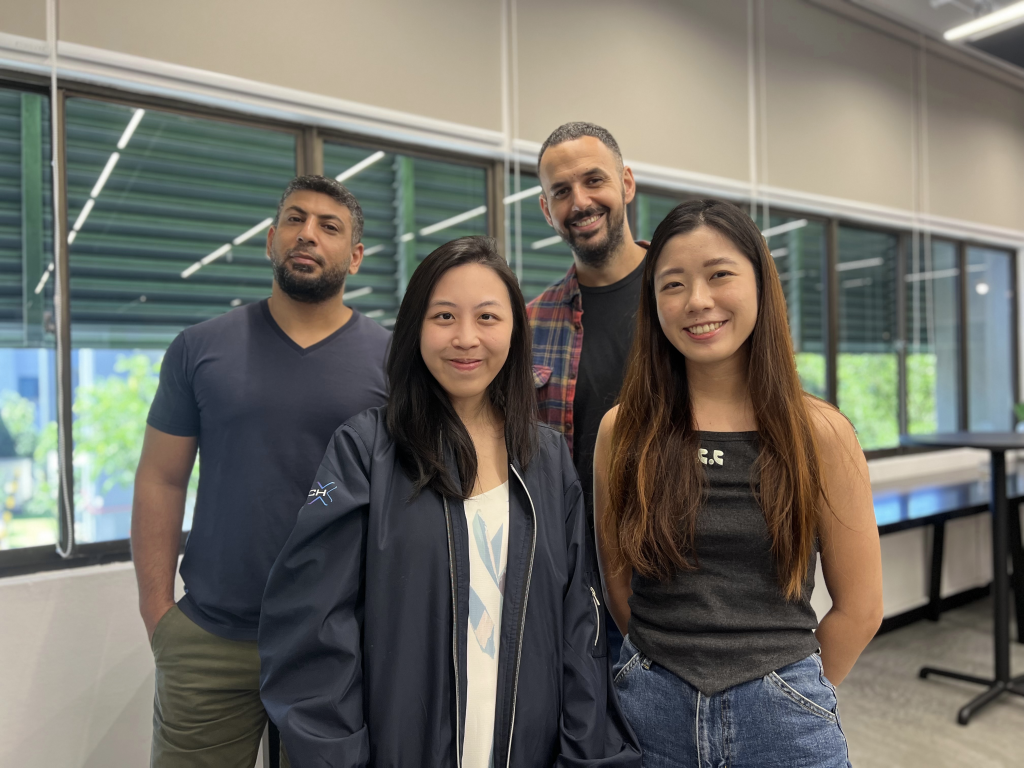
(From left) Lior Eitan, Michelle Ng, Chiko David, and Felicia Lim / Photo credit: Hatch
They also work with Hatch’s engagement team to experience end users’ operations first-hand and better understand their requirements.
“Once, we went on a Police Coast Guard vessel, as their challenge statement for us was about improving searches of commercial vessels,” Lim shares. “I saw how close and uncomfortable some of the vessels can be. Some of the steps were much steeper than I thought, which helped me consider the working environment of our Police Coast Guard.”
After suitable challenges are incorporated into Hatch’s programs, the team conducts open-call applications or reaches out to firms directly and shortlists potential startups. These businesses come from a wide range of countries and domains, including verticals outside public safety and security.
To ensure that the shortlisted candidates are well-suited to the end users’ needs, the analyst team considers the dual-use potential of each firm’s technologies.
For example, in a previous cohort of Dimension X, one of the Home Team end users wanted a solution that could better match spent bullets to firearms. Instead of just looking at solutions related to ballistics, the analyst team explored startups outside the security vertical with a domain-agnostic approach. In this case, it started looking at tech that could identify microscopic details on an object, even considering inviting startups involved in dentistry.
“We add value by looking for new ways of doing things,” Lim says.
A new dimension
One of the key programs organized by Hatch is Dimension X, which is run by a team of the same name. It consists of Wilson Ng, Gerald Chow, and Lydia He, who run two cohorts each year.
Through Dimension X, which is run directly by Hatch, public safety and security agencies can interact with startups that offer cutting-edge technologies and solutions in a rapidly evolving tech scene.
“This program helps us understand startups effectively and evaluate them while their technology is still relevant, and then begin joint development on solutions as soon as possible,” explains Ng, who’s the Dimension X program lead.
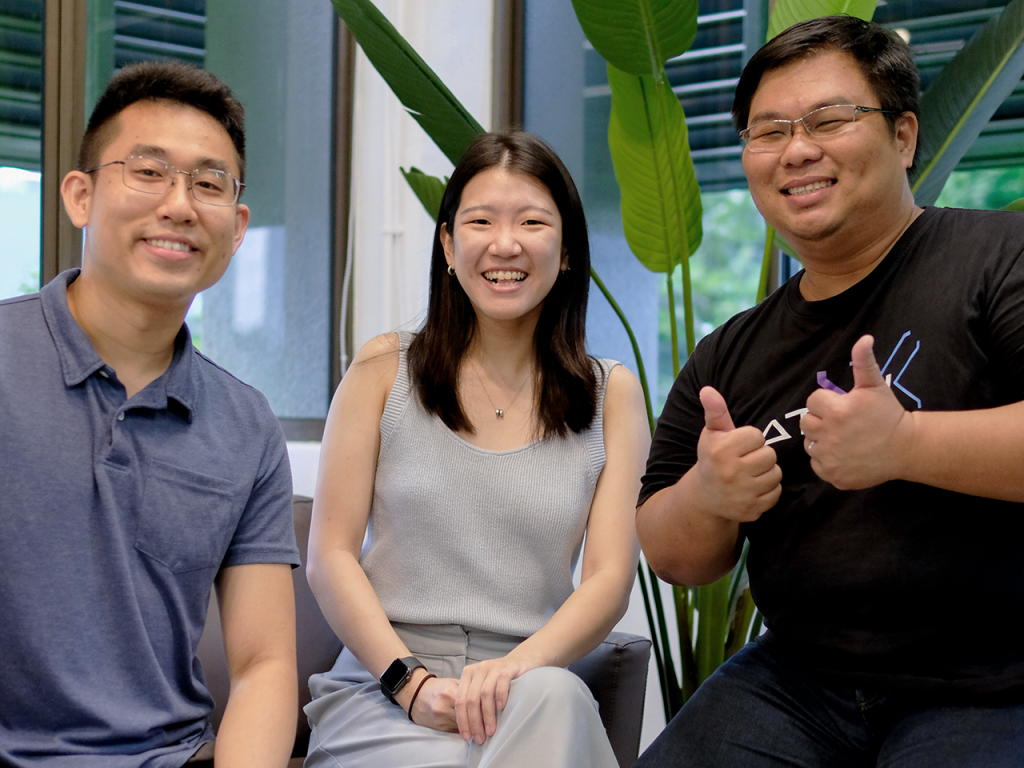
(From left) Gerald Chow, Lydia He, and Wilson Ng / Photo credit: Hatch
In addition to S$100,000 (US$75,000) in prize money, Hatch connects participating startups with a “Champion” – government end users or tech experts who issue the challenge statements. Because of their operational experience and understanding of technical requirements, Champions can offer startups insights and guidance when developing a solution, as well as access to operational environments where they can test prototypes.
For example, Manifold, a Hong Kong-based startup focused on AI-powered 3D scanning and modeling, worked with its Champion and their team from the Singapore Civil Defence Force (SCDF) to develop a proof of concept for investigating fires. Originally developed for the construction industry, Manifold’s handheld 3D scanning system uses AI to help SCDF better document fire scenes and enhance investigation procedures, yet another example of how dual-use technologies feature in Hatch’s programs.
Throughout the program, the Dimension X team balances the needs of end users and startups. This can involve helping startups test their solutions with end users, facilitating knowledge sharing of new and relevant tech to end users, checking in with both sides, and managing misalignments during the program.
For Chow, one of the most fulfilling moments of the role is seeing how the Champions collaborate with startups to tailor their solutions to operational requirements.
“In our first cohort, our Champions helped startups access some onsite testing locations that were relevant and realistic,” he recalls. “One startup used a defunct prison to test out the indoor flying capabilities of small drones.”
This innovation journey doesn’t stop after the proof of concept is out. Beyond the Dimension X program, startups will also receive opportunities to bring their solutions into operational trials.
“Our north star isn’t just about doing proofs of concept, but getting startups on the journey to fully deploying new capabilities to end users,” Ng adds.
Punching above their weight
Last but not least, Hatch’s innovation team continues to engage startups in their post-Dimension X journey, offering post-program support for implementing solutions.
This is so Hatch can ensure that after all the work invested through the center’s programs, their proof-of-concept doesn’t stall.
“Think of me as the middleman between startups and the end users,” says Loh Yi Ting, a member of the innovation team. “A lot of the startups we work with are based overseas, so it can be tough for them to figure out what local end users are like.”
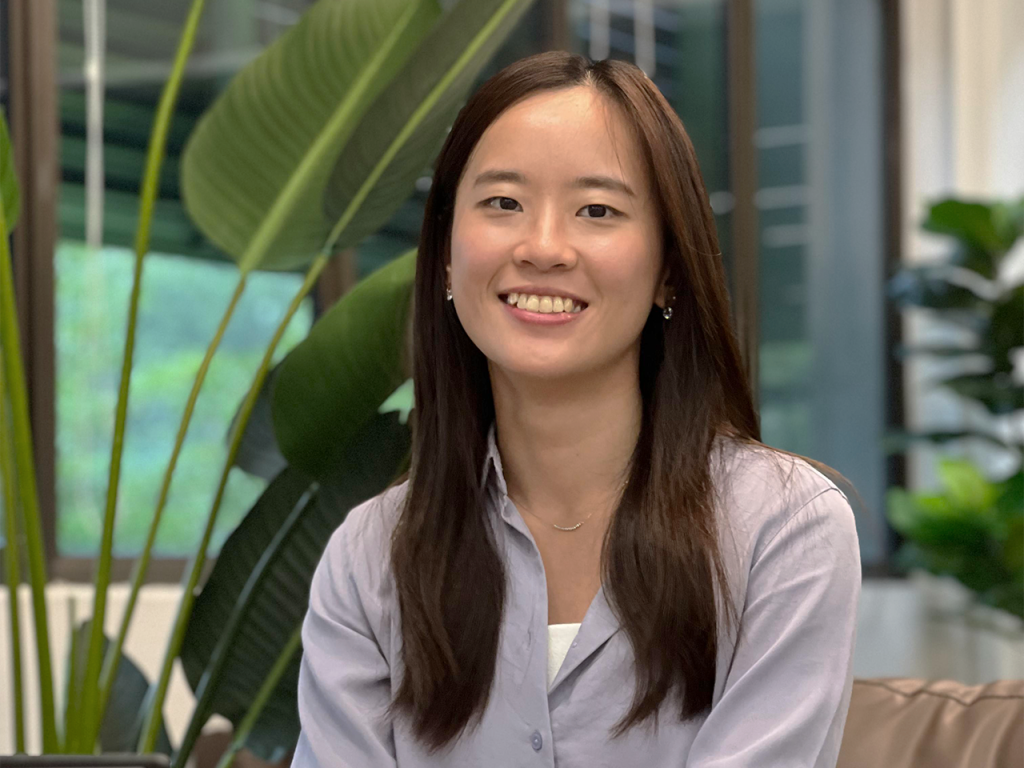
The innovation team’s Loh Yi Ting / Photo credit: Hatch
She adds that government end users may not have experience working with startups and request for a fixed list of deliverables, thinking of them like a large vendor. Loh helps them find a compromise through open discussions and rolling milestones so that startups – even in their limited capacity – can continue taking steps to implementing their innovations.
For example, her team recently helped Wonder Robotics, an Israel-based drone startup, secure a trial with HTX’s Robotics, Automation and Unmanned Systems unit. The project aims to tackle challenges such as safe landing during drone recoveries and in low-light environments, as well as GNSS-free localization of drones.
Loh facilitated discussions for both sides to scope out what a more comprehensive trial could look like.
“It’s better for both sides to focus on developing and testing new ideas together,” she says.
Hatching a new future for public security
With Hatch now running on full steam, its teams are coming together for their own “Avengers, assemble!” moment to ensure that the innovation center’s programs are a success.
Beyond the three teams mentioned above, the Dimension X team’s Ng shares that there’s also the engagement team, which liaises with the Home Team as well as local and international external innovation ecosystem partners; the Hatch & Match team, which runs an evergreen scouting program of the same name that curates startups for end users; and the marketing team, which promotes Hatch’s programs to the public.
“We can’t do the whole thing ourselves, so it’s all about how different teams at Hatch pass the baton on to each other,” he adds.
“Through programs like Dimension X and Hatch & Match, Hatch is able to tap into a global network of startups from unexpected sectors – all united by their potential to redefine public safety,” says Mok Shao Hong, center director of Hatch. “Together with our committed end users, program partners, and innovative startups, we’re not just meeting the needs of public safety – we’re propelling the future of public safety and security forward.”
Hatch is an innovation center driven by the mission to curate and accelerate dual-use technologies that enhance public safety and security. To find out more and apply for the Dimension X program, click here.
This content was produced by Tech in Asia Studios, which connects brands with Asia’s tech community. Learn more about partnering with Tech in Asia Studios.
Stay updated on the go with our mobile app.
Get latest insights with smoother, more personalized experience through TIA mobile app.
Recommended reads
 Tracking AI hiring in Singapore: OpenAI, Anthropic, and more
 Why ‘cheaper’ no longer wins dev deals for Vietnam
 Alibaba’s capex isn’t the full story
 Forget startups. Buy the business running on Excel
 Life’s a game, and AI agents are Animoca’s new play
 Indonesian AI startup goes global
 Forrest Li on scaling Sea, building smarter bots, and founder grit
 An AI assistant that joins sales calls and scores team skills
 Beyond the check: Why VCs need more than capital
 SGX’s CEO says it doesn’t need a unicorn to win





Editing by Winston Zhang, Stefanie Yeo, and Lorenzo Kyle Subido
(And yes, we’re serious about ethics and transparency. More information here.)






📅 Upcoming Events
22 October 2026
Payoneer x CSPN Summit 2026