 Samantha Cheh · · 6 min read
How ecommerce is propelling Southeast Asia’s payments scene to new heights

There was a time when buying things online meant some kind of interaction with the outside world. Customers would have to go down to an ATM to make a bank transfer to the merchant or count out bills and coins to pay the delivery driver who showed up at the door.
However, all this has changed. When customers shop online, they can now make payments digitally, often with just a few taps on a smartphone, and delivery drivers can just drop off the package at their doorstep.

Photo credit: tuiphotoengineer / 123RF
“We’ve seen exponential growth [in the last decade] in Southeast Asia in terms of payments innovation,” says Agnes Chua, executive director of business and product development in Southeast Asia for payments platform 2C2P. “There are now more ways to pay than there have ever been before.”
Digital wallets, for one, have become increasingly common in the region, and buy now, pay later (BNPL) schemes have also gained popularity in countries with traditionally low financial services penetration. At the same time, hyperlocal real-time payments (RTP) solutions have become widespread throughout the region thanks to the development of services such as Singapore’s PayNow, Malaysia’s DuitNow, and Thailand’s PromptPay.
“Covid-19 expedited a reset of the whole system,” says Chua. “Digital wallets and QR codes were already becoming part of the new normal, but the pandemic accelerated all of it, with contactless payments seeing user bases grow by about 20%.”
That said, digital payments could not have arrived at its current level of adoption without the support of Southeast Asia’s thriving ecommerce industry.
The ecommerce engine behind payments
According to an International Data Corporation (IDC) report commissioned by 2C2P, ecommerce spending in Southeast Asia is expected to rise by 162% over the next three years. And digital payments are anticipated to make up 91% of ecommerce payments by 2025, up from 80% in 2020.
“Online shopping has become the norm for consumers of all ages,” says Chua. “Ecommerce is no longer an afterthought but a core business operation, and that’s especially true for Southeast Asia where ecommerce growth is comparable to major internet markets like South Korea and Japan.”

Agnes Chua, executive director of business and product development in Southeast Asia at 2C2P / Photo credit: 2C2P
The IDC report also raised a key point: the success of ecommerce is intertwined with the region’s developing payments landscape. Digital payment methods have made shopping online even more seamless and convenient for consumers, which has led users to move away from more conventional formats like cash on delivery. Merchants, on the other hand, are seeking ways to grow by tapping into the broader pool of customers that are now within reach thanks to the availability of diverse payment methods.
“The market demand has become more complex, so merchants are increasingly turning to payment partners who can help them grow and stand out in a crowded marketplace,” says Chua.
In her view, merchants are now expecting to partner with “one-stop shops” that can unite payments with accounting, operations, and marketing services, as well as provide data-driven insights into their business’ performance.
“That’s why [these merchants are] now considering a wider variety of payment options to optimize opportunities in the region beyond what Visa and Mastercard can offer,” she adds.
Ecommerce developments driving payments
The expectations for these two sectors will get even bigger in the face of the new trends that are coming up in the region’s ecommerce space.
Cross-border ecommerce, for instance, has recently risen in prominence. Previously, high costs and long settlement times kept many consumers from making international transactions – but that’s already changing.
“The regional ecosystem has benefited from more bilateral and regional cross-border partnerships like the ASEAN Cross-Border Payments Interoperability Network initiative that encourage member-countries to implement QR and RTP payment systems,” Chua says.
With these initiatives, cross-border ecommerce in Southeast Asia currently accounts for over 40% of all ecommerce transactions in the region – a number that is set to increase even further as cheaper payments become available and more sophisticated logistics networks are developed. Merchants, as a result, are no longer limited to selling in local markets and can sell directly to consumers in neighboring countries, which means they will need to be able to manage a larger variety of payment options for consumers.
Another trend that will drive digital payments is the rise of social selling, a form of ecommerce marketing that relies on livestreams and social media platform-based campaigns to directly sell to consumers. Social sellers often operate through platforms, such as Facebook, WhatsApp, and Instagram, and seek out options that allow them to integrate payments easily into their existing processes.
Additionally, the borderless nature of social media means that these sellers can also attract customers outside their home markets, creating a need for them to be able to accept a greater variety of payment options.
“We’re now seeing more social media platforms provide the tools and infrastructure to support secure online transactions for social sellers,” Chua says. “For merchants who want to engage in cross-border business, payment options that enable international access are crucial, especially in this part of the world.”
Seamless payment support for merchants
However, while cross-border ecommerce and social selling have created new opportunities for merchants, many of these sellers still lack the skills and knowledge needed to make the most of the different payment options at their disposal.
For instance, the sheer diversity of possible payment methods on offer could easily overwhelm them, which is why payment firms have developed solutions for this specific issue.
2C2P, for one, focuses on offering “seamless and streamlined omnichannel experiences for merchants through a single point of integration,” says Chua.
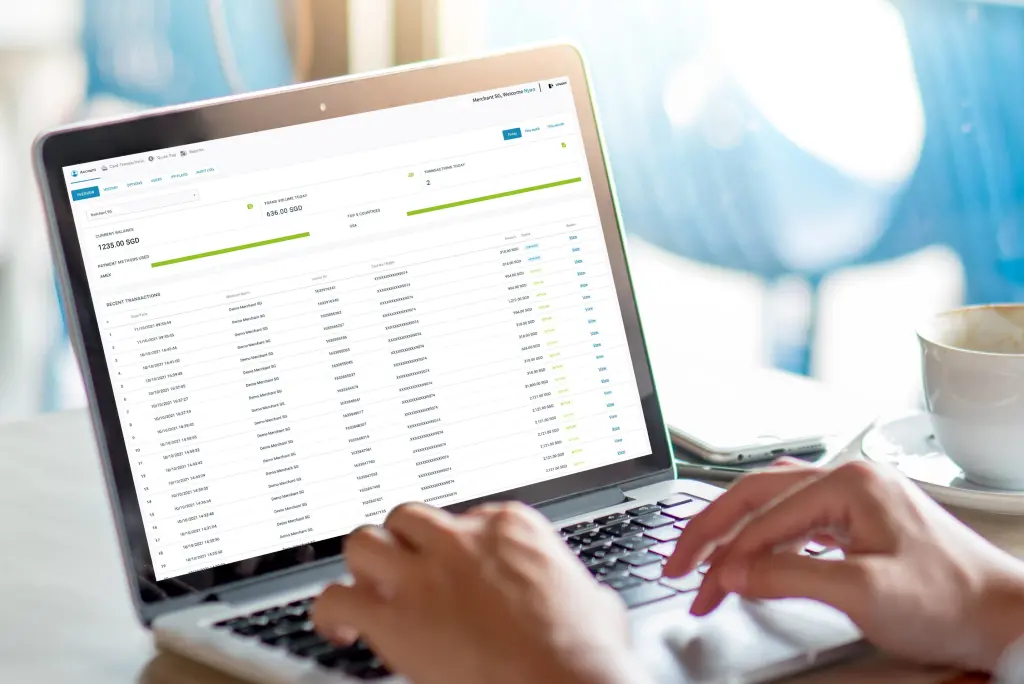
Photo credit: 2C2P
What this means is that merchants don’t have to worry about what specific payment methods they should accept or how to manage the integrations, as the 2C2P platform consolidates the best options into a single point, which allows customers to pay and helps merchants process the transactions on the back end.
Service providers such as 2C2P also allow sellers to make the latest payment methods available to customers by partnering with upcoming players in the space.
“2C2P is constantly looking at the latest payment trends so our customers get a unique and popular solution,” explains Chua. She points to 2C2P’s recent partnerships with BNPL provider Hoolah and Shopee Pay as examples of this in action.
“We watch the payments space very closely to see which are the emerging platforms in each country that we have a presence in,” she adds.
Additionally, as merchants continue to adopt more value-added, customer-centric features, payment platforms like 2C2P will be central in supporting good customer experiences.
”Compared to traditional forms of payments, digital payments have the potential to enrich customer relationships, user experiences, scale businesses, and transform communities by simplifying end transactions,” she says.
To the future of ecommerce payments
On the road ahead, Chua expects that ecommerce payments will evolve to enhance the customer experience even further.
“Payments has the potential to enrich the customer relationship, create and enhance user experience, and scale the business,” she says.
In her view, payments could come in to offer value-added services for ecommerce consumers, such as multicurrency conversion and charge-back processes for digital wallets, which is something not currently available in the market. She also anticipates greater support for loyalty and rewards programs, where customers can easily redeem points to offset their purchases across multiple platforms, instead of having to shop on a specific site.
Additionally, 2C2P is also keeping a close eye on new forms of payment such as central bank digital currencies (CBDCs).
“Around 70%-80% of the central banks have indicated that they are involved in developing CBDC-related projects,” Chua says, pointing to examples like Thailand’s retail CBDC project and Singapore’s Project Ubin.
One thing is for certain: Payments will continue to grow alongside ecommerce, especially as the latter becomes the first point of sale for many businesses.
“Ecommerce is definitely going to keep growing, and that growth will be exponential,” concludes Chua. “The digital experience will be a core focus for all merchants right now.”
2C2P is a leading payments platform that aims to help ecommerce merchants take advantage of the opportunities posed by the outsized growth of cross-border ecommerce and social selling. With a single point of integration, 2C2P enables merchants to offer their customers seamless and convenient access to a range of payment options.
Learn more about the state of Southeast Asia’s payments landscape through IDC’s report, commissioned by 2C2P, here.
This content was produced by Tech in Asia Studios, which connects brands with Asia’s tech community. Learn more about partnering with Tech in Asia Studios.
Stay updated on the go with our mobile app.
Get latest insights with smoother, more personalized experience through TIA mobile app.
Recommended reads
 Mortgage fintech: Indonesia’s next big consumer lending space
 Funding Societies swipes right on payments in SEA
 How credit analysis can help Tokopedia score against ecommerce rivals
 Behind Ant Group’s revived SEA ambitions
 QRIS, BI Fast propel banks’ fight against e-wallets in Indonesia
 Grocery tech firm Ocado’s SEA entry could shake up the scene
 Shein’s rapid rise in Southeast Asia could topple ecommerce giants
 Examining Alfamart’s and Indomaret’s digital moves
 Why Southeast Asia’s ecommerce players should prioritize customer loyalty
 Philippine fintech firm partners with Alipay+





Editing by Stefanie Yeo, Nathaniel Fetalvero, and Jaclyn Tiu
(And yes, we’re serious about ethics and transparency. More information here.)




