J.T. Quigley · · 7 min read
Here’s how a Finnish startup landed $10M from Baidu. In a McDonald’s
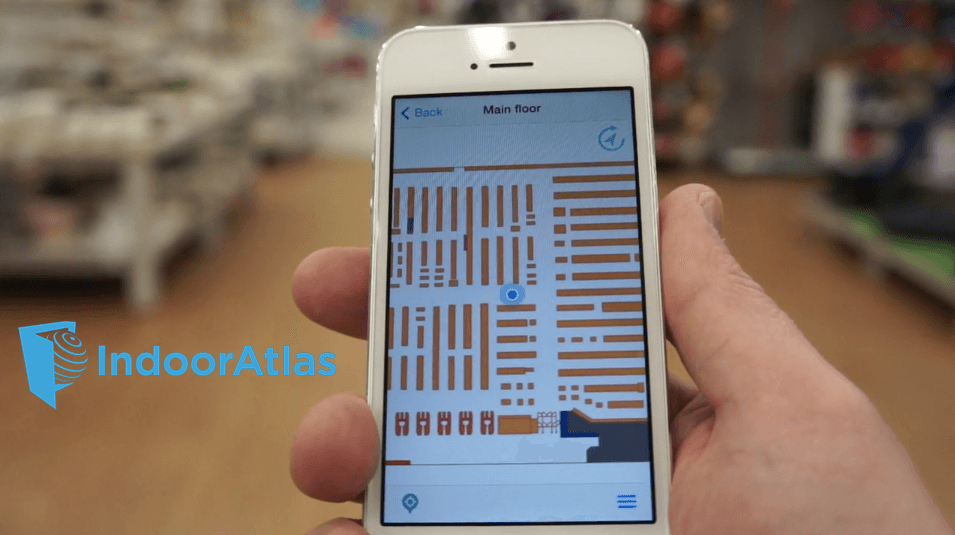
Eight-figure investment deals are often inked in boardrooms with long mahogany desks or high-floor offices with a view of the bustling metropolis below. It’s hard to imagine such a large amount of money changing hands at a place like McDonald’s, with sticky soda rings and French fry salt lingering on the plastic table tops.
If said McDonald’s was located inside a Walmart, you might expect a handshake agreement over a nickel bag of pot or a rusty old Chevrolet – not a US$10 million deal pairing European tech geeks with one of China’s top tech titans.
But that’s exactly where IndoorAtlas, a Finnish startup now headquartered in Silicon Valley, landed Chinese search giant Baidu’s first ever investment in a European venture. And this is how it went down.
Magnetic mapping
As you can probably infer from its name, IndoorAtlas wants to become Google Maps for shopping centers, train stations, stadiums, and any other large, enclosed structures. In that context, a Walmart meeting might not sound too far-fetched. Understanding how the startup’s tech works makes the decision clearer.
IndoorAtlas uses a smartphone’s existing magnometer – the sensor that allows the compass function to work – to detect variations in the surrounding geomagnetic field.
“Every building has unique magnetic field based on its size, shape, and interaction [with surrounding] buildings,” Wibe Wagemans, IndoorAtlas’ president, tells Tech in Asia. “Imagine the magnetic landscape as mountains and valleys. A single measurement doesn’t work, but as you move around [the magnometer] makes observations from multiple angles and remembers features like hallways, doors, and shelves.”
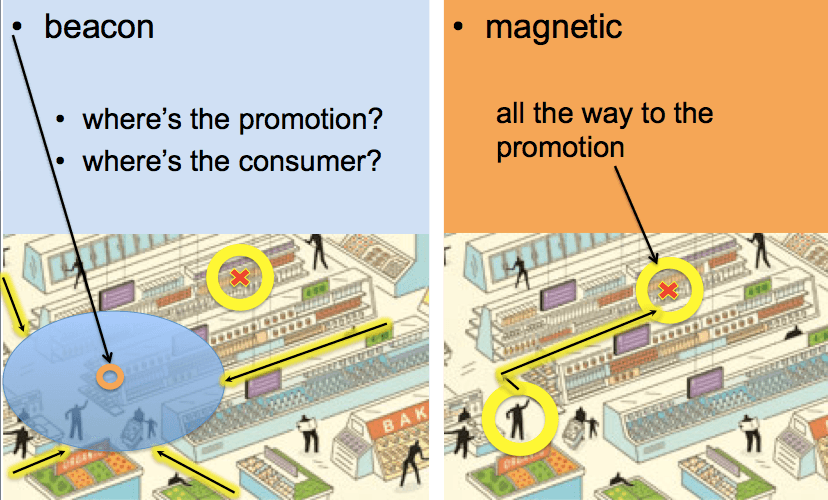
In the same way that Google deploys Street View cars to visually map public roads, IndoorAtlas’ business partners send local teams to walk through shopping malls and other indoor spaces to generate these geomagnetic maps – a process the startup calls “fingerprinting.” IndoorAtlas claims that its magnetic mapping tech – complemented by dead reckoning, sensor fusion, wifi, and Bluetooth – is accurate to between one and two meters.
Not only can IndoorAtlas tell you where specific stores are in a cramped shopping mall, but the startup envisions being able to tell users where specific items are located within the store. Want to get in and out of the grocery store as quick as possible? The IndoorAtlas app could show you the quickest route to the bread, milk, eggs, and cash register. Forget an iBeacon promotion saying there’s a sale at store x. IndoorAtlas will direct you to the store, then straight to the sale rack.
“[Mapping] multiple floors is easy for magnetic tech,” Wagemans says. “A single floor with high ceilings [like Walmart] makes it harder, really wide aisles also make it harder, so it was the perfect testing ground to really show IndoorAtlas’ capabilities.”
“Anyone can do a demo in a small office by installing lots of beacons and routers, but aisle after aisle in a Walmart without any infrastructure – no one else can do that,” he adds.
Greeted by a giant
McDonald’s coffee
Korea, Japan, and Singapore
Every building in the world





Stay updated on the go with our mobile app.
Get latest insights with smoother, more personalized experience through TIA mobile app.