Apple’s iBooks and iTunes Movies stores are now unavailable to users within China, as the country’s regulators tighten their grip over the media that’s accessible by citizens of the People’s Republic.
The stores weren’t censored in the conventional sense. Normally, when we say that China has censored a foreign company’s website or media, it means that internet connections to that site have been blocked – such as Facebook, YouTube, and the like.
But in this case, Apple had jumped through all of the government’s hoops, and had gone legit in China. The iBooks and iTunes Movie stores were registered with the State Administration of Press, Publication, Radio, Film, and Television (the unpronounceable SAPPRFT), and had approval to operate in the country – until, suddenly, they didn’t.
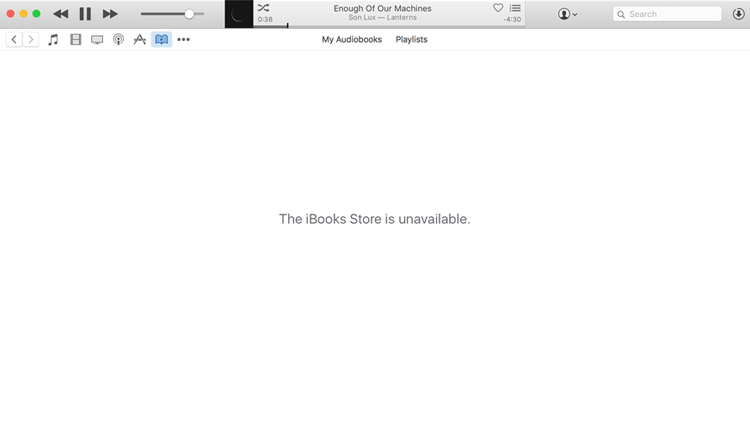
Screenshot of the iBooks store in China today. Image credit: Tech in Asia.
According to the New York Times, SAPPRFT demanded Apple shut the stores, and reps at Apple are scrambling to get the libraries available again.
Push and pull
Apple’s media offerings in China have always been different from the rest of the world. Its iBooks and Movies stores just launched last September and offered a selection of products specially curated for China.
“Curated” means that some items were censored, but it also means that a tremendous number of Chinese-language material was added to both stores. Chinese versions of iTunes U, the App Store, and Apple’s podcasts market are also available in the mainland.
The iTunes Music store has never opened in China, but the Apple Music streaming service launched at the same time as iBooks and iTunes Movies did last year.
Running any kind of media distribution network in China is a recipe for trouble.
Running any kind of media distribution network in China is a recipe for trouble. Just this week, SAPPRFT cracked down on a viral video star – certainly not a good sign for a foreign company selling books and movies in the strictly-regulated country.
Also earlier this week, in an American congressional testimony, Apple’s general counsel said that the company had refused Chinese requests to turn over its source code.
Apple’s is in a weird position in China – on one hand, it is big enough to deny government requests for some data and still operate confidently within the country. On the other hand, its media distribution channels are only a snap SAPPRFT decision away from being knocked offline.
The iBooks and iTunes Movie stores were reportedly closed down last week, so the blocking is not likely related to the testimony. We may never know why the state abruptly demanded Apple close up the stores.
If they come back online soon, we’ll have to see if any specific material is conspicuously unavailable for download.





Stay updated on the go with our mobile app.
Get latest insights with smoother, more personalized experience through TIA mobile app.