Kylee McIntyre · · 5 min read
India’s street food is to die for. These startups want to bring it to your phone

Photo credit: Ewan Munro.
You’re in the kind of heat that makes you heavy and the kind of tired that makes your limbs burn. You’re traveling and cursing your decision to take the self-guided walking tour the internet suggested to you, because you don’t know how long it’s been, except that it’s been too long. That reminds you – you don’t know what time it is. You check your watch, and lunchtime was two hours ago. At that moment, right as you’re realizing how deeply hungry you are, a breeze hits you that momentarily relieves the heat, and with it comes the aroma of chicken and spices.
Your mouth waters – you have no choice but to follow it. There’s something savory there, something tangy with just a hint of spice. The breeze is making you feel seemingly lighter than you have been in years, and as you follow the smell of promise and redemption, the street food cart comes into place, huge pieces of meat and a rainbow of vegetables roasting on sticks, just for you. You know, at that moment, that the hours of heat and your sore feet have been mere trials. You were destined to come to this center of deliciousness.
Now, imagine that this entire experience can be minimized to fit into the palm of your hand.
Street food is common all over India, affordable, and comes in several varieties, but it’s a disorganized sector. Vendors tend to operate independently from carts, and can move their stalls around as they wish. Unless you’re a city local, it can be hard to find good – and clean – street food. And as street cuisine varies from city to city, it can be hard for hungry travelers to find the perfect novelty to whet their appetite.
This kind of thinking led Maheima Kapur to look at street food as good potential for a startup. To her, street food is a great way to get to know a city, and in her opinion, the best way to get to know these food places is to get in touch with locals.
“If I was in a city where I didn’t have friends – or I didn’t have foodie friends – then finding the perfect place to eat local, regular street food was not easy,” she tells Tech in Asia.
Her solution – to map everything out for travelers, or even locals who lived on the other side of the city- led to the launch of Talking Street. The website went into pilot mode as a blog in July 2015. It now covers over 300 street food joints in Bangalore and Goa. Maheima, her team, and locals within the target cities help her curate the site for factors like popularity and hygiene. They also include reviews and photographs about the food on the site.
Rohit Gehe and Armaan Kapoor came into the street food startup scene looking to serve hungry millennials looking for cheap and fun places to eat. Apart from that, they also wanted to make street side sellers adept at using technology. The idea for their app Samoza, currently available on Google Play, came about seven months ago as a result of a hungry idea and some mentor-driven market research by the founders. The app is crowdsourced, meaning that users can add street food stalls themselves and rate them by quality and hygiene.
They launched Samoza at the beginning of this month.
See: Swiggy cooks up $35m funding, proves India’s food startups aren’t toxic
Business on the streets
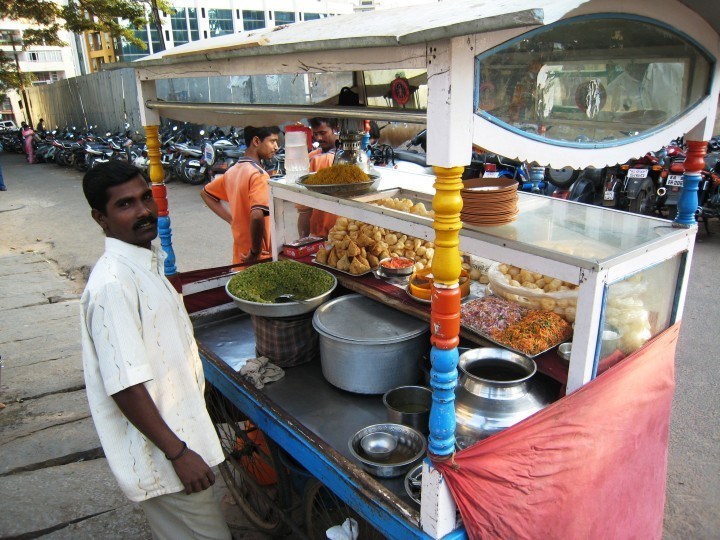
Photo credit: Charles Haynes.
A unorganized sector means that the journey to finding a workable business model is challenging, to say the least.
Sunny side-up





Stay updated on the go with our mobile app.
Get latest insights with smoother, more personalized experience through TIA mobile app.