- Premium Content It takes our newsroom weeks - if not months - to investigate and produce stories for our premium content. You can’t find them anywhere else.
 Glenn Kaonang · · 7 min read
Write a prompt, create a video game. Will players bite?
PixVerse wants to change how people enjoy video games.
Instead of playing one created by professional developers using software like Unreal Engine or Unity, users tell PixVerse’s AI model what they want, and it builds the game for them.
Tech in Asia was shown a demo of this idea from the Singapore-based startup, which announced in July that it’s developing a game creation tool on top of its video generation model. Unlike a conventional game that’s programmed to translate player’s inputs into a set of predetermined actions, PixVerse generates the visuals, dialogue, and sounds in response to those inputs.
“You just say what you want. However long it is, however nonsense it is, it doesn’t matter,” says Qiushi Li, Tencent’s former head of publishing who now leads PixVerse’s video game division. “Our model defines what is true and what cannot be realized, and then generates the game for you to play.”
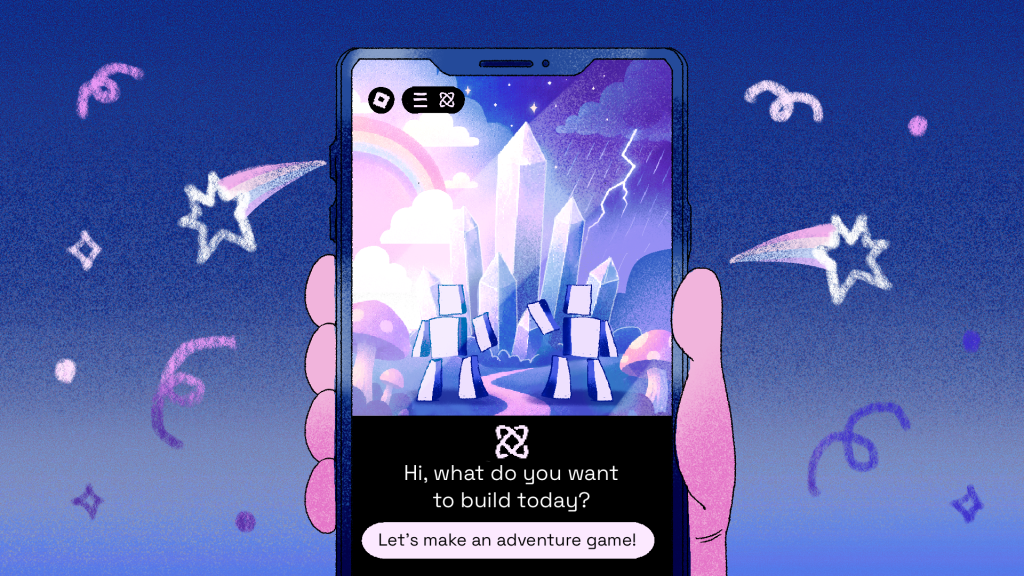
Image credit: Ulla
Gaming experts interviewed by Tech in Asia see a problem with this proposal: making it easy to generate something playable doesn’t make the result fun. They questioned whether users would return to these games, much less play them.
AI companies have been aggressively gunning for the modern entertainment trifecta: music, movies, and video games. But while AI has gained a foothold in the first two areas, the same can’t be said for the third.
That’s because AI is largely used in the concept and prototype phases of video game development rather than in the entire production pipeline. In the music and film industry, broader use of AI has led to fully AI-generated songs on Spotify and fully AI-generated movies making it to the Cannes Film Festival.
According to Moritz Baier-Lentz, OpenAI’s senior advisor who also invests privately in the gaming and AI sectors, AI game creation tools today can be split into two categories.
The first uses the tech to automate conventional game development. AI can generate characters, scenery, rules, and code, but the result is still a traditional video game assembled before it is played. An example is Roblox’s Build, a mobile app that lets users turn text prompts into a playable game within the platform.
The second, which PixVerse falls under, involves what are commonly called world models. Instead of relying on conventional software to calculate what happens and then display it, the AI predicts and generates the next scene in response to the player’s actions. Baier-Lentz describes the output as “a video that changes itself” as someone plays.
Easier to build, harder to matter
Roblox announced Build on July 16 and opened it to public testing on July 28, initially in New Zealand and only for age-verified users aged nine and above. It plans to expand availability over the following months.
PixVerse’s effort is earlier and smaller in scale. Its games division has roughly a dozen people, according to Li, and the tool currently supports only turn-based strategy and role-playing games. Each play session is limited to 10 minutes.
See also: The world model ambition growing inside a SG AI video startup
Who pays, and for what?
Disposable, or worth returning to?
Stay ahead in Asia’s tech landscape
This is premium content. Subscribe to read the full story.
Roblox and PixVerse are taking AI game creation straight to players. Our reporting shows why easier creation may not produce games worth playing.
We know this is not ideal. ⌛ Sign up in 20 seconds. Cancel anytime.
Our subscriber community includes professionals from these companies:





Stay updated on the go with our mobile app.
Get latest insights with smoother, more personalized experience through TIA mobile app.