Sarah Dai · · 3 min read
In China, AI can now screen newborns for genetic disorders
Chinese scholars have developed AI-powered software that is geared to help screen newborns for genetic disorders through a facial scan.
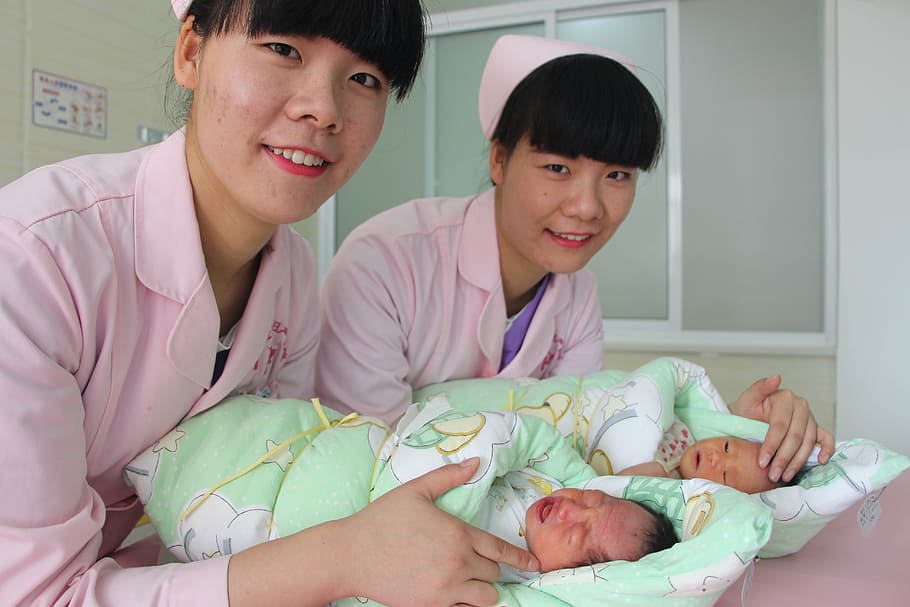
Photo credit: Piqsels
Researchers from the Shanghai Children’s Medical Center and the Shanghai Paediatric Center said their new assistive diagnosis tool – which they described as the first of its kind – was designed to detect more than 100 disorders with distinctive facial features, including Cornelia de Lange syndrome (CdLS) and Down syndrome, according to a report by state-owned China News Service on Friday.
They said their AI-enabled tool would be used for initial screening, helping avoid missed or wrong diagnosis of newborns.
Prominent facial features of children with CdLS, for example, include thin eyebrows that often meet at the midline, long eyelashes, short upturned nose, thin downturned lips, low-set ears, and high-arched palate or cleft palate, according to the CdLS Foundation. Children with Down syndrome may have tiny white spots in the colored part of their eyes, flatter faces, a tongue that hangs out of the mouth, and eyes shaped like almonds or shaped in a way that is not typical for their ethnic group.
Powered by so-called deep-learning algorithms, the new tool will be used to review past medical records for facial profile patterns and make use of that data to help diagnose new cases.
The software has already been put on a trial run in Shanghai, where pediatricians upload and submit photographs or video taken from patients for screening of suspected disorders, according to the report.
Diagnosis and early detection are among the most highly prized healthcare applications of AI in China. While it is the world’s second-largest economy, China is known for shortages in medical resources and long waiting queues at major hospitals. AI has already been put to use across the country to predict flu outbreaks, check for chronic diseases, and diagnose cases of cancer.
This latest development in using AI and facial recognition for health care comes as the Trump administration added eight companies, including China’s AI national champions SenseTime Group and Megvii Technology, to Washington’s trade blacklist for their purported roles in the suppression of Uygur minorities in Xinjiang.
A number of other large Chinese companies are making headway in using AI for health care. In July of this year, Chinese conglomerate Ping An Insurance launched AskBob, an AI-based medical decision support tool that can provide precise diagnosis and treatment recommendations for more than 1,500 diseases. This tool was initially introduced in Singapore through collaborations with SingHealth and the National University Health System.
The US Food and Drug Administration expects AI technologies to transform health care by “deriving new and important insights” from the vast amount of data generated every day. It predicted “high-value applications” would be made in various areas, including early disease detection, identification of new observations or patterns of human physiology, and development of personalized therapeutics.
Visit SCMP.com for the latest China tech news.
Copyright (c) 2019. South China Morning Post Publishers Ltd. All rights reserved.
Editing by Charmaine de Lazo





Stay updated on the go with our mobile app.
Get latest insights with smoother, more personalized experience through TIA mobile app.