Kaya Domingo · · 5 min read
How Tokopedia democratizes logistics for Indonesian businesses

When the world was put in lockdown, the already complicated cross-border supply chain was in dire straits. Matching supply to demand became even more challenging, and even simple deliveries were troublesome. Logistics companies had to find ways around overseas sourcing to meet consumer demands, and many turned to new technologies to optimize processes and strengthen supply chains amid the chaos.
In Asia, Indonesia was one of the worst hit. Even before the pandemic, logistics in a nation made up of thousands of islands proved tricky, as shipping costs and durations to and from one island to another vary extensively.
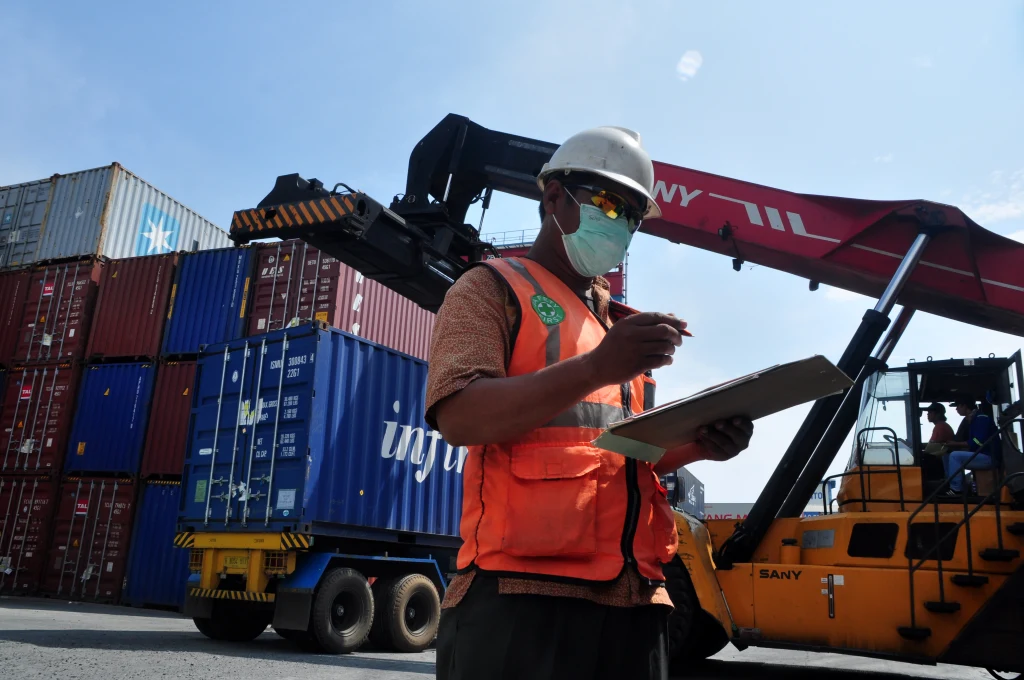
A logistics yard at Jakarta’s Tanjung Priok port / Photo credit: 123rf
Case in point, the average consumer residing in Indonesia’s small islands may find it cheaper and more effective to buy online from sellers in Hong Kong or China, something that puts local Indonesian businesses in jeopardy. Products from abroad are usually transported on ships directly to the warehouse closest to the consumer, instead of being passed along from warehouse to warehouse on trucks in a literal game of pass the parcel.
And given that quality products and speedy deliveries are one of the factors to success for small business owners in Indonesia, trying to get items to consumers on time is crucial. But for these sellers, that’s a massive challenge: One day, you have a handful of orders, and the next, it can spike up to two to three times of the daily volume. Orders are also never concrete, as consumers can change their minds.
Not all small businesses are well-equipped to handle this unpredictability, especially now with Covid-19 in the picture.
Changing the status quo
Fulfillment service TokoCabang, which was introduced by Indonesian technology company Tokopedia in 2019, is gunning to remove operational barriers for sellers in logistics and fulfillment. It allows merchants on its platform to store their products in a portable network of fulfillment centers and ties up with various logistics partners to support sellers in delivering those products to consumers.
By doing so, TokoCabang helps transform fixed costs into variable ones. Previously, merchants would have to hire enough staff to manage large spikes in order volume, even though they weren’t certain of when these spikes would occur.

Photo credit: Tokopedia
Using the service instead allows them to offload the responsibility of processing and fulfilling orders to TokoCabang, enabling them to focus on improving products or growing the business.
“If you manage operations out of a small warehouse or your living room, and business is growing greater than what your current facility permits, TokoCabang is there to help you offload those responsibilities,” explains Erwin Saputra, associate vice president of fulfillment at Tokopedia.
Merchants on Tokopedia also have access to tools that make their operations more efficient and allow them to manage their inventory better.
Among other things, TokoCabang’s inventory management and analytics tools give retailers an overview of information such as what inventory is stored at the warehouse, how long they’ve been stored there, and which cities orders are coming from. Users can also match supply to demand by placing items at warehouses near where consumers are.

Erwin Saputra, associate vice president of fulfillment at Tokopedia / Photo credit: Tokopedia
For customers, TokoCabang’s goal is simple: an equal logistics experience across Indonesia.
“It doesn’t matter if you’re a consumer in Medan or Makassar. Eventually, you should be seeing the same selection of products and be able to get these products at consistent speeds and reasonable costs,” says Saputra.
Bypassing roadblocks
TokoCabang fulfills orders quicker and more accurately than the top 1% of sellers who handle their own fulfillment processes, claims Saputra.
However, in its early days, the fulfillment service had some teething problems. The company promised sellers same-day deliveries but had issues in making these shipments, especially when big campaigns were in progress. Maintaining stock accuracy was also difficult, as TokoCabang tried to support all the different campaigns sellers were pushing out.
This was where Tokopedia’s expertise in technology played a role. By merging analytics and other tools such as inventory management systems with the physical aspect of logistics, it was able to consistently grow, scale, and improve TokoCabang’s systems.
“Over time, especially over the past year, we’ve improved the warehouse system and the integration with Tokopedia, and we’ve upgraded our campaign system as well,” says Saputra.
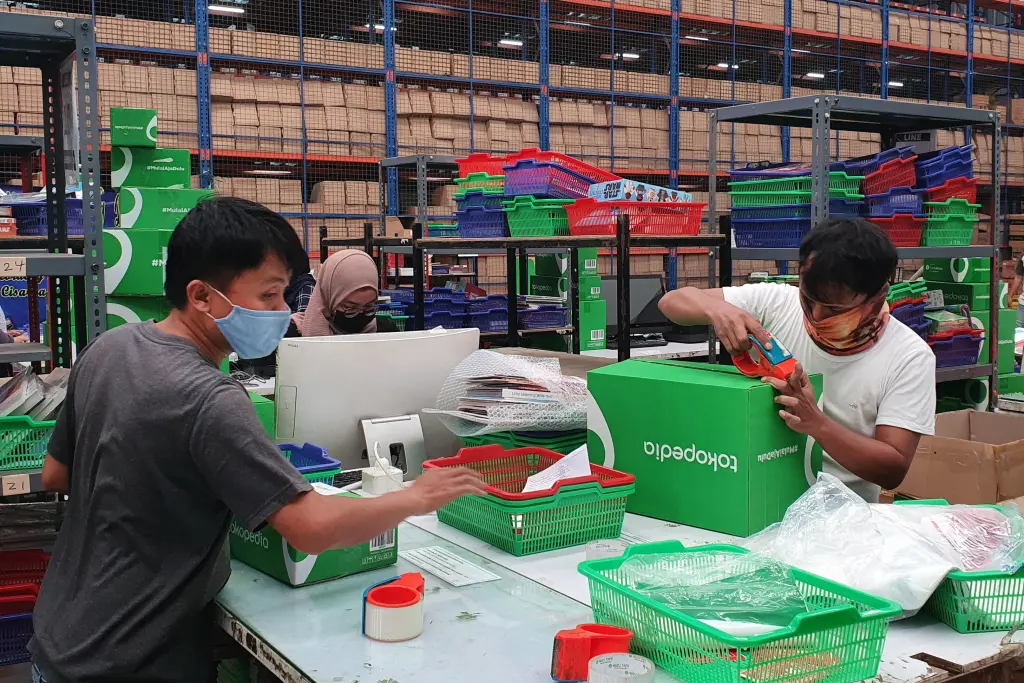
Photo credit: Tokopedia
Today, nearly all orders made on Tokopedia before 4 pm can be fulfilled on the same day, he shares. Consumers are able to receive their orders via ride-hailing courier services, which are made possible through TokoCabang’s fulfillment centers.
With the pandemic, the service has seen more merchants gravitating to its platform to address their logistical challenges. Saputra shares that orders processed by TokoCabang have more than doubled from the first quarter of 2020. The service has also been able to keep pace with the demands of ecommerce despite changes caused by Covid-19, such as when one of the largest book fairs in Indonesia moved online last year.
More than just faster shipments, retailers are seeing other benefits of using TokoCabang.
“[One mobile accessories distributor] was able to expand his business and build a brand presence in cities like Bandung, Palembang, Medan, Makassar and Surabaya,” says Saputra. “They could also process and deliver orders to customers in those cities on the same day, just like they could in Jakarta.”
What’s next on the journey
Since its launch, TokoCabang has seen tremendous business growth. Saputra says it’s all thanks to the technology it uses to serve sellers – something it’s continuously working on elevating to optimize supply and demand.
“I would say we closed last year having achieved operational and technological improvements at a standard that we can be proud of,” says Saputra.
The next part of the journey? Helping merchants on their path to expand their businesses.
“We want to democratize commerce through technology in Indonesia by enabling consumers to get items faster, while also empowering our sellers by letting them know where they may have further business opportunities,” he adds.
In the current quarter, Tokopedia will launch a free shipping program with quicker deliveries than what Tokopedia currently offers. Items leaving the TokoCabang warehouse will also be eligible for free one-day delivery for intracity shipments and two-day delivery for major cities in Indonesia.
“When consumers across Indonesia buy something that’s fulfilled by TokoCabang, they will get a superior end-to-end delivery experience – that’s what we’re trying to achieve next quarter,” Saputra says.
Tokopedia is an Indonesian technology company with the country’s biggest marketplace. Its mission is to democratize commerce through technology.
Find out more about Tokopedia on its website.
This content was produced by Tech in Asia Studios, which connects brands with Asia’s tech community. Learn more about partnering with Tech in Asia Studios.
Stay updated on the go with our mobile app.
Get latest insights with smoother, more personalized experience through TIA mobile app.
Recommended reads
 Indonesian AI startup goes global
 Forrest Li on scaling Sea, building smarter bots, and founder grit
 An AI assistant that joins sales calls and scores team skills
 Beyond the check: Why VCs need more than capital
 SGX’s CEO says it doesn’t need a unicorn to win
 SMEs want AI too, but not the kind Big Tech is selling
 Oatside’s alt-milk rise hits a profitable gear
 Alibaba’s financial health in 12 charts
 Asia’s telcos bundle AI into mobile plans. Will it pay off?
 M-Daq chases bigger clients as revenue falls, losses grow





Editing by Stefanie Yeo, Winston Zhang, and Jaclyn Tiu
(And yes, we’re serious about ethics and transparency. More information here.)