
What makes a product "smart"? According to the online etymology dictionary, a smart device gives the sense that it’s "behaving as though guided by intelligence." The term was first used to describe laser-guided bombs during the Vietnam War. A smart bomb uses radio, infrared, lasers, or satellites to guide it, making it much more accurate than what are now referred to as unguided, or "dumb" bombs.

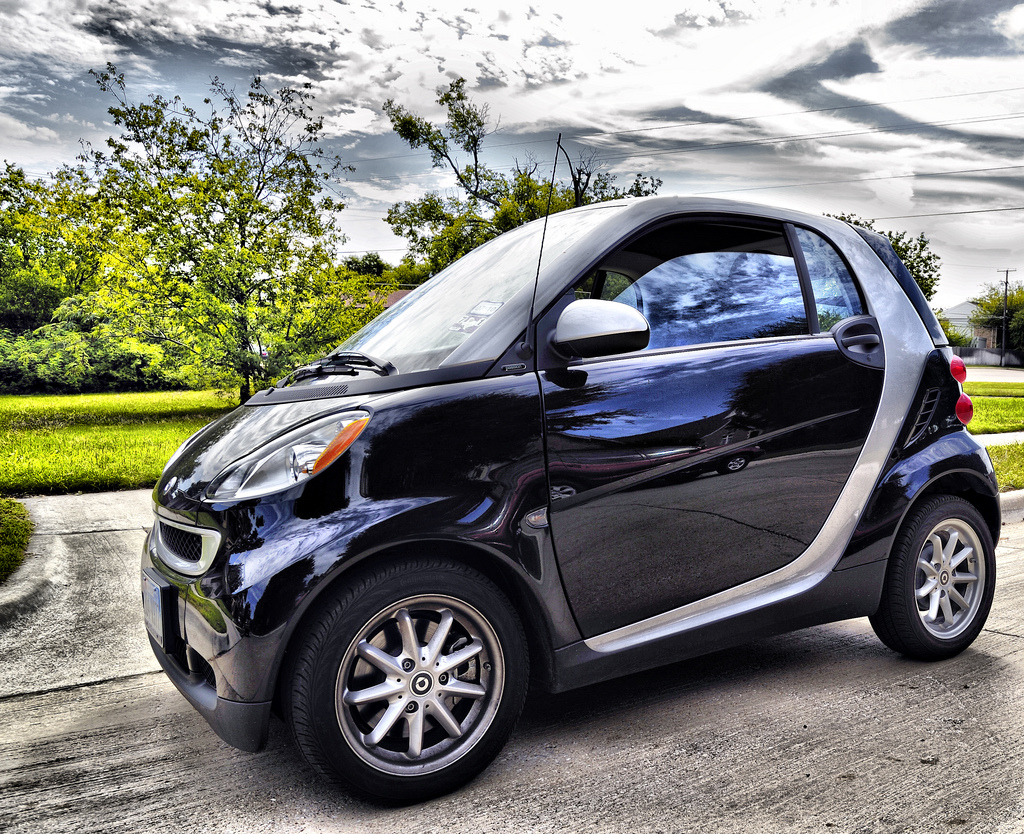
When it comes to consumer tech, the first popular mention of the term that many people in my generation remember came in the form of a brand name – Smart Automobile. Smart cars are those quirky miniature coupes driven round by Europeans. As they were extremely eco-friendly, smart also came to include advanced green technology.
In his first term, US President Barack Obama pledged to build a smart grid – a power network that would diagnose problems electronically, reroute power to reduce outages, and connect cities to wind turbines and solar farms for more sustainable energy.

Today, smart has come to describe any gadget that improves on its non-smart predecessor through connectivity, sensors, efficiency, or a combination of these. Adopted into the mainstream lexicon with the emergence of the first Palm smartphone and boosted by the more recent wearables and internet-of-things movements, the word now describes such a wide range of gadgets that it’s starting to lose its potency.
In some cases, it even sounds like a joke. Just here in Asia, we’ve seen smart water cups, smart table coasters, and smart seat cushions, and that’s only scratching the surface. Just look at how the term has spread from its western origins into the global buzzword it is today.
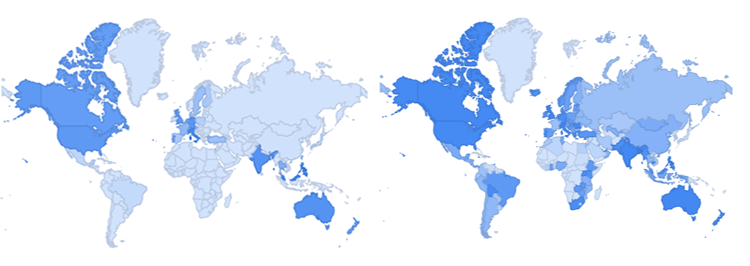
2004 (left) to 2014 (right) Google search volume comparison by region for the term “smart.”
Defining smart
The common denominators among these gadgets are typically Bluetooth or wifi connectivity, an accompanying mobile app, and some sort of electronic sensor. These components work in unison to gather data, transmit it to a phone, and display it to the user.
Natural language selection





Stay updated on the go with our mobile app.
Get latest insights with smoother, more personalized experience through TIA mobile app.