Deepti Sri · · 3 min read
M&A deals to drive increase in exit events in next 2 years for SEA startups: Report
Southeast Asia’s startup ecosystem is expected to see a total of 468 exit events between 2020 and 2022, according to a report by Golden Gate Ventures. This comes after a slump in large exit events that began in 2017 – from 153, it steadily went down to 108 in 2020.
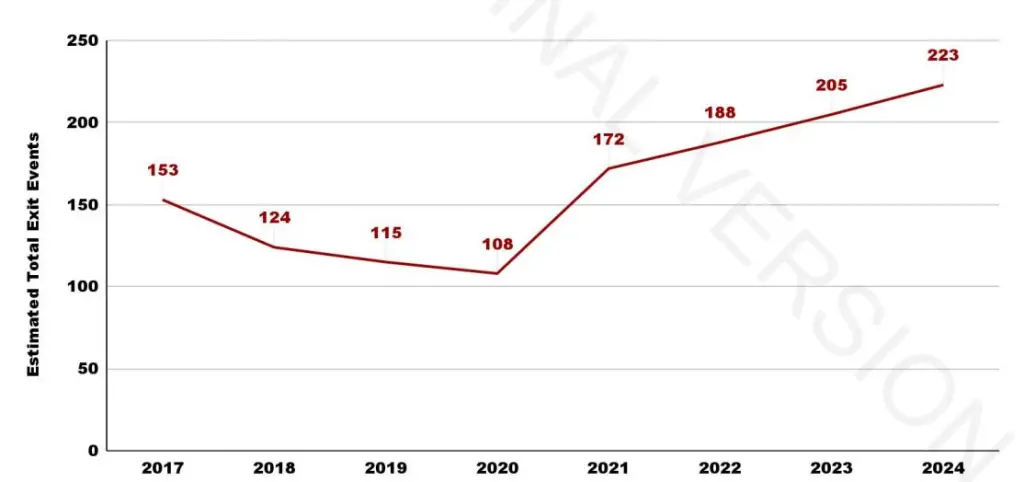
Photo credit: Golden Gate Ventures
These exit events refer to when investors have decided to liquidate an investment in a startup either through mergers and acquisitions, secondary share sales, or stock exchange listings, which are expected to drive up such exit events.

Photo credit: Pixabay.
The spike in the number of late-stage investors, secondary buyers, and special purpose acquisition companies (SPACs) have led to a positive outlook on the exit landscape for investors in Southeast Asian startups in the coming years.
Even though the pandemic slowed the pace of exits in 2020, the rise of SPACs has piqued the interest of institutional investors. Many of them are now looking at Southeast Asian tech firms and expect a strong pipeline of deals in series B- and C-stage startups.
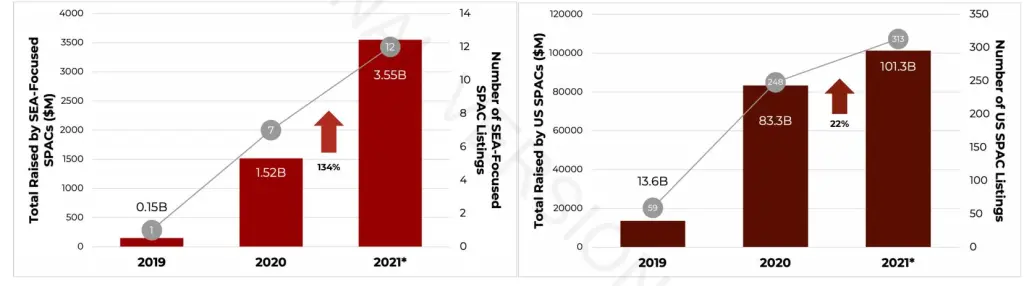
Photo credit: Golden Gate Ventures
That said, even if SPAC mergers have become more common, these do come with a set of risks – an unsuccessful deal will leave an imprint on market sentiment and may negatively impact investor interest or a startup’s momentum.
Citing a recent EY report, Golden Gate Ventures said that more than half of startup executives from Southeast Asia are looking to actively pursue M&A deals in the next 12 months — the highest number since 2012.
Although private companies like Grab, Gojek, and Trax have made a number of acquisitions, Golden Gate Ventures anticipates further acquisition deals after these unicorns are publicly listed. This will be spurred on by an increase in liquidity from the stock market.
According to the report, this liquidity plays a crucial role in providing accessibility for companies to list themselves on Asian exchanges.
But the financing that startups receive in the stock markets after their IPO is often not a big amount, as retail investors are often “excluded.” That’s why startups have begun turning to dual listings with established exchanges.





Stay updated on the go with our mobile app.
Get latest insights with smoother, more personalized experience through TIA mobile app.