 Iris Deng · · 3 min read
Here’s what you need to know about China’s mass surveillance camera maker
Big Brother in China is watching you, and there is a good chance that it is watching through a camera made by Hangzhou Hikvision Digital Technology, one of the world’s largest suppliers of video surveillance equipment.
Here’s what you need to know about Hikvision.
Founded in 2001, Hikvision has morphed from a former Chinese government research institute into a US$39 billion business specializing in professional video surveillance cameras.
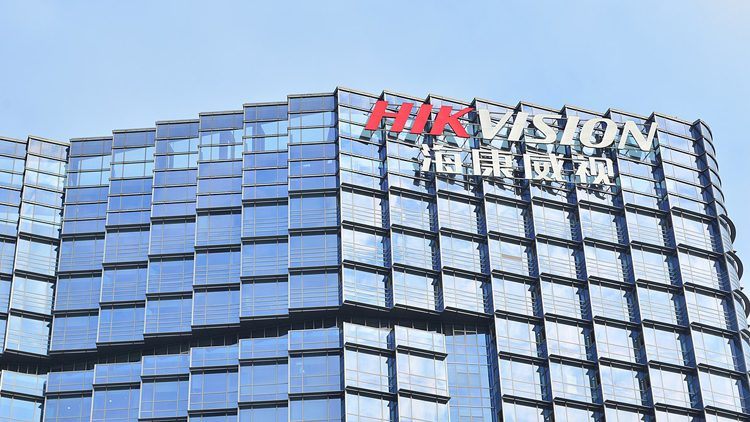
Hikvision headquarters in Hangzhou / Photo credit: Wikipedia
Headquartered in Hangzhou in eastern China and listed on the Shenzhen Stock Exchange, Hikvision has been a supplier to hundreds of government-led surveillance projects in major cities including Shanghai, Hangzhou, and Urumqi, where its cameras can take clear shots of vehicles and passengers even in poor visibility conditions. Hikvision expanded into the consumer space in 2013 with Ezviz, a brand that makes surveillance equipment for the home and office.
Who owns Hikvision?
Around 42 percent of the company is controlled by state-owned enterprises, with China Electronics Technology HIK Group owning 39.6 percent of the company as the biggest shareholder.
Along with two alumni from Huazhong University of Science & Technology, Hikvision chairman Chen Zongnian, 54, started the company while he was working in a research division of China Electronics Technology Group Corporation.
How big is the surveillance market and what’s Hikvision’s position in it?
The global video surveillance equipment market was expected to grow 10.2 percent to US$18.5 billion in 2018, thanks to increasing demand for security cameras, according to a report by London-based market research firm IHS Markit last July. China’s professional video surveillance equipment market, which accounts for 44 percent of all global revenue, grew by 14.7 percent in 2017, outpacing the rest of the world, which grew by only 5.5 percent, the report showed.
Hikvision had a leading share of 21.4 percent for the global closed-circuit television and video surveillance equipment market in 2017, according to IHS Markit.
The meteoric rise of Hikvision comes amid booming demand for public surveillance by the Chinese government. China’s Skynet Project, a national surveillance system that authorities say is aimed at “fighting crime and preventing possible disasters,” had more than 20 million cameras installed in public spaces in Chinese cities in 2017. Meanwhile, the Sharp Eye Project has extended the watch to rural areas across China, according to state media.
IHS Markit estimated that China had 176 million surveillance cameras in public and private areas in 2017, compared to only 50 million cameras in the US. China is expected to install about 450 million new cameras by 2020, and by the end of that year, about 450 million new cameras will be shipped to the Chinese market, the report said.
What are the challenges for Hikvision overseas?
Hikvision’s products are in use in more than 150 countries and regions globally, including the US and the UK. Some of its major overseas projects include the surveillance systems in Philadelphia Safe Communities in the US, Nuremberg railway station in Germany, and a Brazilian World Cup stadium.
In the first half of 2018, sales from the overseas market grew 26.7 percent year on year to reach 6.2 billion yuan, accounting for 30 percent of Hikvision’s total revenue.
However, the company’s ambitions face some hurdles amid the ongoing US-China trade war, as the US moves to cut off business ties between federal agencies and Chinese surveillance equipment suppliers.





Stay updated on the go with our mobile app.
Get latest insights with smoother, more personalized experience through TIA mobile app.









📅 Upcoming Events
22 October 2026
Payoneer x CSPN Summit 2026