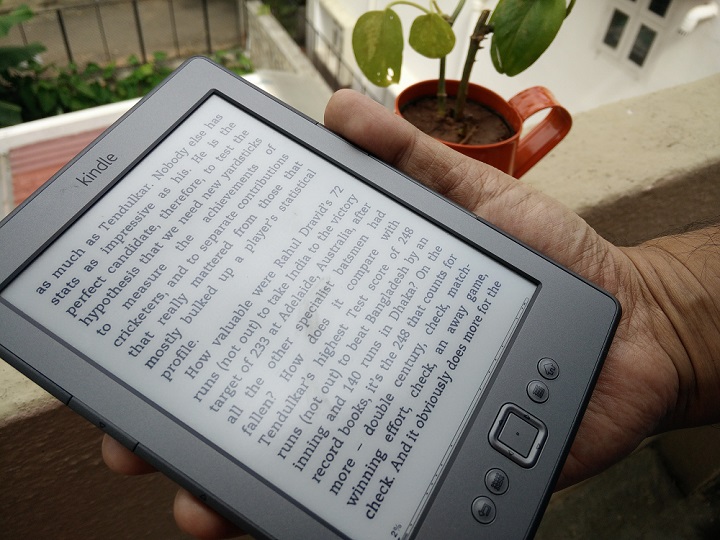
In-depth tech blog Stratechery has a great piece on ebooks. Apparently in 2015, the sales of physical books in the United States is still going strong while ebook sales fell 10 percent. The market share of ebooks hasn’t grown much, holding steady at 20 percent for several years. The trend is even more disconcerting due to the massive sales decline of ebook readers.
Single-purpose devices like the Kindle are apparently too cumbersome for the general population. It’s still too early for a verdict, but things are not going well for electronic books.
This is very interesting because the emergence of electronic media tends to disrupt physical media. Case in point, the introduction of iTunes and other digital music platforms destroyed CD sales.
In my home country Indonesia, the penetration of ebooks is miniscule: ebook sales only account for less than 2 percent of total book sales. Inspired by the Stratechery post, here I will discuss several factors why ebooks are not popular in Indonesia. I will draw from my experience as an avid reader of both digital and physical books.
The Case Against Ebooks
Price
Books in digital format cost the same as physical books, especially local ones. For example, Raditya Dika, the most popular youth fiction author in Indonesia, published a book called Koala Kumal, which costs IDR 50,000 (US$3.60) for a physical copy. The digital format costs IDR 44,000 (US$3.17) even after discount.
The tiny price difference is not compelling enough for readers to shift to ebooks. This is strange because without the production and distribution costs, publishing digitally should be way more cheaper. It seems like Indonesian book publishers are deliberately maintaining high-profit margins to maintain the status quo of physical books.
On the other hand, the prices of imported books are much lower on digital. For example, at the time of writing, the paperback edition of The Martian in Periplus is IDR 225,000 (US$16) while on Google Play it is half that. Ebooks have become an obvious choice if you’re getting imported books in which prices recently skyrocketed due to weakening rupiah currency.
DRM restrictions
For reading and buying ebooks, I personally use both Google Play and Amazon. The annoying thing is that both of these platforms are walled gardens. Ebooks bought from these platforms are DRM-protected, which means they can only be read with the platform’s own ebook reader. It is impossible to consolidate my ebook collection under one universal reader without some kind of hack. Yet another unnecessary complexity just to read books.
Bad experiences
Brand-new physical books have such a distinct and likeable smell that there’s even a perfume developed based on that odor. You don’t get this in a digital format obviously. In addition, reading ebooks over a long period of time tires the eyes, unless you are reading using an e-ink device such as the Kindle Reader, though it is hard to get even in Jakarta. If we consider these two facts, the digital format not only isn’t as pleasant as reading a paper book, it brings a whole new set of problems.
There just aren’t strong incentives for Indonesian book readers to shift. Prices are not that low, restrictive DRM is a bother, and the reading experience isn’t much better.





Stay updated on the go with our mobile app.
Get latest insights with smoother, more personalized experience through TIA mobile app.