Grace Priscilla Teo · · 3 min read
Why video interviews fail for recruitment
This article summarizes an episode of TechCrunch’s video series featuring Sarah Lucena, founder of Mappa.
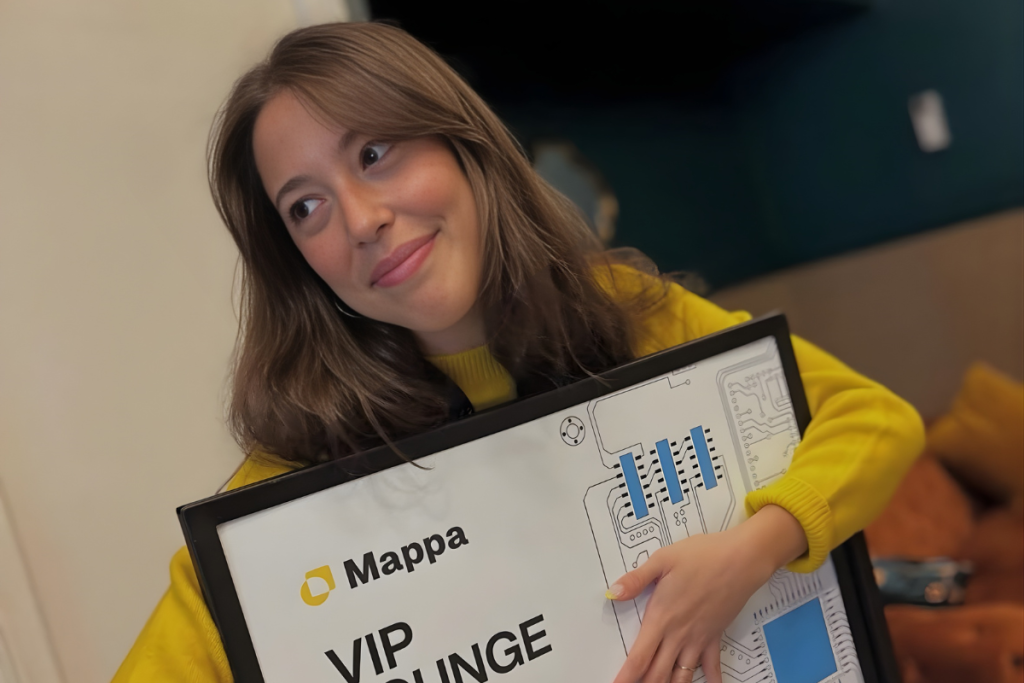
Sarah Lucena, founder of Mappa / Photo credit: Sarah Lucena
Sarah Lucena, founder of Mappa, believes that video interviews don’t work well for seeing what a candidate is really like. She says being on camera makes people perform, so voice is the more reliable signal for predicting if someone will fit in with a team.
Mappa is a company that makes software that studies how people act to help companies make better hiring choices. Instead of relying on visuals, the company focuses on audio, the idea being that voice conveys how people really act, while video encourages staged behavior.
A new way to study behavior
Using video often hides the truth instead of showing it. When Lucena’s team compared video and audio together to audio-only, their ability to read candidates diminished.
Lucena says a psychiatrist explained why, “When people know they are being seen, they act as they want to be perceived.” That awareness changed how candidates behaved, reducing their authenticity during the process.
Focusing on voice
To address that, the team shifted to audio-first evaluation. Voice, Lucena argues, taps into social cues that predate reading and writing and can reveal how a person thinks and collaborates without the distraction of on-camera performance.
“Voice actually ties back to our initial socialization resources. We learn how to speak before we learn how to read or how to write,” she says.
Compatibility is not similarity
A common mistake in hiring is thinking people who are similar will work well together. Putting people who act the same on a team can cause problems instead of helping them work together.
Lucena explains, “Our matching algorithm…is thinking of how compatible those two behavioral profiles might be, not [how] similar. Sometimes you don’t want two hyper A-types together.”
Instead of seeing personality types as bad, leaders should see them as neutral. They just work differently in certain situations.
“The behavior you portray and the way you are is perfect for environments that are ready to absorb it,” Lucena adds.
Hiring without bias
The usual way of hiring often misses good people because of hidden biases. By using unbiased information about how people act, companies can find candidates who will do well, no matter their background.
“What we do is take that guess out of the process,” Lucena says. She says this change has two main results:
Uses outside of hiring





Stay updated on the go with our mobile app.
Get latest insights with smoother, more personalized experience through TIA mobile app.