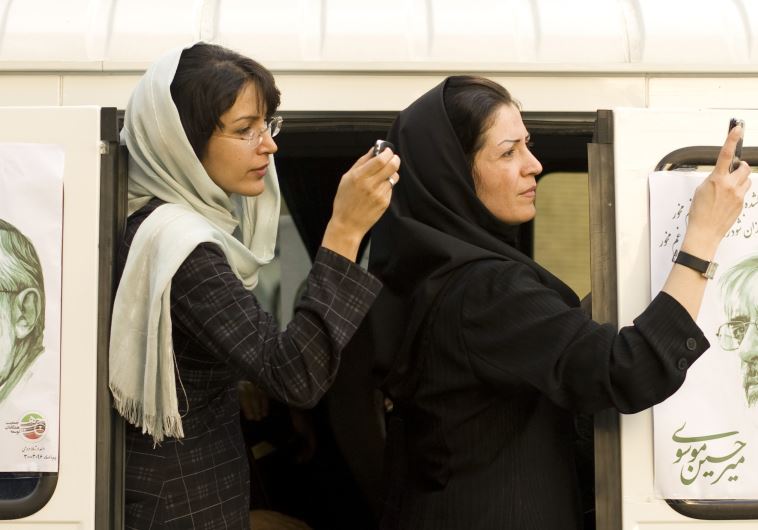
Photo credit: The Jerusalem Post
It’s an exciting time for the Iranian economy as the first quarter of 2016 begins without the international sanctions that have isolated them since 2002. The United States have released billions in frozen assets, Iranian goods are available for export, and their lucrative oil industry has reopened up to the global market.
Foreign companies are due to move in, and domestic businesses can connect with the outside world. Iranian President Hassan Rouhani expects to attract around $50 billion in foreign investment and predicts huge overall economic growth.
Challenges of an open market in the Iranian tech sector
One area of the economy that will be significantly impacted by the move is Tehran’s technology sector. The region has always been at the forefront, dating back to the very dawn of medicine, mathematics and science, and in spite of sanctions they have managed to foster a thriving startup scene.
It was the exclusion of Google, Amazon, and other western based giants that helped national tech companies fill the void.
In fact, some are cautious because it was the exclusion of Google, Amazon, and other western based giants — through sanctions and censorship — that helped national tech companies fill the void. Instead of the Google Play Store, which doesn’t function for paid downloads, students from Sharif University of Technology and entrepreneurs, Reza Mohammadi and Hessam Armandehi, launched their own Android marketplace called Cafe Bazaar. Alongside some non-Iranian apps and games, the online marketplace offers thousands of Iranian clones and genuinely unique apps. If Google is allowed to enter the market, it could cut into their 20 million weekly user base.
Digikala, another Iranian substitute, was launched to address sites such as Amazon blocked by banking, payment processing, and shipping restrictions. Digikala ships over 4,000 orders each day. The company is estimated to be worth $150 million. Because of internet censorship, they even have a YouTube clone called Aparat, with an estimated net worth of $30 million. All of these risk the threat of a more open economy.
Opportunities to bring Iranian companies abroad
It’s not all doom and gloom, however. Tehran’s tech community are not newbies desperately trying to replicate the success of US firms. The entrepreneurs are more than capable of succeeding in their own right and have a long history of leaving Iran to offer their skills to the bigwigs in Silicon Valley, New York, and London. Some even go at it alone. Alireza Tahmaseb is currently in London and has raised over $1.6 million on Kickstarter to fund a modular smartwatch that will give Apple Watch a run for its money.
Instead of seeing a free market as a problem some are viewing it as an opportunity for networking, to find outside funding, and to expand their businesses. Remember, the sanctions went both ways.
While big western companies couldn’t operate within Iran, local businesses also could not market their products and services to anyone overseas.
While big western companies couldn’t operate within Iran, local businesses also could not market their products and services to anyone overseas. TechRasa, a Tehran-based startup media group, sees itself as an ambassador to bring both sides together. They want to promote Iran’s tech scene to the world and bring the world to Iran.
“There are many successful Iranian entrepreneurs in Silicon Valley, but they have lost their connection with their home country throughout the years,” said co-founder Hamed Jafari in a recent interview with HuffPost Tech.
“The young, talented entrepreneurs in Iran always heard the names of these people on the news but never felt they could actually be in contact with them. TechRasa aims to build a bridge between the two,” said Jafari, “For now, we’re interviewing these people, so both sides get to know each other better. Our plan is to organise some events in Iran and gather these people in one place. We hope that in the near future, Iran will become one of the strongest startup hubs in the region.”
First-generation Iranian American Shobeir Shobeiri is the co-founder of Persian Tech Entrepreneurs, a group that encourages such networking in the US. Membership has grown to 7,500, and their events have drawn Iranian speakers from US apps like Flip-O-Gram, as well as Amin Zoufonoun, vice president of corporate development at Facebook. Iranian tech is certainly not going to be left out in the cold.
Prime time for investment in Iranian tech startups





Stay updated on the go with our mobile app.
Get latest insights with smoother, more personalized experience through TIA mobile app.