Elyssa Lopez · · 6 min read
Sora’s new mission: solving robotics
Welcome to The Prompt, your Monday dive into the world of AI that puts Asia front and center. From Big Tech’s power players to the region’s scrappy disruptors, we cover it all. Want full access to all our AI reporting? Subscribe to us here.
Hello reader,
Apps come and go, but the past week may have delivered one of the most high-profile closures in the AI era: OpenAI has shut down Sora, the text-to-video platform that hit one million downloads a week after its launch.
So that’s it – China’s taking the AI video crown. Tech in Asia has written about a number of startups, many of them from China, that aimed to rival Sora. That includes Pixverse, which recently became a unicorn after raising US$300 million, pushing its valuation at US$1 billion.
While Sora’s Chinese counterparts are intent on dominating the social AI video scene, OpenAI seems to have shut the platform down because it knows money is rushing somewhere else: robotics.
CEO Sam Altman reportedly told staff that the Sora research team would now focus on “systems that deeply understand the world by learning to simulate arbitrary environments at high fidelity.” Read that line twice if you have to.
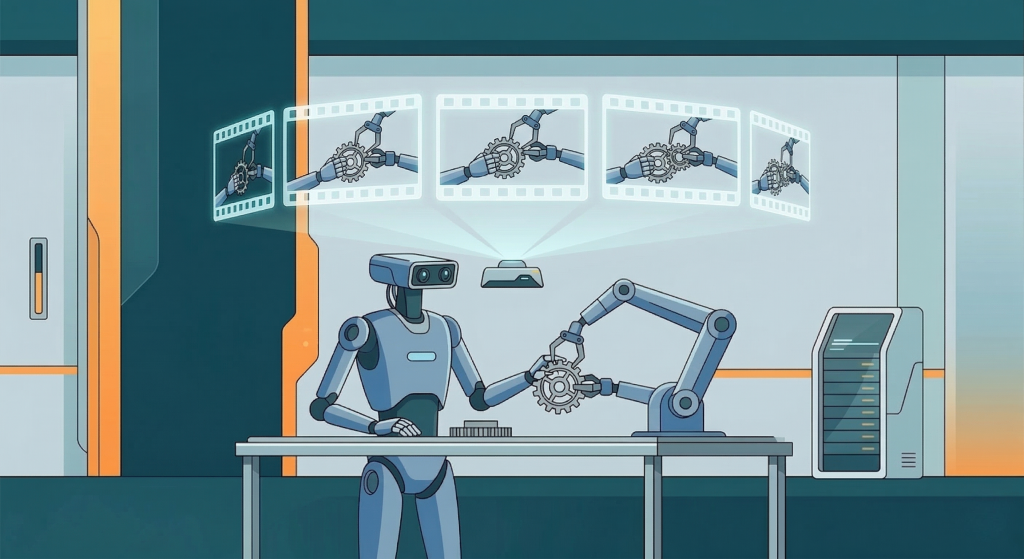
Image credit: Made by Miguel Cordon/Tech in Asia with the help of AI
OpenAI gave a more laymanized take on the direction to The New York Times: It reported that Sora’s research team “would continue to use video-generation technologies behind the scenes as a way of teaching skills to robots.”
With the robotics sector estimated to be worth US$53.6 billion by the end of the year, and with the US government stating its intention to only use American robots, the move makes business sense. Perhaps OpenAI is looking into locking down government contracts, as it did with the Pentagon following the latter’s fallout with Anthropic.
Whether OpenAI can dominate the robotics space the same way it did with chatbots is up for debate.
Nvidia has been running Isaac Sim, its open-source robotics simulator, since 2021. The system is based on PhysX5, which allows users to input the physical attributes of the environment a prospective robot would move in – from the item a robot has to assemble to the table it has to do it in – in a three-dimensional simulator with mathematical equations.
Do we really want to trust robots trained on systems that used to produce AI videos loaded with humans with six hands or dogs that can cross through walls? Given the wealth of research showing that human videos as well as simulations with humans are some of the best ways to improve robots’ skills, I wouldn’t bet on it.
While we continue to observe a post-Sora ecosystem, our top story this week could hopefully help you work through your firm’s AI adoption challenges. We also have some top AI deals that should be on your radar.
Elyssa Lopez, journalist
TOP AI READ FROM OUR DESK
WHAT WE THINK
STANDOUT AI DEALS
RESEARCH SPOTLIGHT





Stay updated on the go with our mobile app.
Get latest insights with smoother, more personalized experience through TIA mobile app.