- Premium Content It takes our newsroom weeks - if not months - to investigate and produce stories for our premium content. You can’t find them anywhere else.
 Joe Gan · · 8 min read
Can Tencent’s Joox beat Spotify in Asia?
After seeing success with its QQ Music streaming service, Tencent was thirsty for more. But rather than just growing within China, the internet giant launched Joox in January 2015 in a bid to offer its music services to overseas markets.
Within a year of its release, the app seized majority of the market share in Hong Kong and Malaysia, which came as a surprise to many. After all, Spotify had already been in both markets since 2013, yet it was knocked off the top spot by a newcomer.
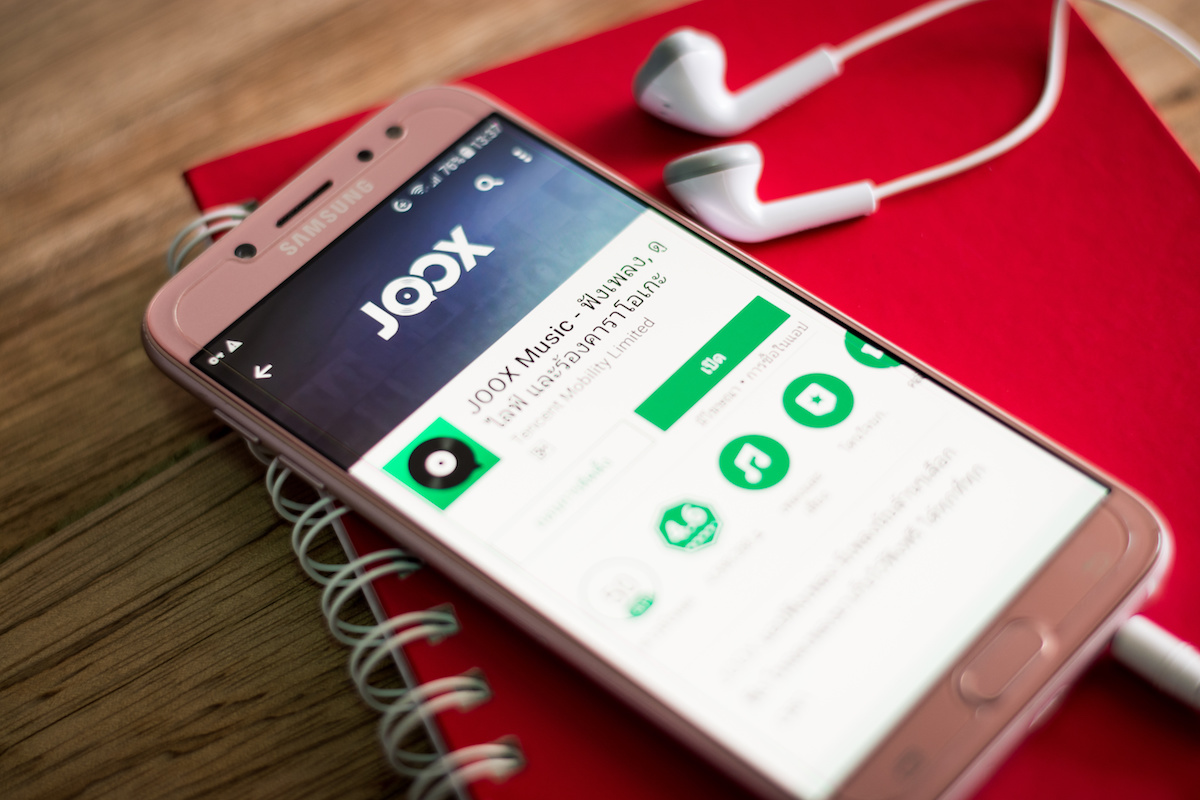
Like Spotify, Joox is a freemium service that gives its users access to over 30 million songs but certain functions, such as skipping songs ad-free, are reserved for premium users. / Photo credit: 123Rf
What has helped Joox hit a high note with users is its emphasis on local music. Such content is particularly important in some Asian markets, especially in Thailand and Taiwan, where 40% to 50% of the most popular singles are in the local language. And Joox provides just that, giving listeners access to millions of songs in Korean, Mandarin, Cantonese, Thai, Indonesian, and Malay.
Spotify is no pushover, however. In fact, in terms of active users, it’s maintaining its lead over Joox in key Asian markets, an industry source estimates.
Joox has been reinventing itself as a multimedia entertainment app. In 2017, it launched its livestreaming service for Mandopop and K-pop concerts, complete with real-time subtitle translations in local languages, consequently converting thousands of music fans into app users.
That same year, it launched its karaoke feature that allows users to record and sing songs with others. Joox tells Tech in Asia that the karaoke function has seen “impressive” success: By 2019, users have sung over 10 million songs through the app, with some 20 tracks belted out every minute.
Although Joox’s move to widen its offerings has struck a chord with a young demographic, Spotify says that “diversifying into livestreaming concerts is not currently in [its] plans.” Instead, it will be focusing on “building the best-in-class catalogue of original and exclusive podcasts” to become the world’s top audio platform, a company spokesperson says.
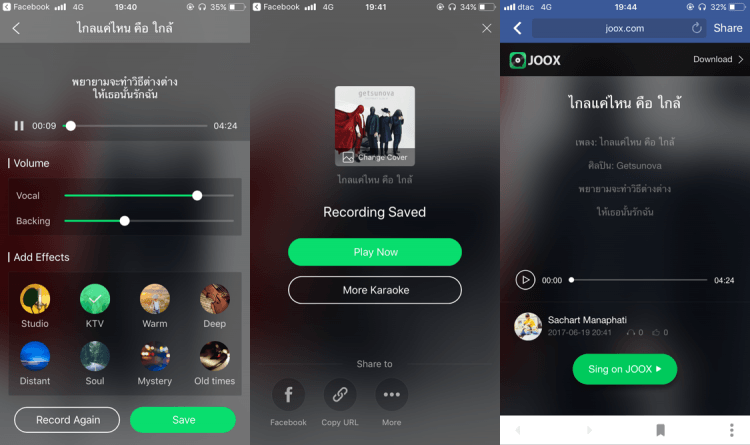
In 2019, an average of 20 karaoke songs were sung per minute on Joox. / Photo credit: Joox
If Joox’s karaoke feature rings a bell, that’s because Tencent Music Entertainment (TME) started its own karaoke app WeSing in September 2014. But not only does it allow users to sing karaoke, it also lets them share videos and livestreams with friends via Weixin (WeChat) for free. There are some paid features in WeSing that have generated revenue for TME, a growing and profitable Tencent subsidiary that was valued at around US$21 billion in 2018.
The primary sources of revenue for livestreamers and karaoke singers on WeSing are virtual gifts and coins from their fans. Power users with six-figure follower counts can earn as much as 50,000 yuan (US$7,300) a month in tips during livestreams – and that’s after TME takes its steep 70% cut of revenue.
While most of TME’s 800 million user base is concentrated in its music-streaming apps QQ Music, Kugou, and Kuwo, the firm’s biggest revenue sources are its “social entertainment services,” with sales from music-focused livestreams and online karaoke accounting for two-thirds (67.6%) of total revenue.
Joox’s potential revenue
Running up against Spotify
Lowering the barrier to usage
Supporting local
Stay ahead in Asia’s tech landscape
This is premium content. Subscribe to read the full story.
Tencent’s answer to Spotify may have edged out the Stockholm-based music- streaming platform in some markets, but Joox still has a lot of ground to cover.
We know this is not ideal. ⌛ Sign up in 20 seconds. Cancel anytime.
Our subscriber community includes professionals from these companies:





Stay updated on the go with our mobile app.
Get latest insights with smoother, more personalized experience through TIA mobile app.








📅 Upcoming Events
22 October 2026
Payoneer x CSPN Summit 2026