- Premium Content It takes our newsroom weeks - if not months - to investigate and produce stories for our premium content. You can’t find them anywhere else.
 Jofie Yordan · · 6 min read
Gojek alumni’s workforce startup grew 10x amid pandemic
In Indonesia, much has been said about the rise in digital services adoption amid the Covid-19 pandemic. But the past one and a half years have also led to contractions in the labor market, with many businesses either decreasing employee salaries or exercising layoffs.
These staff cuts, however, have provided an opportunity for Sampingan, an Indonesian workforce management platform. Wisnu Nugrahadi, Sampingan’s CEO and a Gojek alum, reveals that the company now has over 1 million job seekers on its platform – a 3x increase compared to pre-pandemic times.
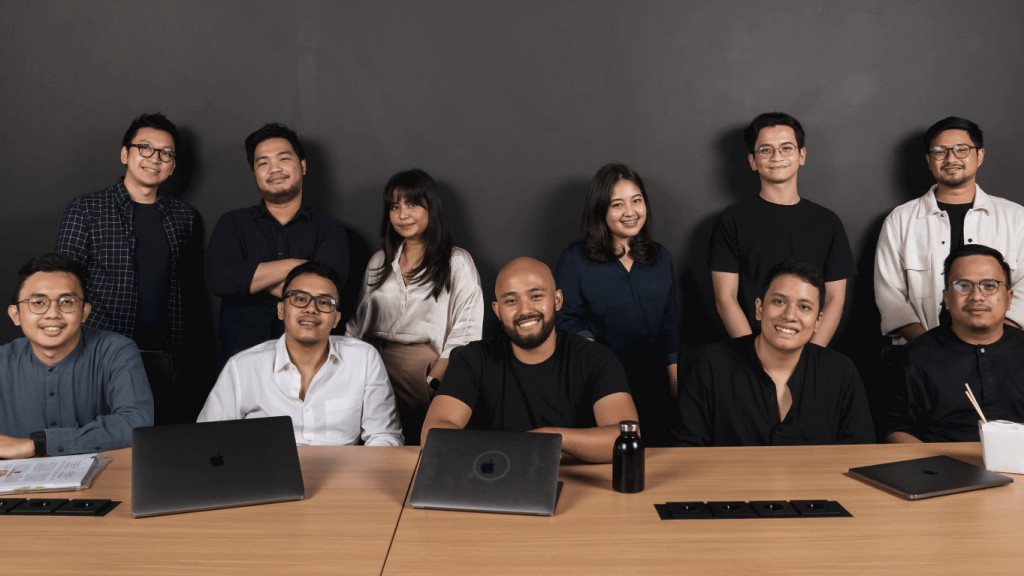
The Sampingan team / Source: Sampingan
More importantly, its revenues have grown 10x between 2019 to 2021.
“Honestly, from a marketing perspective, we didn’t spend much effort to increase the number of workers,” Nugrahadi tells Tech in Asia. “Perhaps the name Sampingan itself is already well-known by job seekers.”
As App Annie data shows, Sampingan’s downloads were sluggish at the end of 2019 but then rose rapidly in mid-2020. That was enough to attract US$5 million in series A funding earlier this year, which brought the company’s total investment to US$7.1 million.
Digitizing the old ways
Sampingan – which translates to “side job” – was founded in 2018 by Nugrahadi, Dimas Pramudya Putra, and Margana Mohamad. It initially aimed to help companies find pre-vetted workers (primarily blue-collar workers) on demand, but it has since expanded to offer other services, including an end-to-end SaaS platform for enterprise and brand management.
Nugrahadi and Putra are both Gojek alumni – Nugrahadi was an operations manager, while Putra was the decacorn’s head of product growth. The initial idea for Sampingan came from a problem that Nugrahadi encountered when he was with the super app: The company had a worker management system that was run completely manually.
Sampingan also differs from freelance marketplaces like Fiverr and Upwork in a few ways. First, it is a closed enterprise platform. A client needs to sign up through Sampingan’s sales team – and do so with an official company representative – instead of just going through the usual online sign-up process.
The platform itself is also enterprise-focused. Customers can carry out processes like recruitment, employee tracking and management, as well as payroll administration, all on Sampingan.
“What we do at Sampingan is actually simplifying the [recruitment and worker management] process by automating most of it,” says Nugrahadi.
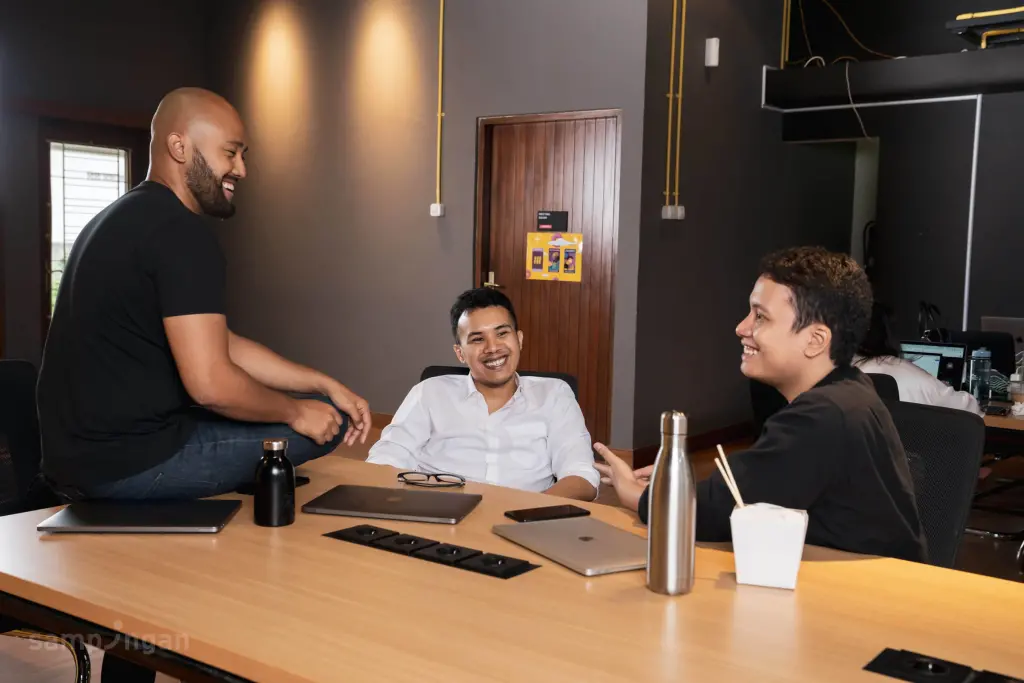
(From left) Sampingan founders Wisnu Nugrahadi, Dimas Pramudya Putra, and Margana Mohamad / Source: Sampingan
10x revenue growth
A nascent space
Stay ahead in Asia’s tech landscape
This is premium content. Subscribe to read the full story.
Sampingan lets clients like Bukalapak and Shopee Xpress automate recruitment processes and worker management with an end-to-end system.
We know this is not ideal. ⌛ Sign up in 20 seconds. Cancel anytime.
Our subscriber community includes professionals from these companies:





Stay updated on the go with our mobile app.
Get latest insights with smoother, more personalized experience through TIA mobile app.












📅 Upcoming Events
22 October 2026
Payoneer x CSPN Summit 2026