C. Custer · · 2 min read
Foxconn workers went on strike last week, but not for the reason you think
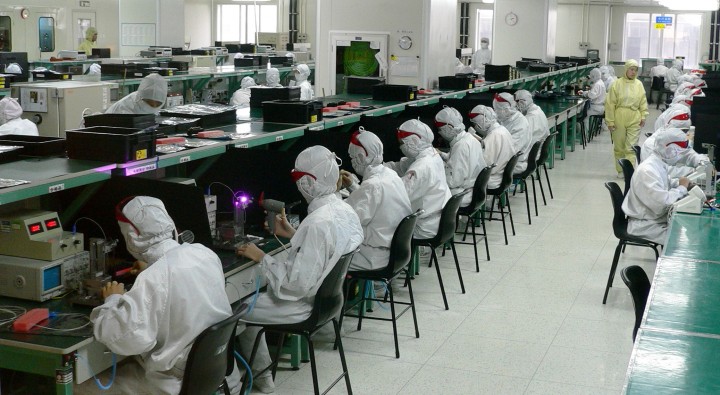
Last week, around 1,000 workers at Foxconn’s Chongqing plant stopped working. They made banners and demanded a meeting with management to discuss their grievances, making it clear that they wouldn’t step back on the assembly line until that happened. Their beef? They wanted to work longer hours. Foxconn wasn’t giving them enough overtime.
A Foxconn representative told the Chinese newspaper Securities Daily that the dispute was resolved after four hours of negotiations, and a much smaller follow-up protest has also been resolved. Production was not affected, and life moves on for the Chinese electronics manufacturer.
But the dispute does highlight the difficult position that Foxconn and other Chinese electronics manufacturers are in when it comes to labor. The Western press, and even the company’s Western partners, have been critical of Foxconn for violating overtime regulations and asking workers to work more hours per month than the company is meant to. But as this recent dispute indicates, reducing worker overtime can be unpopular with employees, who are accustomed to getting a lot of overtime and thus see the reduction as a de-facto pay cut.
And indeed, the overtime pay does represent a significant chunk of many workers’ income. An average Foxconn worker has a monthly salary of around RMB 2,000 (US$326). But with overtime pay, their actual take-home can end up being as high as RMB 3,000 or 4,000 a month (US$489-$652).
In this particular case, Foxconn’s overtime reduction was apparently related to a reduced order from Hewlett-Packard rather than any international pressure to reduce worker hours. But it does still illustrate the rock-and-a-hard place position the company sometimes finds itself in when it comes to meeting global standards for working conditions while still satisfying its own employees.
See: Why China’s about to get a lot more robots
(Source: Securities Daily via Sina Tech)
Editing by Terence Lee, image via Steve Jurvetson, Wikimedia Commons
(And yes, we’re serious about ethics and transparency. More information here.)





Stay updated on the go with our mobile app.
Get latest insights with smoother, more personalized experience through TIA mobile app.