- Insights This article was written by a TIA community member. Insights pieces undergo the same rigorous editorial process that newsroom-produced articles have.
 Dustin Jefferson S. Onghanseng · · 8 min read
Building a hardware startup: Getting logistics and finance right
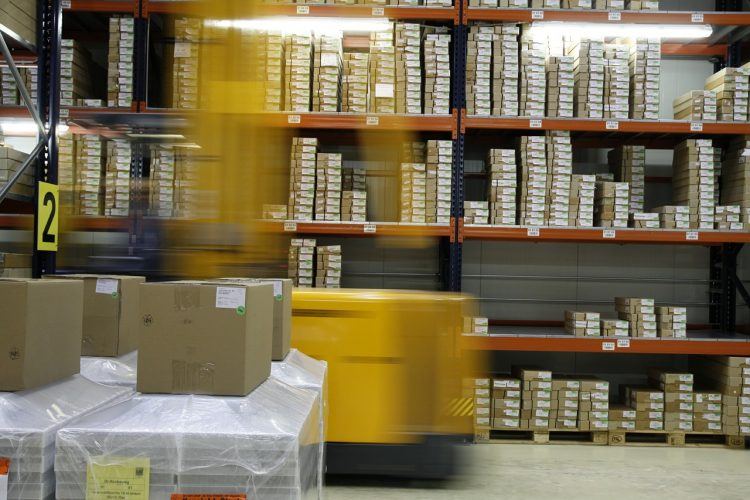
Photo credit: Pixabay.
This third part has been long overdue. My team and I have been too preoccupied with doing the stuff I’ll be discussing here during the past 12 months. Only now did I manage to find some time to write this piece.
We learned in the first and second parts of this series that developing a hardware product is a long process that starts with finding the right team and turning the idea into a prototype through a series of tests. From there, we transitioned to manufacturing and learned how choosing the right manufacturing partner could significantly impact your timeline.
In this third piece, we will talk about the last crucial aspects of building a hardware startup: logistics and finance.
Logistics
Unlike software or apps, hardware cannot be easily distributed around the world. It’s physical, not digital. You need to deal with logistics.
Logistics is way more than just getting your product to the customer. It can be divided into three parts:
- Getting your raw materials into the factory
- Getting your completed product to the customer
- Getting your product back from the customer (if there’s something wrong)
Raw materials into the factory
You can’t produce anything if you don’t have the materials to produce it.
At this point, we can assume that you’ve already built the product and obtained certifications. This means that you already know what kind of parts or raw materials you need.
If your product only uses off-the-shelf parts, your manufacturing partner can source these for you and find the lowest prices. You don’t need to find the lowest price yourself. That’s your contract manufacturer’s job. However, this isn’t exactly healthy because it means that what you have is a commoditized hardware, so you’d need to find your competitive edge elsewhere (software).
If your product has a few special parts in it, that’s good because it means there’s some form of secret sauce in your hardware that cannot be easily commoditized. The difficulty here is you have to negotiate with the supplier on the pricing and lead time of these special parts. The suppliers would call for large volumes while you call for small quantities. It takes time to find the middle ground in terms of pricing and quantity. This also increases the overall cost of your product, which should be justified by your hardware’s secret sauce.
And yes, lead time. That’s a huge burden. That’s the time it takes for your supplier to ship you the parts/raw materials to your factory. Some can take a month, six months, or even a year. This means that you can’t start production until those parts are delivered to your manufacturing partner’s factory. One small part can halt your entire production process.
So if it takes too long, we go back to the drawing board and modify the product so it can use parts that have shorter lead times. You, of course, don’t want to go through this, so you need to get this sorted out during product design. You should also know how your suppliers would be able to support your needs.
Finance





Stay updated on the go with our mobile app.
Get latest insights with smoother, more personalized experience through TIA mobile app.








📅 Upcoming Events
22 October 2026
Payoneer x CSPN Summit 2026