 The rapid growth of the Internet has contributed to the explosive growth of online content in recent years. In addition to traditional text-based content, there is now an unprecedented amount of multimedia content arising mainly from the proliferation of social networking sites and user-generated platforms.
Existing search and retrieval techniques are either text-based or content-based or a combination of both. These approaches are ineffective for abstract or complex queries from users. For a more efficient and effective web-scale media search, there is a need to move from text-based search to a concept-based search to overcome semantic gaps. There is also a need for techniques to perform large-scale indexing of multimedia features to help organisations and individuals cope with this unprecedented flood of media-rich material.
NUS researchers from the School of Computing are pioneering a new generation of media search technologies, spanning from web-scale image/video search to multilingual search, scanned text search and speech-based search.
In this seminar, our researchers will share some of their cutting-edge research results in media search technologies with you. For more details, read the abstracts and biographies of our distinguished speakers below.
Speakers
Keynote Speaker: Mr Michael Yap, Deputy Chief Executive Officer, Media Development Authority
Industry Guest Speaker: Mr Loo Cheng Chuan, Principal, SingTel
Prof. Chua Tat Seng: Interactive Web-Scale Media Search
This talk focuses on recent research efforts in interactive Web-scale media search. It will first discuss the progress in searching for answers in community question-answering sites such as Yahoo!Answers. It then describes three research directions that are critical to the realisation of Web-scale image/video search – namely, visual concept annotation, indexing, and interactive search strategies. The talk concludes with remarks on future research in searching for live media contents on the Web.
Dr. Wang Ye: Mobile music retrieval and its applications
Mobile music retrieval has gained popularity, particularly in the form of smart phone applications. This talk focuses on recent research in this domain, including current system infrastructure and datasets. Two applications scenarios – healthcare and edutainment – will be described through a live demo. In healthcare for example, music therapy research has shown that the use of familiar tempo-matched auditory stimuli helps in the therapeutic gait training of patients with Parkinson’s disease. A music retrieval system has been developed that will help therapists locate music pieces that have specific tempo, cultural and beat strength features.
A/Prof. Ng Hwee Tou: Machine Translation and Multilingual Search
Web pages on the Internet are written in a multitude of languages. Machine translation allows the automatic translation of text from one natural language into another, which facilitates information access and search for content written in another unfamiliar language. This talk will present current research in machine translation, in which a computer learns how to translate from millions of words of parallel texts in multiple languages. Two research issues are highlighted: translation that disambiguates the meaning of words, and translation of resource-poor languages.
Dr. Sim Khe Chai: Spoken Document Retrieval
Spoken Document Retrieval (SDR) is a task of retrieving relevant spoken documents (audio/video files containing speech) from a collection of documents based on user queries. SDR relies on both automatic speech recognition and text-based information retrieval technologies. The contents of the talk include introduction to these technologies, related research activities at the university, industrial applications and demonstrations.
Prof. Tan Chew Lim: Document Image Retrieval
Optical Character Recognition (OCR) is the predominant approach to obtain textual information from scanned documents. However, OCR has inherent shortcomings: language dependency, slow speed, and vulnerability to degraded image quality. We propose the use of word shape coding and holistic word spotting to make up for the deficiencies. After getting the textual information, retrieval can be conducted on the text level with text retrieval techniques.
Prof. Mohan Kankanhalli: Management of Surveillance Data
With rising concerns about security in our society, we have witnessed an increase in the deployment of surveillance systems. Surveillance systems usually employ a number of video cameras. We will show that a surveillance system is really a search system. We will discuss the following topics which are related to surveillance data management:
How to determine the correct number of video cameras to be deployed?
How to transform the raw video data into useful information which can be used for situation monitoring?
An event-processing architecture for surveillance data management.
Event Details
When: Thursday 12th August 2010, 2pm to 5pm
Where: Seminar Room, Level 1, I3 Building, 21 Heng Mui Keng Terrace, Singapore 119613 [map]
Cost: Free
Stay updated on the go with our mobile app.
Get latest insights with smoother, more personalized experience through TIA mobile app.
Recommended reads
 Math provides the proof. OpenAI says AI makes original ideas.
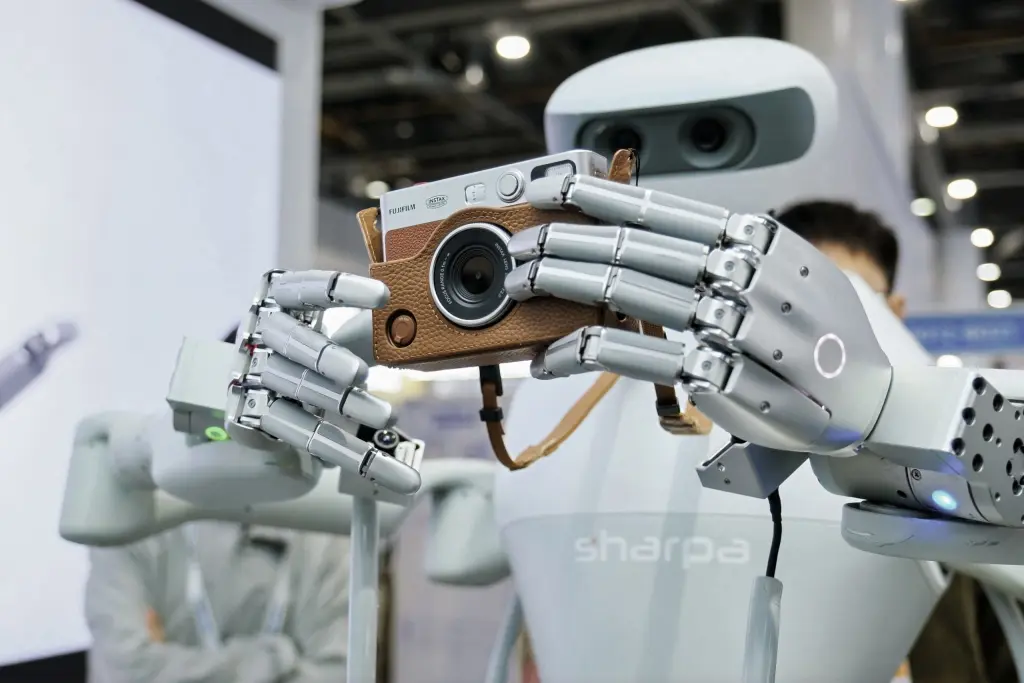 Grab, SG gov’t to enter partnerships with Sharpa on physical AI
 Why ‘vibe PMing’ is the future of product management
 The hidden problem with multi-step AI workflows
 Singapore wants to be an AI superpower. Will it work?
 Swapping hydrogen cylinders for on-site generation
 How OpenAI is betting on one powerful “brain” over many tools
 OpenAI’s Atlas eyes Chrome’s throne
 How OpenAI’s PM grades product progress using strict AI rubrics
 Startup offers cleaner activated carbon without coal use










📅 Upcoming Events
22 October 2026
Payoneer x CSPN Summit 2026