 Sumit Chakraberty · · 8 min read
Robot wars: Amazon has Kiva, Alibaba has Geek+, and there’s GreyOrange for the rest
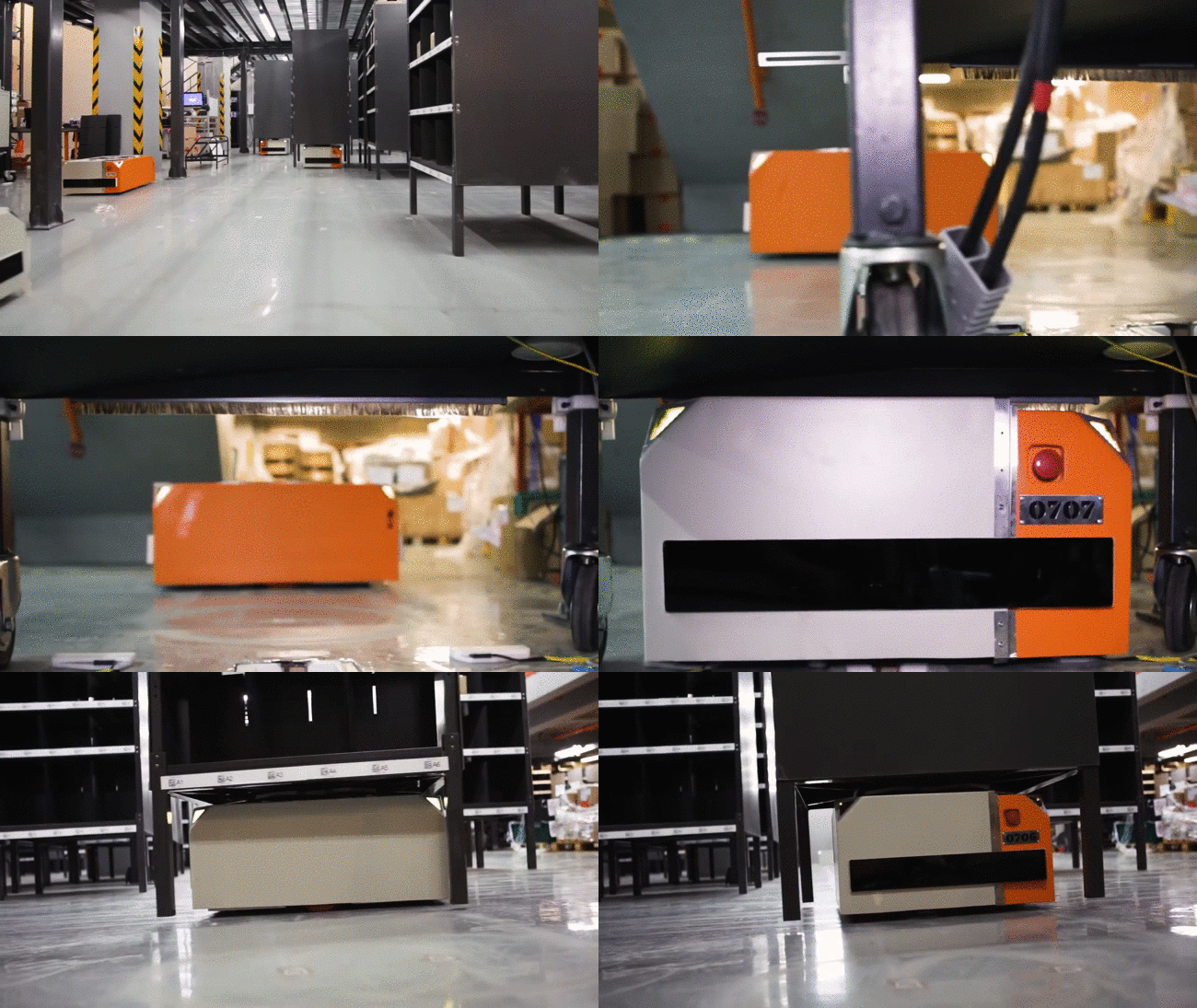
The Butler in its natural habitat. From video by GreyOrange.
Chickpet is one of the oldest bazaars in Bangalore, dating back to the 16th century. The roads are chock-a-block with everything from carts and trucks to a sundry cow. Shoppers throng its bylanes, haggling over silk sarees, kitchen utensils, and gold jewelry. Little had changed from the time I had come here as a cub reporter to write about people who collected the dirt from the jewelry shop lanes and washed it for gold.
It was uncharted territory for a startup from India. There was hardly any ecosystem for electronic hardware, and certainly not for robots.
This time I was here to see something equally eye-popping. A truck had backed up against a wide shopfloor, where packages were being unloaded and carried to a beltway. Scanners automatically read the barcodes and tagged the packages by type, weight, and destination. Further along, metal arms shot out and swept packets off the belt into bins.
All this was manual until recently at this courier company’s warehouse. Now, robotic sorters do the job. Who could have imagined robo workers in a Chickpet bazaar teeming with people?
But the robots have increased the capacity for processing consignments tenfold for the DTDC warehouse, and it’s far more accurate too, the processing manager, Bhupathi Anand, points out to me. Human errors in labeling and routing are costly for a courier company.
An alternative to Amazon’s Kiva robots
The robots come from Gurgaon-based GreyOrange, a rare hardware success story from India. One of its first big clients was Indian ecommerce leader Flipkart, whose global rival Amazon had acquired the pioneer of warehouse robots, Kiva Systems, for US$775 million in 2012.
The acquisition, which made Kiva an inhouse product of Amazon, left a gap in the industry. GreyOrange filled that gap, providing warehouse automation for other ecommerce and logistics companies – from India’s Flipkart to Ninja Van in Singapore and Loggi in Brazil. Even a country as advanced in robotics as Japan has a niche for GreyOrange, which partners Japanese firm Ground, founded by former Rakuten Logistics CEO Hiratomo Miyata.
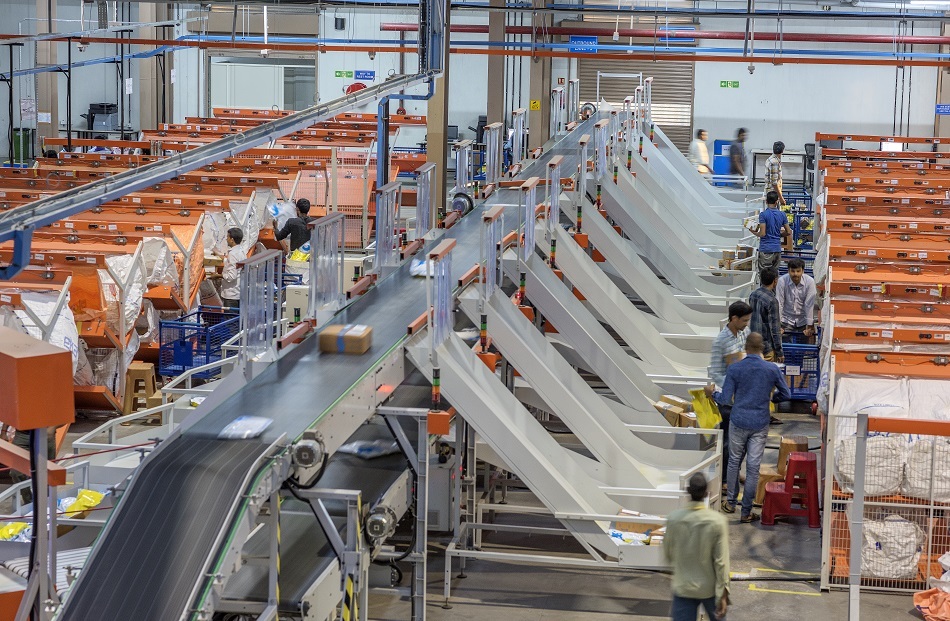
The GreyOrange sorter. Photo credit: GreyOrange.
The Indian company’s robots do sorting as well as storage and retrieval. There are linear and parallel sorters as well as robots that find and fetch packages. The last lot are called Butlers – borrowing the word for valets in traditional British households made famous by the super-efficient Jeeves in PG Wodehouse novels.
These robotic Butlers have the artificial intelligence to manage inventories and increase efficiency far better than any human worker. They can adapt to changing inventories and order fulfilment in real time, processing a constant flow of machine learning and other data.
See: 45 hot software product startups from India and their cool ideas
Home Logistics’ Osaka center was the first to employ the GreyOrange Butler in Japan a few months ago, picking it over several other options for warehouse automation. “The GreyOrange Butler is an entirely new robotics concept for warehouse automation unlike automated storage and retrieval systems,” Home Logistics CEO Manabu Matsuura said while announcing the deployment.
A duet of software and hardware
Breaching the Great Wall
From college humanoids to industry robots
New opportunities and challenges





Stay updated on the go with our mobile app.
Get latest insights with smoother, more personalized experience through TIA mobile app.










📅 Upcoming Events
22 October 2026
Payoneer x CSPN Summit 2026