Erik Crouch · · 4 min read
The startup cutting the sweatshops and middlemen out of making clothes
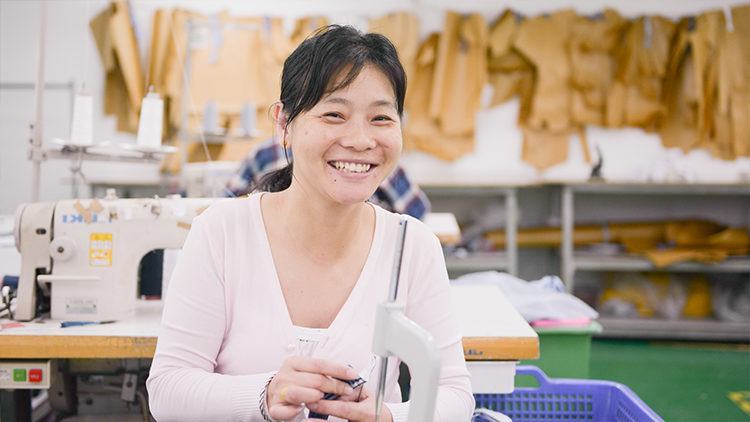
A worker in one of Maderight’s factories. Image credit: Maderight.
On its surface, the world of clothing retail has undergone huge changes over the past few decades, as shopping moved online and companies went global. But behind the scenes, it’s a different story.
“Essentially, you’re dealing with a business and a process that hasn’t really changed in the last 100 years,” says Shuo Yang. “Sure, the machines are different, and where you get it done is different, but just how the business actually works is very antiquated.”
International clothing manufacturing is a messy web of subcontractors, questionable labor conditions, and layers upon layers of middlemen. While the industry has certainly shifted over the last century – particularly as Asia became a hub for manufacturing – it hasn’t gotten any easier to navigate.
After experiencing the opaque and frustrating world of manufacturing firsthand, Shuo and some friends teamed up to form the US- and Shanghai-based Maderight, a startup aimed at grabbing apparel sourcing, production, and logistics by the collar and dragging it into the 21st century.
It started with a shirt
Shuo, along with co-founders Kent Mori and Kevin Chan, first dove into the world of fashion in 2013. The trio launched ASPECD, a Kickstarter-backed shirt company that aimed at the high-end, with a wide number of available sizes and free alterations. They knocked out their funding goal in 24 hours and eventually raised more than US$16,000.
“We were solidly in that boutique range where you have a little cash coming in but you have to reinvest a lot in marketing and online advertising,” says Shuo. ASPECD became a small boutique brand, shipping a few thousand orders per season.
Shuo had experience working in manufacturing in Asia, but most boutique clothing operations didn’t. For small shops in the west, Asian manufacturing meant questionable labor practices, unreliable timelines, and utter opacity. Shuo was able to navigate the world of Chinese clothing manufacture to find ethical, reliable factories for ASPECD – a skill that ended up attracting even more attention than the shirts themselves.
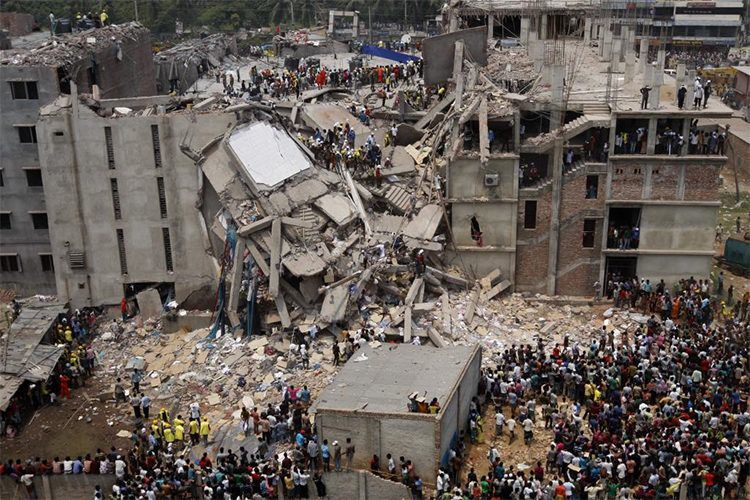
In 2013, an unregulated garment factory in Bangladesh collapsed, killing some 1,130 people. A lack of transparency in the garment industry is as old as the industry itself, and it has long been a hotbed for labor activists – and now, it seems, startups. Image credit: Wikipedia.
“We got a lot of requests from other companies, asking how our products were so good,” he says.
Shuo and Co. realized that the field was ripe for a techy, transparent solution – so in 2015, the team retooled and launched Maderight.
The company’s pitch is straightforward: with a website and an app, clothing brands can track the production, shipment, and sourcing of their goods. Maderight handles the quality control, inspects the factories, and makes sure everything goes according to schedule.
“What we really try to sell is comfort and security,” says Shuo. “And part of that means being able to talk to somebody who is very knowledgeable who can handhold you through the entire process.”
Gaining momentum





Stay updated on the go with our mobile app.
Get latest insights with smoother, more personalized experience through TIA mobile app.