Grace Priscilla Teo · · 5 min read
Sam Altman: Why Google’s success saved OpenAI
This article summarizes an episode of Alex Kantrowitz’s video series featuring Sam Altman, CEO of OpenAI.
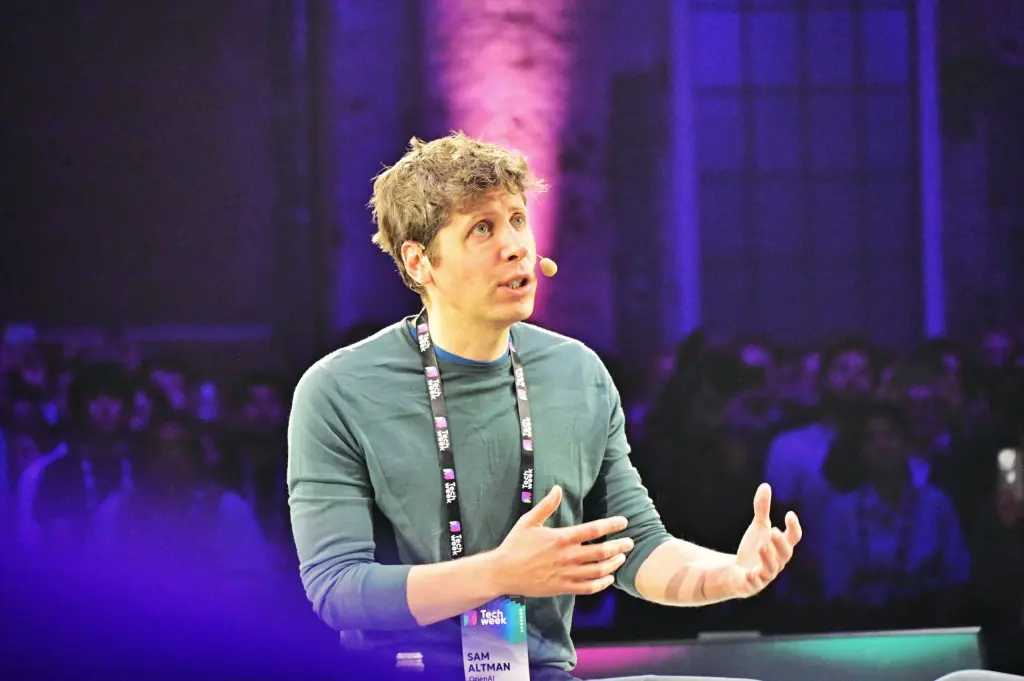
Sam Altman, CEO of OpenAI/ Photo credit: Shutterstock
Sam Altman, CEO of OpenAI, believes Google could have crushed his company in 2023 but failed to act. He says this points to a weakness in large companies, and his strategy is to use the slow pace that comes from them having too much to lose.
The incumbent’s trap
Altman calls OpenAI’s survival a result of good timing. He suggests the company is still around less because of its own technology and more because of weaknesses at its biggest competitor.
A moment of vulnerability
Looking back, Altman admits OpenAI was in a weak position. Against a giant like Google, the company was exposed and could have been shut down with one move.
He states, “If Google had really decided to take us seriously in 2023, let’s say, we would have been in a really bad place. I think they would have just been able to smash us.”
Protected by profitability
So why didn’t Google act? Altman suggests it was because the company was so successful. Google’s main business makes so much money that changing it is hard for the company to do, even to lead a new market.
Altman argues, “Google has probably the greatest business model in the whole tech industry. And I think they will be slow to give that up.”
The AI-native advantage
This hesitation from big companies gives startups the only opening they need. While big companies try to add AI to their old products, new companies can build everything around AI from the start.
He explains, “Bolting AI onto the existing way of doing things, I don’t think is going to work as well as redesigning stuff in a sort of like AI-first world.”
Product over model parity
This focus on designing products around AI is the company’s main defense. The goal is to build a set of products that people use so much that they can’t live without them, even if other AI models get just as good.
Building a personal connection
To make its products essential, OpenAI is focusing on a feature other than just power. The way to keep users, Altman believes, is to make the AI a personal assistant that learns about them over time.
Altman notes, “In ChatGPT, for example, personalization is extremely sticky. People love the fact that the model gets to know them over time, and you’ll see us push on that much, much more.”
The consumer-to-enterprise pipeline
This focus on the consumer product gives OpenAI a strange advantage with business customers. So many people know ChatGPT that it gives the company an easy way to sell to businesses, skipping the usual long sales process.
Beyond the chat interface
Redefining the human-AI relationship
Compute as the economic engine
The capability overhang





Stay updated on the go with our mobile app.
Get latest insights with smoother, more personalized experience through TIA mobile app.