- Premium Content It takes our newsroom weeks - if not months - to investigate and produce stories for our premium content. You can’t find them anywhere else.
 Apoorva Dutt · · 7 min read
Why Jack Ma thought about quitting Alibaba in 2001
Pressures were mounting on Jack, including from his first investor Goldman Sachs, to prove that Alibaba could actually make money.
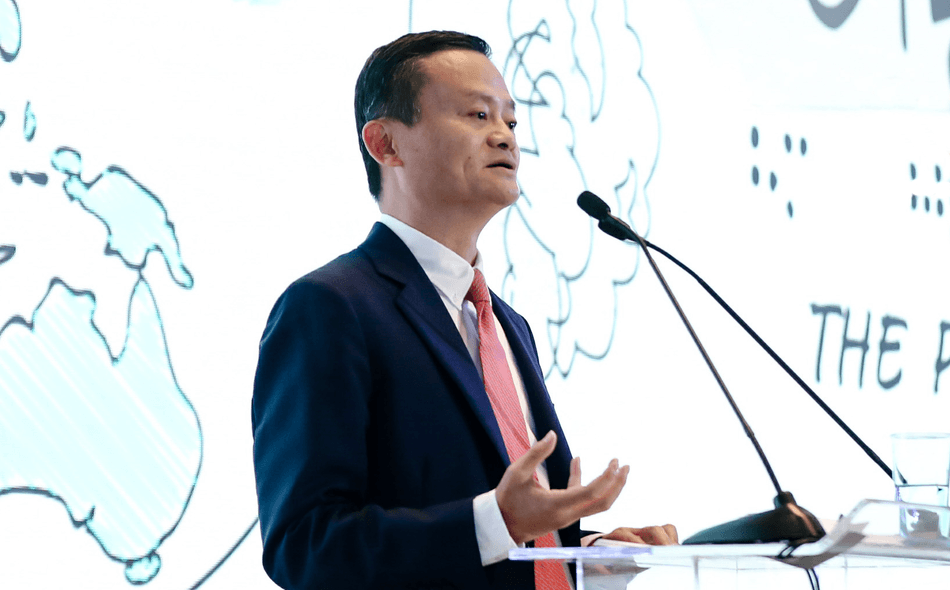
Jack Ma in September 2018 / Photo credit: Alibaba
The following is an edited excerpt from Alibaba: The House That Jack Ma Built by Duncan Clark. The excerpt was provided by publishing house Ecco. You can buy a copy of the book here.
As the stock market continued its downward slide, enthusiasm for internet companies of any description began to dwindle. Dot-com had become dot-bomb.
At a venture capital investor conference in Hong Kong that fall, Jack was one of the featured speakers. In a dramatic reversal from the crowds that Jack had drawn just a few months earlier, Goldman Sachs had to scramble to find people to fill an empty conference room to hear his pitch. Standing at the podium in front of a skeptical audience, an investor recounted to me, Jack cupped his hands in front of his face, squinted his eyes, and declared, “I can see the end of the tunnel.” But in the face of growing investor cynicism about the sector, Jack Magic was wearing off.
Meanwhile, in California, Alibaba’s efforts to build an R&D center under John Wu’s leadership were running into problems. In an effort to overhaul the company’s disparate software platforms, Alibaba had hired more than 30 engineers in its new Fremont office, but coordinating with their colleagues in China across a 15-hour time difference was proving a headache. Forced to use English for the benefit of non-Chinese-speaking colleagues in California, Chinese engineers in both offices struggled to communicate among themselves.
The team started to fracture and tempers frayed as Hangzhou pushed to develop one product and Fremont another. After an infrastructure upgrade, the whole Alibaba.com site went down. Jack was visiting Fremont at the time and had to step in personally to force better cooperation between the two teams so that the problem could be fixed. It was clear that splitting the technology team across the Pacific had failed. Alibaba started to move core functions back to Hangzhou. Alibaba was about to embark on a new, defensive strategy: “B2C,” or “Back to China.”
Pressures were mounting on Jack, including from his first investor Goldman Sachs, to prove that Alibaba could actually make money. “Alibaba.com has a revenue plan for today, tomorrow, and the day after tomorrow,” Jack commented. “Today we are focused on revenues from online marketing services. Tomorrow, we will add revenue sharing with third-party service providers. And the day after tomorrow, we will add transaction-based revenues.”
To reassure investors and his team, Alibaba agreed to look at offering third-party services such as credit, transport, and insurance services. Together, these accounted for as much as $300 billion in annual revenues on total global trade of $7 trillion. Grabbing even a small slice of this pie could be extremely lucrative.
This was the strategy already touted by MeetChina. The company claimed that more than 70,000 Chinese suppliers and 15,000 prospective purchasers had joined its site. Although few transactions had been facilitated online, it disclosed it planned to take 2 to 6 percent of all transactions on its site. Bucking the investment downturn, MeetChina surprised the market with a fresh venture capital infusion of $30 million, taking its total haul to over $40 million, some $15 million more than Alibaba.
But MeetChina would never make much headway in China. Eventually the company switched focus to Southeast Asia, launching MeetPhilippines.com and MeetVietnam.com (in the presence of President Clinton) and inking partnerships in India, Indonesia, South Korea, and Thailand, before it folded.
Jack had long been dismissive of MeetChina, and as it fell to the wayside he turned his guns on Global Sources, now Alibaba’s main rival, and its founder, Merle Hinrichs. Jack dismissed Global Sources as an “old economy” company that had misunderstood the nature of online trade: “They are a company pushing a publication.” Merle Hinrichs in turn dismissed Alibaba as “a mile wide and half an inch deep.” Although Global Sources’ (recently listed) shares had tanked along with the Nasdaq, it was buoyed by substantial profits generated from its offline print business.
But in the latter half of 2000, it looked like there was something wrong with Alibaba’s strategy. Although it had raised $25 million and signed up more than half a million users, its revenues that year wouldn’t even hit the $1 million mark. Alibaba did start to charge some fees – helping build and host websites for some of its members – but expenses were increasing far more rapidly than revenues. Alibaba’s hiring spree was creating more problems than it solved, as new recruits arrived before reporting and budgeting systems had been put in place. The international nature of its business was also a challenge, both in dealing with clients and in managing human resources.
Trying to market a Chinese company with an Arabic name to clients in the United States and Europe wasn’t proving easy, and Jack admitted that “managing a multinational organization is no easy task with the language and cultural gaps.” As the tech downturn continued into 2001, Jack and Joe recognized that things needed to change. In January 2001 they brought on board as chief operating officer Savio Kwan, a fifty-two-year-old veteran of GE, who gave a frank assessment of the company: “We need to ground [Alibaba] in reality and make it into a business.”
Back to China





Stay updated on the go with our mobile app.
Get latest insights with smoother, more personalized experience through TIA mobile app.