 Rita Liao · · 3 min read
Asia news roundup: Grab to offer in-car grub, Chinese media giants in legal row, and more
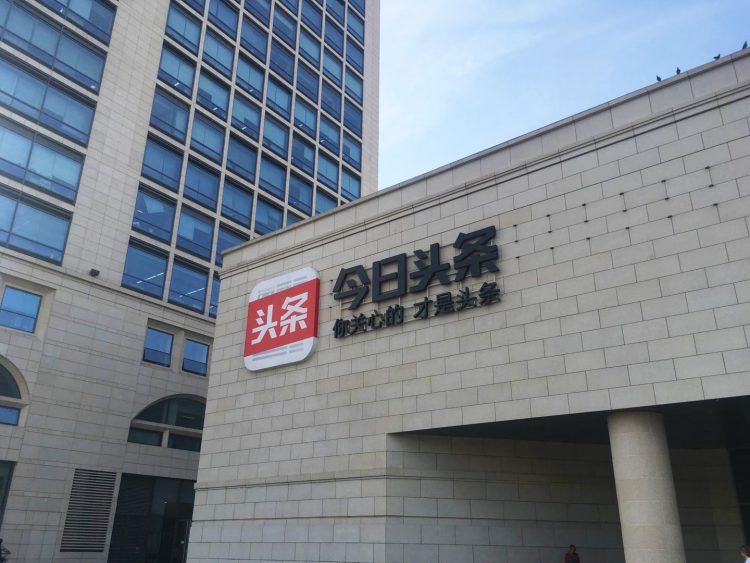
Toutiao headquarters in Beijing / Photo credit: Tech in Asia
Tencent and Bytedance face off in court, Ofo denies rumored executive exit, and logistics startups pocket new funds.
Media and entertainment
Bytedance hits back at Tencent with anti-competition charge (China). The Chinese startup behind immensely popular apps Jinri Toutiao and Douyin has filed a lawsuit against rival Tencent for “anti-competition behavior.” This comes after Tencent sued Bytedance for “defamation.” Bytedance is seeking compensation worth US$14 million, while Tencent has asked for US$0.15 in token compensation. (South China Morning Post)
NetEase sinks US$100 million into “Halo” developer Bungie (China). The Chinese gaming giant, which holds licenses for “World of Warcraft” and “Overwatch,” among other titles, has acquired a minority stake in Bungie, the maker behind video games “Halo” and “Destiny.” The new funds will help Bungie turn into a “global, multi-franchise” gaming company, according to a statement from NetEase CEO William Ding. (VentureBeat)
Transportation
Grab brings in-car refreshments and retail service to Singapore (Singapore). Called Grab&Go, the service is a collaboration between Grab and Cargo – the in-car shopping service provider for Uber and Lyft in North America – that lets passengers order goods and snacks on their smartphone. Grab’s driver-partners will earn money each time a passenger uses the service. (Tech in Asia)
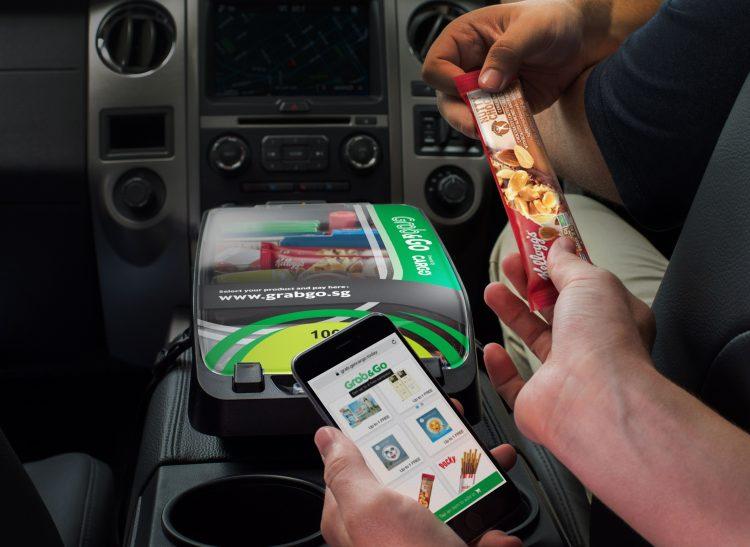
A Grab&Go display box / Photo credit: Cargo
Ofo rejects rumors of COO departure (China). The bike-sharing startup has dismissed claims that it would lay off 50 percent of its employees and that its COO is leaving the company. Both Ofo and key rival Mobike are reportedly suffering from severe cash issues as they pump out bikes to edge each other out. (TechNode)
Fintech
Hangzhou-based fintech platform lands US$360 million (China). Caogen Touzi, which means “grassroots investments” in Chinese, offers investment products to individuals as well as small and medium-sized enterprises. Geo-Jade Petroleum, a Chinese real estate and oil company, led the round. (China Money Network)
Hong Kong MRT to go cashless (Hong Kong). The city’s main train operator is calling on tech companies to run QR code-based payment systems at entrance gates. Across the border, Shenzhen has announced that all metro stations across the city will support QR-code payments – currently operated by WeChat – by the end of 2018. (e27)
Delivery and logistics
Logistics optimization platform nabs US$4 million in pre-series B funding (India). Locus is a startup that utilizes artificial intelligence to offer insights into logistics optimization. The new investment will go towards building up its intellectual property and supporting its global expansion. (The Economic Times)
US$1 million investment to drive Moovaz’s Asia-Pacific expansion (Singapore). The Singapore-based relocation service provider has landed new seed funding from undisclosed American and Chinese unicorns as well as business magnate Ong Beng Seng’s family office fund. Moovaz will use the capital to ramp up its platform and data analytics capabilities as it gears up for a regional push. (DealStreetAsia)
Consumer tech
LeEco founder banned from trains and planes (China). Besieged Chinese tycoon Jia Yueting has been indefinitely banned from traveling on trains and planes in China, according to a list published by the state credit database. Jia is one of the citizens who rank low on the country’s fledgling social credit system, which will be rolled out in full by 2020. (Caixin)





Stay updated on the go with our mobile app.
Get latest insights with smoother, more personalized experience through TIA mobile app.







📅 Upcoming Events
22 October 2026
Payoneer x CSPN Summit 2026