 Colin Moreshead · · 6 min read
Tech in Asia Tour touched down in Kyushu. Here’s who Fukuoka’s sending to Tokyo
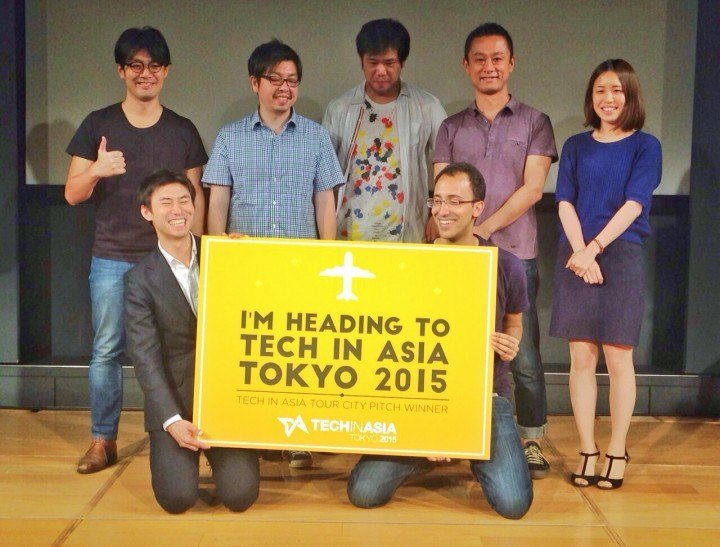
Fukuoka isn’t Japan’s startup capital yet, but there’s reason to believe that it could be headed that way. Tech in Asia Tour: Road to Tokyo 2015 hit Fukuoka Thursday night, hot on the heels of our June 30 Osaka kickoff event. Before an audience of investors, entrepreneurs, and local government officials, four companies from Kyushu’s burgeoning startup scene competed for a chance to appear at Tech in Asia Tokyo 2015 in September.
The hotly-contested battle was judged by three industry leaders: Atomico Japan representative Shin Iwata, IMJ Investment Partners general manager Yasuhiro Seo, and Masanori Hashimoto, the founder and CEO of Fukuoka’s own standout startup, Nulab. The judges each provided their feedback for the competing startups and offered their impressions on the city’s rising star.
“I’ve never seen the Fukuoka startup scene before, and I’m quite pleased to see its potential,” said Seo. “I want to support them and connect them to the Asian market and beyond. I think it’s about time to push Fukuoka signature startups.”
Here are the four Fukuoka signature startups that competed for the top honors. Read through to find out who’s going to be at Tech in Asia Tokyo 2015.
Q-shu Pioneers of Space
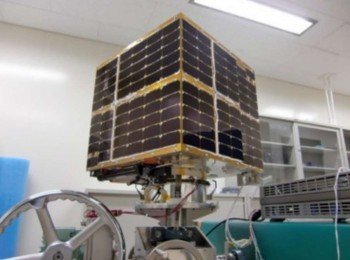
QPS is one startup that’s really shooting for the stars. The company develops microsatellites using a low-cost model, with the aim of drastically reducing the cost of satellite launches over the coming decades. While most satellites being launched today are about 1m³ in size and weigh upwards of 100kg, QPS is betting on much smaller units of only 50cm³ and about 50kg. That may be enough to reduce the costs of development from hundreds of millions of dollars to only a few million, and cut development time in half, down to two or three years.
Even with such massive savings, developing and building satellites is an expensive proposition for any startup. QPS has been at it for 10 years now, and they have a product that they think is ready for prime time. Their “Tsukushi” satellite cost only JPY340 million (US$2.76 million) to develop. The first one was launched last November, and QPS hopes that more will follow in the years to come.
The company is optimistic about growth – there will be five times as many satellite launches in 2030 as there will be in 2015. For now, QPS is focused on staying in the very expensive game of aerospace development. Their short-term cash flow comes from providing technical expertise and consulting services for universities, governments, and private sector companies around Southeast Asia. The company believes that it will be only a short time before their hardware business really takes off.
TeamOn

TeamOn is a brand new startup that wants to become the top comprehensive communication tool for Japanese businesses. The nation’s groupware use is still extremely limited; of the approximately 3.8 million small and medium-sized businesses in Japan, only about 1.8 million of them use any sort of groupware, and of those, TeamOn says that more than 30 percent have reported dissatisfaction.
The TeamOn desktop application was launched in February, followed by iOS and Android releases in March and June, respectively. The company points to multi-platform support and the integration of communication and organization tools like chat and scheduling as key selling points for the software. Users have the best features of Slack, Google Drive, and Facebook on one platform, and it syncs with other file-sharings services as well.
With a free version and a four-tiered pay structure, TeamOn hopes to provide just the right amount of service for any small or medium-sized business. Though users are still in the hundreds, the company is hoping for further growth with the release of Chrome and Windows applications later this year, as well as the introduction of a video messaging function.
Thee Moment
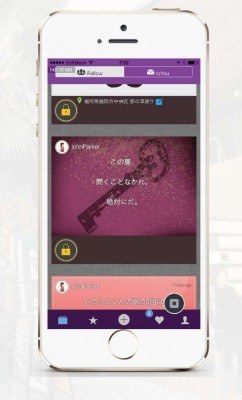
Thee Moment is trying to put some reality back into digital communication. They say that the fun has gone out of most messaging services because delivery is instantaneous – their app, Unlocks, is designed to bridge the gap between reality and inter-device communication.
Users can send and receive “lock cards,” which contain messages that cannot be viewed until their key has been procured by solving a puzzle. Keys might require going to a particular location, accessing the application at a certain time, or solving a riddle. Thee Moment founder Kosuke Shiki believes that this will make messaging a mini adventure for users.
Ahead of the August launch, Shiki believes that he has a great shot at popularity with Japan’s 60 million social media users. To start, the company is offering the service for free to anyone interested in puzzles and adventure. When it’s time to monetize, they plan on extending the service to companies that could provide coupons and promotions through Unlocks.
Yamap
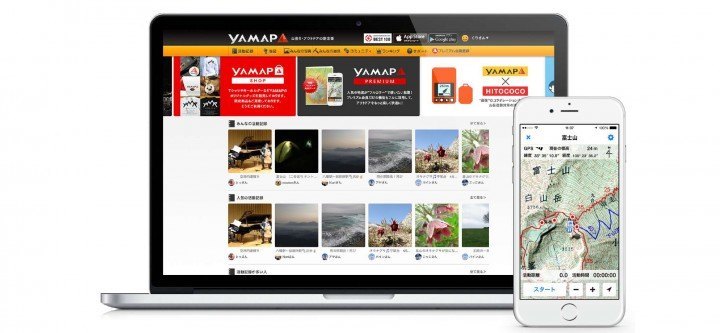
Yamap began as founder Yoshi Haruyama’s project to bring GPS to Japan’s hikers. The application uses hundreds of maps and crowdsourced trail information for users with or without an internet connection.
Haruyama hopes that he can beat out competitors like GPSies with Yamap features like user communications for tips and photo sharing. With an interface geared toward the casual hiker and a growing community of outdoor veterans, Yamap is becoming more than an asynchronous reference tool. The company is hoping for 300,000 downloads by the end of the year, as well as a million each of map downloads and photo uploads.
The company’s revenue driver will be an online marketplace called Yamap Gears, selling products made by outdoor companies like Montbell and Patagonia. Haruyama projects revenues of US$1 million from 600,000 Yamap users and US$6 million from 300,000 Yamap Gears customers during 2016.
Drumroll, please!
The judges crowned Yamap as the champion of Road to Tokyo: Fukuoka 2015 and the startup that will proceed to Tech in Asia Tokyo 2015 in September.
“I had an impression that they are trying to resolve real world problems,” said Shin Iwata of Atomico Japan. “They have the potential to expand and are not dependent on Japanese language.”
“They clearly understand the minds of their users,” added Nulab’s Masanori Hashimoto. “I hope they become a hero of the Fukuoka startup scene.”
Yamap will receive round-trip transportation, accommodation, event passes, and a startup booth at Tech in Asia Tokyo 2015, which will be held on September 8 and 9. Tickets are still available here. They also received a Kindle from event sponsor Amazon Web Services and access to sponsor PR Times’ press release system.
Thank you to everyone who helped make our Fukuoka event a success:
Sponsor: PR Times

Sponsor: Amazon Web Services

Partner: Fukuoka City

Partner: Nulab

Nulab (Cacoo, Backlog, Typetalk)
Nulab is a software development company that creates Cacoo, Backlog, and Typetalk.
- Location
- Japan
- Founded
- 2004
- Employees
- 51 – 200
- Website
- nulab.com
- Latest Funding
- Series A
- Hiring
- 0 positions
Stay updated on the go with our mobile app.
Get latest insights with smoother, more personalized experience through TIA mobile app.
Recommended reads
 Can Sociolla’s supporting features take center stage?
 Binance, YG team up for metaverse, blockchain projects
 Cake DeFi shines while firms crumble amid crypto winter
 OpenAI sets up first Asia office in Tokyo, names ex-AWS exec as Japan head
 Mastering the art of virtual pitching at our TIA Live event
 Meet the 100 top-funded startups and tech companies in China
 A recap of the Tech in Asia Conference 2020
 Founders, we’re looking for more potential ESG unicorns
 Indonesian ecommerce enabler TokoTalk to shut down operations
 Circles Life’s breakthrough: building a digital telco SaaS platform





Editing by David Corbin and Nikita Peer
(And yes, we’re serious about ethics and transparency. More information here.)





