
As the 2020 Tokyo Olympic Games near a close, it’s clear that the current iteration is like no other. In fact, it lays claim to many “firsts.”
This year marks the introduction of three-on-three basketball, skateboarding, surfing, and climbing to the Olympics. It’s also the first time since the turn of the millennium that Japan is hosting the games.
But the most obvious difference this year is the lack of audience members in the stands. There are also numerous banners and logos with “Tokyo 2020” all over the stadium, even though we’re more than halfway into 2021. Their presence makes it hard to forget that, this is the first time that the international event has been postponed due to the pandemic.
The Olympics underwent a much-needed digital upgrade in order to implement operational changes designed to ensure that events proceed without hindrance and to guarantee the safety of athletes and organizers.
Reaching for the cloud
One of the earlier bids to digitally transform the games for the modern age was the launch of Olympic Broadcasting Services (OBS) Cloud in 2018. The collaboration between OBS and Alibaba Cloud, the cloud computing arm of Worldwide Olympic partner Alibaba Group, saw the migration of OBS’ content delivery platform to the cloud.
Called Content+, the service allows rights-holding broadcasters and news agencies to easily browse through a variety of short-form, ready-to-air content – specifically designed for digital and social media platforms – and retrieve the files remotely. It also enables access to live Olympic content as it’s being produced, allowing rights-holding broadcasters to download specific content for their own post-production needs in near real time.

Photo credit: Takashi Aoyama / Getty Images
Like the inclusion of new sports to the Olympics, introducing digital content was aimed at reaching younger audiences.
“Right from the start of the digital explosion in the media, we have seen a unique opportunity to reach out to the millennial and younger demographic,” OBS chief executive officer Yiannis Exarchos said in a 2019 interview with SportsPro. “This is happening in different ways, and, with the introduction of new sports that are much more youthful by nature – like climbing and skateboarding – on the broadcast front, we have been extremely supportive of this inclusion, and have also been pushing traditional broadcasters to explore the opportunities that digital media offer.”
Though OBS Cloud was conceptualized before the Covid-19 pandemic, it couldn’t have come at a more timely moment. With a potentially larger audience tuning in, the integration of cloud technology enables the Olympic Games to have its first ultra-high definition production, while also supporting the extremely demanding content production and delivery workflows of broadcasting the event to a worldwide audience.
“The agility that comes with cloud infrastructure allows faster deployment time with fewer onsite resources, while the flexibility of a cloud platform enables remote post-production and production to be done faster – and from any location with an internet location,” says Selina Yuan, general manager of international business at Alibaba Cloud Intelligence.

Photo credit: Alibaba Cloud
That’s not the only assistance that Alibaba Cloud is offering broadcasters of the Olympics. Earlier this month, the company unveiled a cloud-based digital pin for media professionals covering the event. Called Alibaba Cloud Pin, the device enables users to interact with each other and exchange daily activity updates, such as step counts and the number of friends made during the day, and exchange social media contact information in a safe and interactive manner.
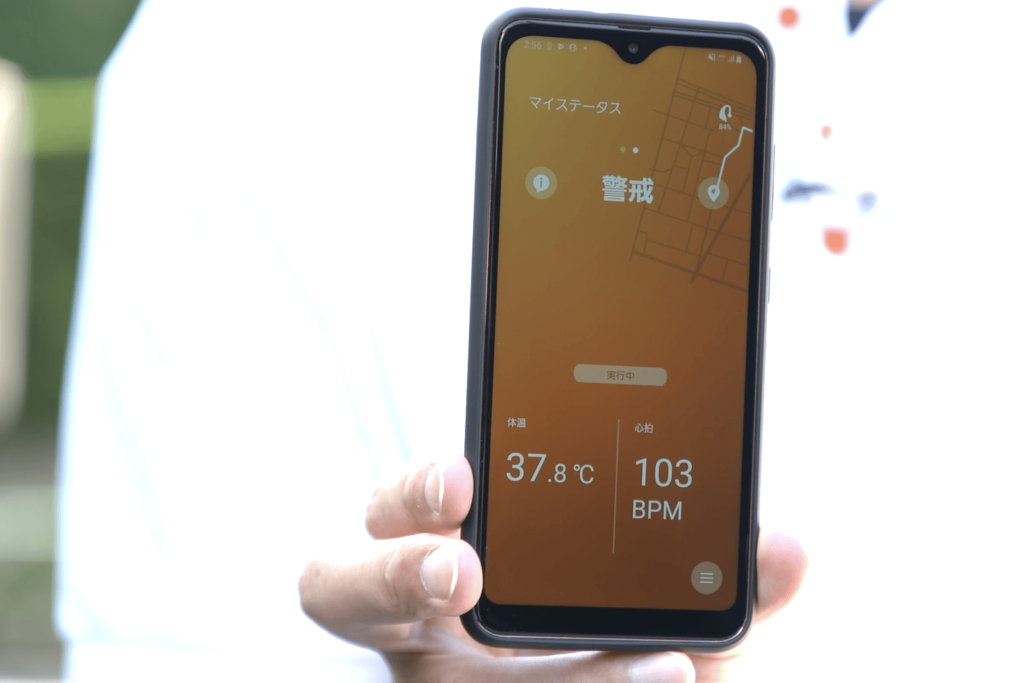
Photo credit: Alibaba Cloud
Alibaba Cloud also released a solution that helps Olympic Games onsite staff reduce the risk of getting heat stroke during the games, which are taking place in the midst of a blistering Tokyo summer. The ear-worn device tracks body temperature and heart rate, while recording the heat index of the surrounding environment via sensors that monitor temperature, humidity, and direct or radiant sunlight. A cloud-based system will then alert users in real time if they’re at risk of getting heat stroke so they can take precautionary measures.
Upping the analysis game
Teaming up with Intel, Alibaba Cloud also leveraged its robust computing power to build an AI-powered 3D athlete tracking system.
Hosted on Alibaba Cloud and leveraging Intel’s technology, 3D Athlete Tracking (3DAT) gives audiences professional insights into athletes’ performances. Without the need for motion tracking sensors, 3DAT leverages standard video, AI, and computer vision to extract over 20 points in 3D on athletes’ bodies, transforming that data into rich visualizations to enhance broadcasters’ storytelling for key game events

Photo credit: Takashi Aoyama / Getty Images
“This technology has incredible potential as an athlete training tool. It’s expected to be a game changer for the way fans experience the Olympics, creating an entirely new way for broadcasters to analyze, dissect, and reexamine highlights during instant replays,” explains Navin Shenoy, executive vice president and general manager of Intel’s Data Center Group.
Supporting athletes on and off the court
When it was announced that spectators would not be allowed at Olympic game venues, organizers began to think of how else they could encourage and cheer on the athletes, recalls Seiko Hashimoto, president of the 2020 Tokyo Games.
This led to the launch of Share the Passion, a project supported by technologies from Alibaba Cloud and Intel. The initiative allows fans from around the world to send supportive messages to athletes via various social media channels. A selection of the submitted messages are then shown on screens at competition venues.
“I hope that through these initiatives, we can share the special moments of the games with as many as possible in a real spirit of solidarity,” said Hashimoto.
Aside from giving Olympic athletes the feeling of support from crowds of spectators, the project also allows them to connect in real time with friends and family after their events via booths set up by OBS at selected venues.
“As a worldwide partner of the International Olympic Committee, we aim to leverage our proven cloud technology to support a digitally transformed Games,” said Unique Song, Alibaba Cloud Japan’s country manager. “As part of our mission, we also want to support the athletes through the games despite the challenges caused by the pandemic.”
Alibaba Cloud is the digital technology and intelligence backbone of Alibaba Group, which became a Worldwide Olympic Partner in 2017. It provides a comprehensive suite of global computing services to startups, corporations, and government organizations worldwide.
Find out more about Alibaba Cloud’s range of cloud services on its website.
This content was produced by Tech in Asia Studios, which connects brands with Asia’s tech community. Learn more about partnering with Tech in Asia Studios.
Stay updated on the go with our mobile app.
Get latest insights with smoother, more personalized experience through TIA mobile app.
Recommended reads
 KKR-backed data center provider opens first facility in Korea
 Has Southeast Asia reached its AI inflection point or stalled at pilots?
 India tech titans caught snoozing by AI
 Why ‘vibe PMing’ is the future of product management
 ‘Good morning, Dave’: The new world of physical AI in daily life
 AI shifts gears into hardware
 AI uses pilot-style checklists to help doctors decide safely
 Southeast Asia’s data center boom has a water problem
 Seedance takes over the internet
 Plot twists ahead for AI video platforms





Editing by Eileen C. Ang
(And yes, we’re serious about ethics and transparency. More information here.)





📅 Upcoming Events
22 October 2026
Payoneer x CSPN Summit 2026