Grace Priscilla Teo · · 4 min read
Sam Altman’s lesson from Google: Trust over ads
This article summarizes an episode of Conversation with Tyler’s video series featuring Sam Altman, CEO of OpenAI.
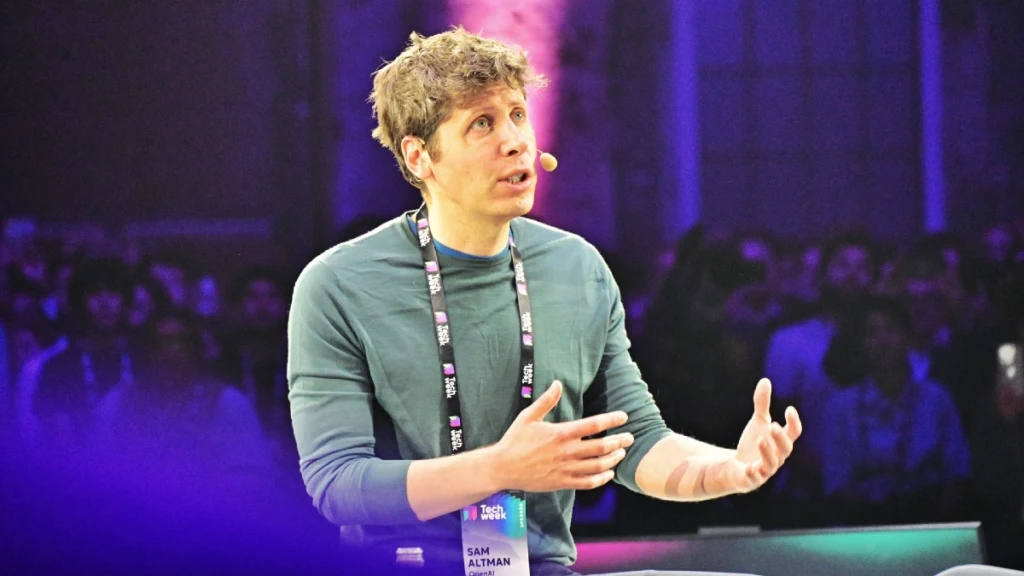
OpenAI CEO Sam Altman/ Photo credit: Antonello Marangi / Shutterstock
Sam Altman, CEO of OpenAI, sees a future where AI will run whole departments at companies. He thinks we need to change how companies are set up and how people work.
The high cost of AI
Training AI at this scale costs billions, so the business model has to be just as big. Using this technology for small tasks feels like a waste.
Finding a business model
Altman states, “I think the way to monetize the world’s smartest model is certainly not hotel booking. I want to discover new science and figure out a way to monetize that that you can only do with the smartest model.”
Solving big problems
He believes the best way to make money is to solve humanity’s biggest problems instead of improving current markets.
“It is not an unfair question because I believe that is the stuff that we will do that will be most important and make the most money eventually,” Altman continues, “[like] a cure for every disease, nuclear fusion, cheap rockets, the whole thing.”
How to make money with AI without losing trust
That billion-dollar price tag creates pressure for a quick profit, but Altman argues this is a trap. He believes the only successful plan is built on user trust. To keep that trust, the AI must give honest results, not just make quick money with ads that make the product worse.
Working for the user
This plan is built on the user believing the AI works only for them. Web search taught this lesson over the last 20 years.
Altman explains, “Ads on a Google search are dependent on Google doing badly. If [Google] were giving you the best answer, there’d be no reason ever to buy an ad above it. ChatGPT is at least trying to give you the best answer. That has to lead to people having a deep and pretty trusting relationship with [it].”
The cost of breaking trust
Once that trust is broken, it is nearly impossible to win back. If a user thinks they are getting an answer designed to make money instead of the best one, the AI is no longer useful.
Altman warns, “If [ChatGPT] were accepting payment to put a worse hotel above a better hotel, that’s probably catastrophic for your relationship with [it].”
Giving AI to everyone
But a business model built on trust and solving humanity’s big goals can’t be scaled in the usual way. This requires an unusual plan where instead of guarding the technology, OpenAI plans to share it widely so more people can find uses for it.
Sharing leads to new ideas
Altman explains, “My most likely story about how the world gets dramatically better is that we put a really great superintelligence in the hands of everybody. We make it super easy to use. We invest in infrastructure and chips and energy to make it super abundant and super cheap.”
Today’s software creates busywork
The AI-run organization





Stay updated on the go with our mobile app.
Get latest insights with smoother, more personalized experience through TIA mobile app.