Suzy Taparan · · 4 min read
How the national winner of a startup pitch competition came up with her winning pitch
Disclosure: The author of this post is not affiliated to any of the organisations mentioned below.
There are two schools of thought when coming up with startup pitches. The first group puts a heavy weight on a founder’s ability to get the attention of potential investors based on the pitch. The second group views the role of pitches (elevator pitches, in particular) as overrated.
Overrated? We spoke to Gear Fajardo, a self-confessed “non-techie” co-founder of an online marketplace for home-based cooks, on her pitching journey and why she credits the quality of her pitch as the main reason Good Meal Hunting was chosen as the Philippine representative of the 2016 Seedstars World.
Here are her 8 tips for coming up with a winning pitch
8. Practice till it hurts.
Gear, who hails from Thailand, only learned to speak English after she got married to a Filipino and settled in Manila more than 13 years ago. Initially, she gladly relegated making pitches to co-founder Lance Pormarejo, and confined herself to what she thought she did best — handling the operations of her startup and cooking.
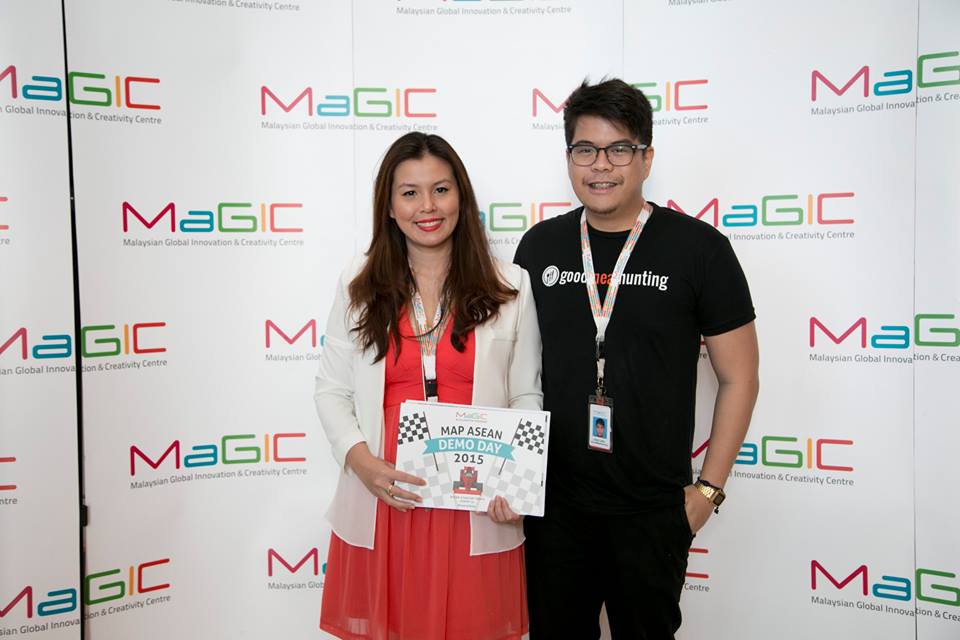
That is, until she joined the Malaysian government-funded MaGIC Accelerator Program in Cyberjaya, Malaysia, in 2015. She was thrown into the deep end, and the first mock pitch prior to Demo Day was, in her words, “a mess.” She was determined to improve.
To prepare for her next mock pitches, she began rehearsing incessantly. She practiced while cooking for fellow startup participants during their stay in Malaysia, and ran through her spiel even while brushing her teeth in front of the mirror.
It came to a point where those who initially volunteered to listen to her speech were good-naturedly complaining that they were now suffering from “last pitch syndrome”.
7. Memorize your spiel like a singer would a song.
Pitching is partly about the performance.
Because she started out conscious about her English, Gear had to memorize each word of her pitch — pretty much like how a singer remembers each word in a song. Once she got the speech down pat, she “reversed engineered” the process by working to make her performance look and sound spontaneous and effortless.
6. Hustle to ask mentors for feedback.
While asking mentors for advice seems to be a no-brainer, Gear believed that not enough participants in accelerator programs in Asia take full advantage of the presence of mentors. “This is not the time to be bashful,” she said.





Stay updated on the go with our mobile app.
Get latest insights with smoother, more personalized experience through TIA mobile app.