- Insights This article was written by a TIA community member. Insights pieces undergo the same rigorous editorial process that newsroom-produced articles have.
 Thomas Luk · · 3 min read
Discuss: Will bike-sharing survive?
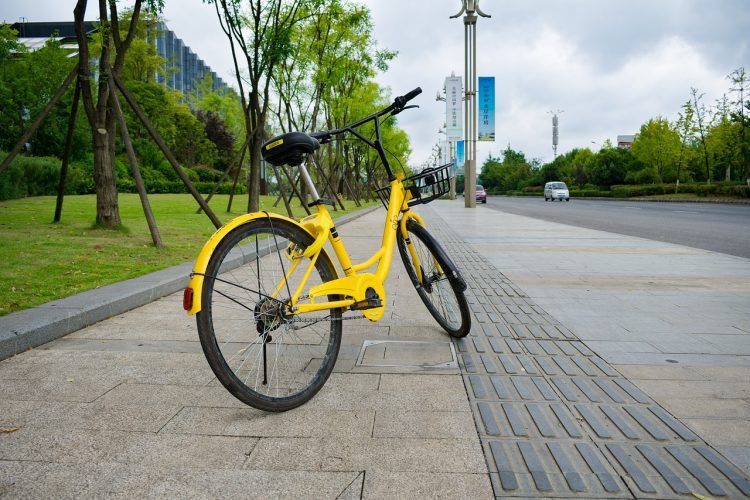
Photo credit: Pixabay.
Discuss is a format where you can share insightful opinion on interesting startup, entrepreneurship, and tech topics. Drop your thoughts in the comments section below.
After the spectacular rise of ride-sharing companies, bike-sharing came into the spotlight. And from there, more questionable sharing ideas emerged (e.g. basketballs, battery chargers, and even foldable seats and umbrellas).
Currently, bike-sharing is obviously in its prime, with companies like Ofo seeking valuations of more than US$3 billion and recently completing a series E funding round of US$700 million. These numbers are the result of a market pricing approach instead of fundamental valuations. They are also heavily based on an underlying story, which will not survive in my personal view.
Bike-sharing clearly provides benefits, particularly in densely populated cities, such as complementing traffic solutions, reducing emissions, and helping promote a healthy lifestyle. The strongest value proposition is and always has been that bike-sharing is supposed to solve the first and last mile problems. It makes traveling more convenient, and either complements or replaces your current mode of transportation.
Bike-sharing works for now because of a public cost, which is already obvious in China. The public good of space is threatened by unregulated bike placements across cities. It is a spectacular cluttering of public space to cater to customers and the required capacity demands.
The public cost has been so high and the critics have been so loud that local governments have taken various measures against the misuse of public spaces (e.g. limiting the overall number of bikes and defining designated areas). This regulation is necessary to optimally coordinate the use of public goods, but it will ultimately destroy the main value proposition of solving the last mile problem.
With such a regulation, only limited designated areas would be open for bike-sharing in the future. Travelers would have to collect their bikes at a station and return it to a different one that may be out of their usual route. They would then have to evaluate whether bike-sharing is still meaningful for them.
The current convenience, which is paid by the public good of open spaces in cities, would definitely diminish once strict regulations are fully in place.
I will not get into the other problematic areas like partly missing security features (e.g. helmets, which are not just nice-to-have options). And I am not discussing current business models, which do not have a clear path to profitability and depend on a future customer data solution model to justify their current story.
In my view, bike-sharing has already been hardly hit and will not survive in its current form. The fixed bike station model, which current bike-sharing companies will be forced onto, has already been in place for decades. Unfortunately, they have not been proven to be tremendously successful. The big challenge will be to use enormous funding to pivot to a sustainable solution that will help the market in the long run.
This post was first published on LinkedIn.
Let’s discuss
- What other factors are a serious threat to the bike-sharing industry?
- What do you think bike-sharing companies should do amid strict regulations?
- Would you still use bike-sharing if it follows a fixed bike station model?
Editing by Charmaine de Lazo





Stay updated on the go with our mobile app.
Get latest insights with smoother, more personalized experience through TIA mobile app.