- Insights This article was written by a TIA community member. Insights pieces undergo the same rigorous editorial process that newsroom-produced articles have.
 Toh Ting Wei · · 4 min read
This startup wants to dominate Southeast Asia’s alternative payments market
This article is co-authored by Leila Lai and Toh Ting Wei.
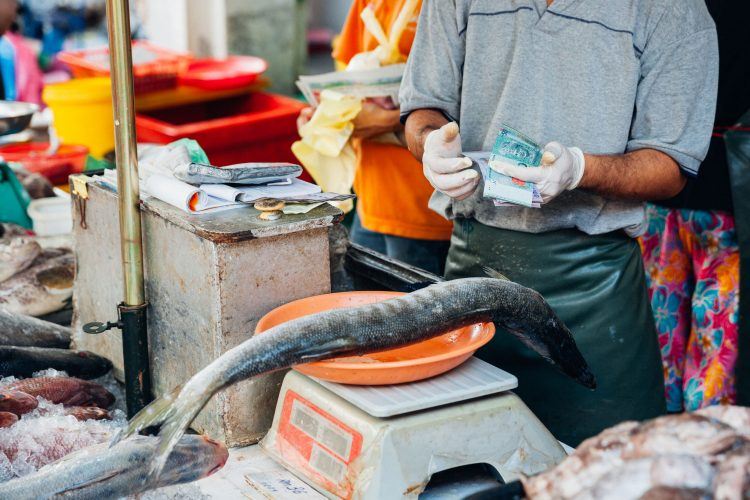
Photo credit: ermakovep / 123RF Stock Photo.
Two-year-old fintech startup Abra is in the race to dominate the mobile payments market in Southeast Asia. The high mobile penetration rate coupled with an unbanked population of 438 million have turned the region into a potential gold mine for alternative payment providers.
“What Abra aims to do is become the default alternative payment method across Southeast Asia,” said Eric Rosenthal, head of Abra’s business development. The Silicon Valley-based startup, which aspires to be the WhatsApp for payments, has developed an app that allows users to transfer money globally with a tap on their phones. This allows users to bypass banks and remittance companies.
Through its app, also named Abra, transactions entered in local currencies are converted to bitcoin and sent directly via blockchain technology to the wallets of merchants and other users.
For users who do not have bank accounts to link to their Abra accounts, they can deposit and withdraw funds through “Abra Tellers.” These are businesses or individuals vetted by the startup who charge a small fee for their service. Users of the app can select a teller near them before meeting up at a mutually convenient location to carry out the transaction.
“In Abra’s case, if you don’t have a bank account, you will still be able to use it,” explained Eric.
Expansion plans
Abra already has strong backing for its expansion plans in Southeast Asia. Since its inception, the startup has raised US$14 million over two funding rounds, with Arbor Ventures leading its Series A round last year.
The startup launched in the Philippines in late 2015 and plans to expand to other Southeast Asian countries by early 2017.
With 70 percent of its population currently unbanked, and the number of smartphone users there projected to hit 90 million within the next few years, the Philippines is an ideal testbed for Abra’s business model.
“Our hypothesis is that our ability to get in the hands of more users will be greater than the ability of banks to acquire more users and underwrite more customers for credit cards,” Eric said.
According to him, “Outside of Singapore, the vast majority of people in Southeast Asia use alternative payment methods [instead of credit or debit cards] because it’s the only option they have.”
Strong competition in the region
While Abra has much potential, it faces strong competition in the mobile payment market from other players within the Philippines and Southeast Asia.
In the Philippine market, alternative payment startups like Dragonpay and Pesopay are Abra’s close competitors.
No winner-takes-all scenario





Stay updated on the go with our mobile app.
Get latest insights with smoother, more personalized experience through TIA mobile app.







📅 Upcoming Events
22 October 2026
Payoneer x CSPN Summit 2026