Bhavani Tirumurti · · 7 min read
The secret to simplify your shopper’s online journey is finding the hook

Photo credit: bowie15 / 123RF Stock Photo.
Online shopping is called retail therapy for a reason; it’s supposed to be a getaway for relaxation and exciting discoveries. However, this getaway often turns into a retail nightmare. Navigating through disorganized websites, scrolling through complicated product descriptions, filtering out irrelevant categories, weeding through ads and banners, and having to blindly trust the quality of items displayed on the screen can be overwhelming for customers.
So how can we simplify the shopping experience for them?
Find that hook
Most customers have a vague notion of what they want when they log onto a retailer’s website. A shopper’s real intent can be dissected by looking out for things that are associated with the item they’re viewing. The associations can be by style, color, price, pattern, cut, or even just simply because they saw someone else wear it before.
This is the hook.
Starting a shopping quest with a product a customer can instantly connect with puts them at ease, rescues them from irrelevant clutter, and makes them hopeful about what they think the rest of the website can offer.
Tell your shoppers that you get their vibe
You want the hook to be established as early on in the online retail journey as possible so that you can instantly connect with your shopper and let them know that you understand their needs.
Personalized recommendations are positioned to help shoppers direct their attention toward products that are curated specifically for them. The combination of computer vision-based attribute tags as well as user clickstream, browsing, and purchase data is necessary to fine-tune personalization engines.
See: Decoding the complex online shopper’s mind and the key to unlocking it
With every click on a product, a shopper’s preferred style, color, pattern, silhouette, cut, price, and brand preferences are understood and meaningful inferences about their intent can be made. In the photo below, the “Top Picks for You” recommendations on a homepage suggests products relevant to a specific user’s style based on individual browsing history, making site navigation easier.
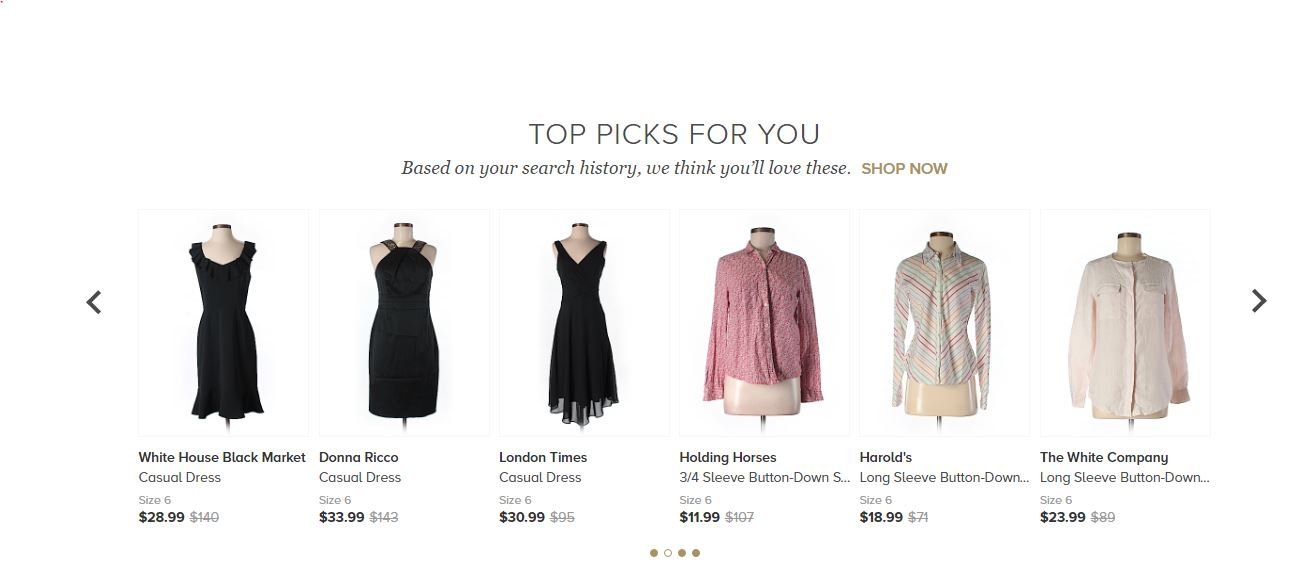
Personalized recommendations on a homepage showcase styles of clothing that are specific to a shopper’s preferences. Photo credit: ThredUp.
It is essential for time-bound users to be able to weave through websites in a methodical manner and quickly identify items that vibe well with their lifestyle.
You also need to be the stylist
What do you do once you know what your shopper’s hook is?
Streamline the shopping experience with a design-centric approach
And it’s a wrap!





Stay updated on the go with our mobile app.
Get latest insights with smoother, more personalized experience through TIA mobile app.