Nicolette Tan · · 4 min read
Founder of fintech platform being used in 95 countries shares his expansion strategy
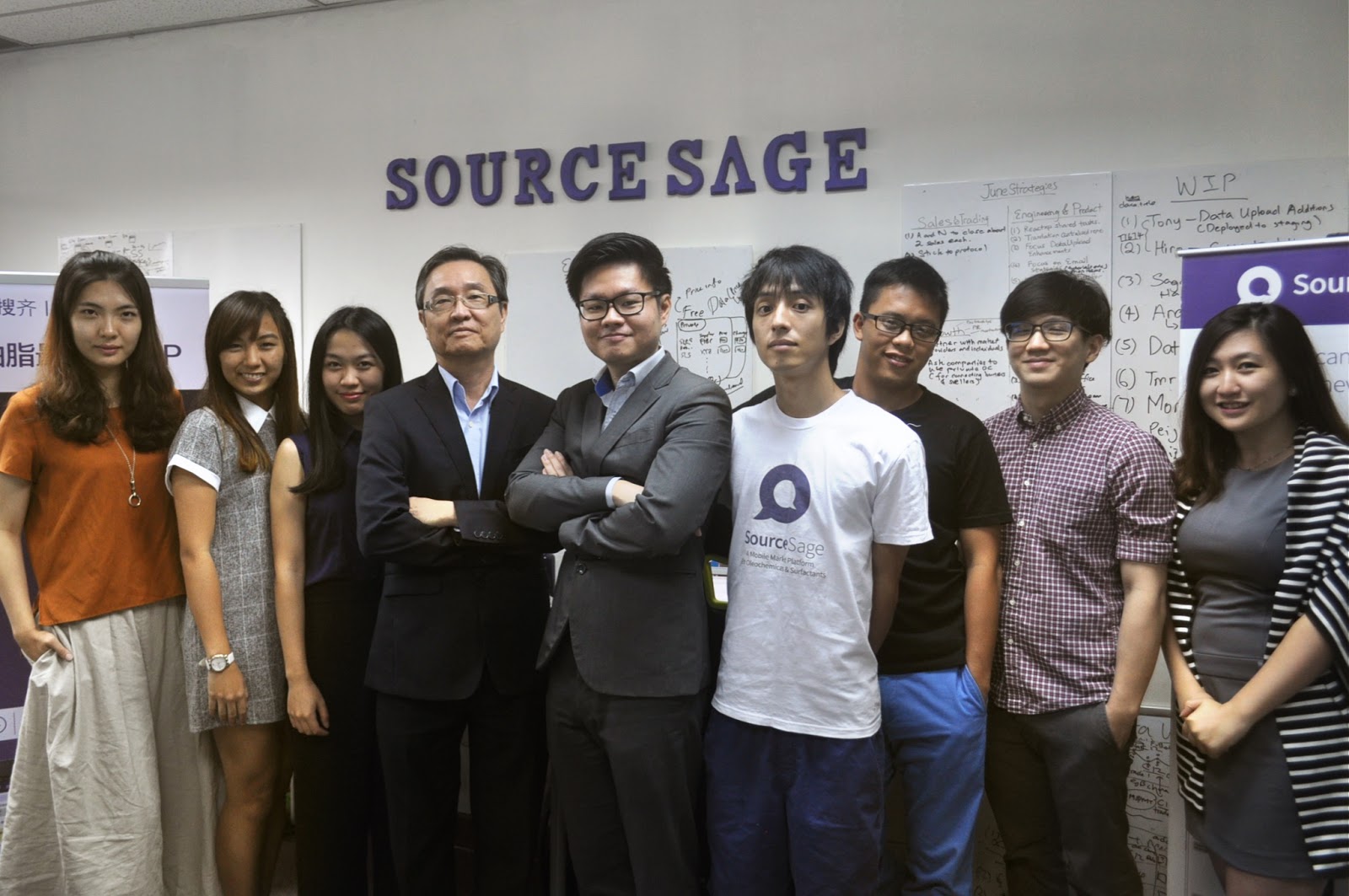
SourceSage founder Sim Jian Min (fifth from left) and his team in their head office.
Commodity trading is an industry that has traditionally been slow to adopt new technologies. For years, Sim Jian Min watched his father’s business, Integrated Chemicals Specialties, being undercut in an environment that was increasingly competitive.
In 2014, Sim saw the opportunity to disrupt the industry with technology and founded SourceSage, a B2B fintech company that aggregates and delivers real-time market intelligence and business opportunities. Their platform is now being used across 95 countries.
In this article, I spoke with him about his strategies in establishing partnerships to grow his global platform.
What are your plans for expansion?
Currently, SourceSage already has a presence in India and Southeast Asia, with a growing business in China and the Middle East. We have also conducted an analysis of our customer base and, based on organic growth, we plan to expand to America and Europe in the future.
What is your strategy for market entry?
We definitely start by attending the largest B2B conferences and talk to our users. We don’t have a fixed strategy, but a useful benchmark for me would at least be having 10 companies in the market with a sizeable potential revenue using our service. We track data on how companies and individuals buy/sell commodities through our platform as well as whether there is regular revenue, a sizeable trading margin, etc.
What is your management structure like for your different markets?
We don’t really manage people, but rather allow them to do what they are best at. Right now, we have 10 to 20 people, and we hire very slowly because I want to make sure we have the right structure to manage an international business team. Having said that, there is only so much automation and chatbots can do. As we scale, we will definitely need more manpower on the ground. Presently, we are looking to recruit people in China and Hong Kong for our China expansion.
We want to keep our systems flexible and flat, so we won’t operate with separate country managers. We don’t want to parachute someone into the role or deploy someone from Singapore. Instead, we have representatives who are in charge of different areas, while every representative will still work directly with the centralized hub in Singapore.
What’s your priority for hiring local teams abroad?
Commodity trading is a very established industry mostly with more experienced businesspeople. It can be quite resistant to change. Hence, our team members need to have the ability to speak to people older than them and have the composure and confidence to handle difficult situations. Domain knowledge can be built up, so our preference is for someone who is young but very quick to learn.
One useful way to hire is through online challenges. For our trading and brokerage recruits, they are expected to find suppliers and buyers of two or more products. For enterprise sales, they have to get at least three relevant people to download the app and tell us how they convinced them to download the app. These match expectations on both sides about their actual day-to-day tasks. We onboard all new employees with a training program from the market research, growth, and product teams.
How do you communicate with your foreign teams?
We have daily sales clinic sessions and weekly reviews with our sales representatives in different regions. Our engineers are based in Singapore, so the teams abroad are mostly sales teams. Business development and traders work remotely from their respective markets and maintain constant communication with the Singapore head office. Trading requires frequent information flow between buyer and seller. So for us, efficient communication is key to building a strong business relationship.
What does product localization look like for your company?
Numbers are a universal language, so the barrier to usage is lower even if the app is not localized in our clients’ native language. Having said that, our interactive chat support always receives messages from users in many other languages. To us, language support for the app is low-cost, so we will hire locals from the market to do the app translation.
How key are partnerships in your expansion strategy?
For us, partnerships was a natural strategy because my father’s business provided us long-standing relationships that we could leverage on. We would just cross-sell the technology to existing partners.
In Japan, partnerships are key in such a traditional industry. We have to go through Lion, Kao, and other big conglomerates in order to establish legitimacy. Otherwise, they can be quite averse to working with unknown entities.
What advice do you have on entering foreign markets?





Stay updated on the go with our mobile app.
Get latest insights with smoother, more personalized experience through TIA mobile app.